
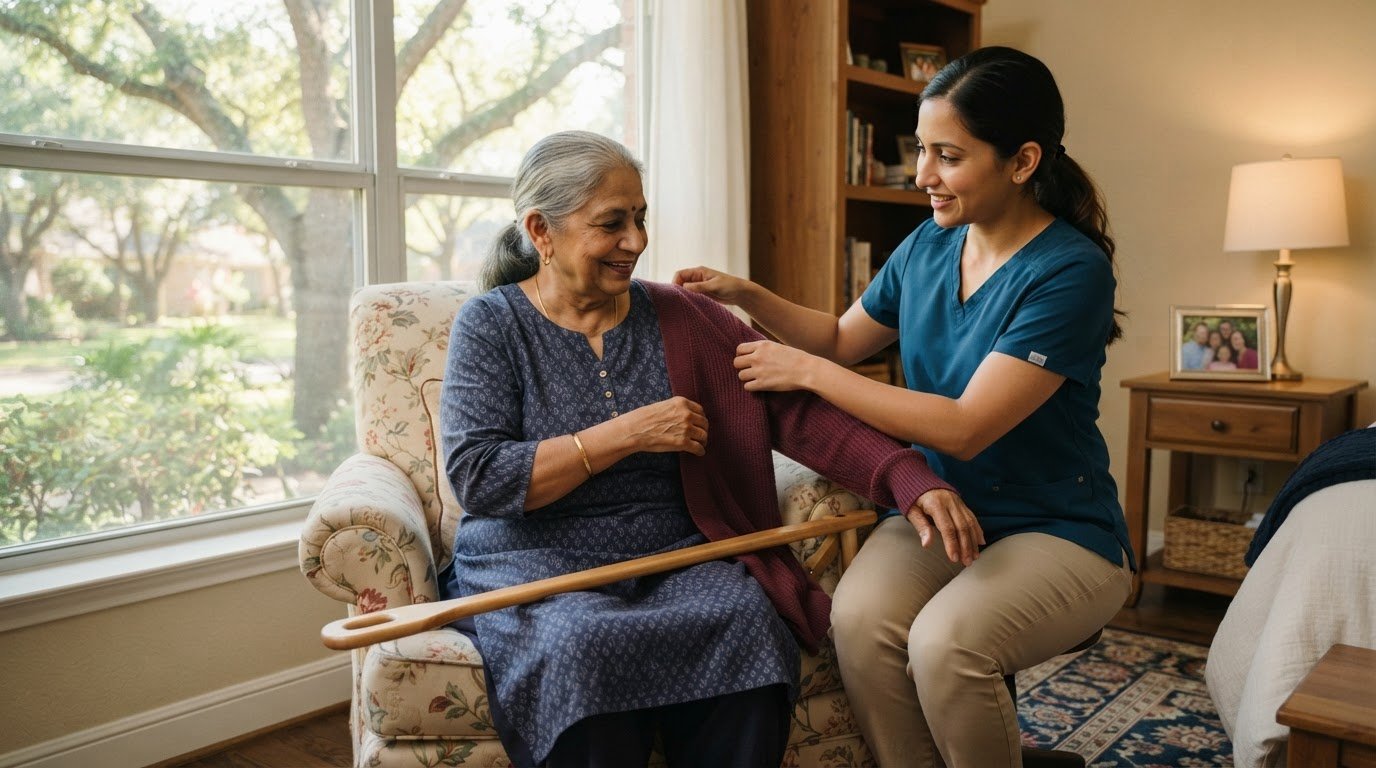
In the United States, 44 percent of adults diagnosed with arthritis report daily activity limitations, including difficulty getting dressed. Dressing assistance for older adults with arthritis can ease this routine by reducing awkward bending, twisting, and reaching, while helping preserve comfort and independence.
Start with practical changes. Dressing while seated, choosing clothes with easier fasteners, and keeping garments within reach can make getting ready safer and less frustrating. Respect the person’s pace and let them do as much as feels comfortable.
This guide explains why dressing aids can help, how to choose options for grip and mobility, and simple ways to make dressing easier at home. It also covers when gentle personal care support can help, so families can build a routine around the individual’s comfort, dignity, and abilities.
Key Takeaways
- Use dressing sticks and other aids to make reaching and managing clothing easier while seated.
- Choose aids that match the person’s mobility, grip, and reach, with handles that feel comfortable to use.
- Consider elastic laces or magnetic closures when tying or fastening shoes is difficult.
- Make dressing less demanding by adapting clothing choices and offering only the help the person needs.
- When getting dressed regularly requires hands-on support, personal care at home can help maintain comfort and dignity.
1. Why are dressing aids so important for older adults?
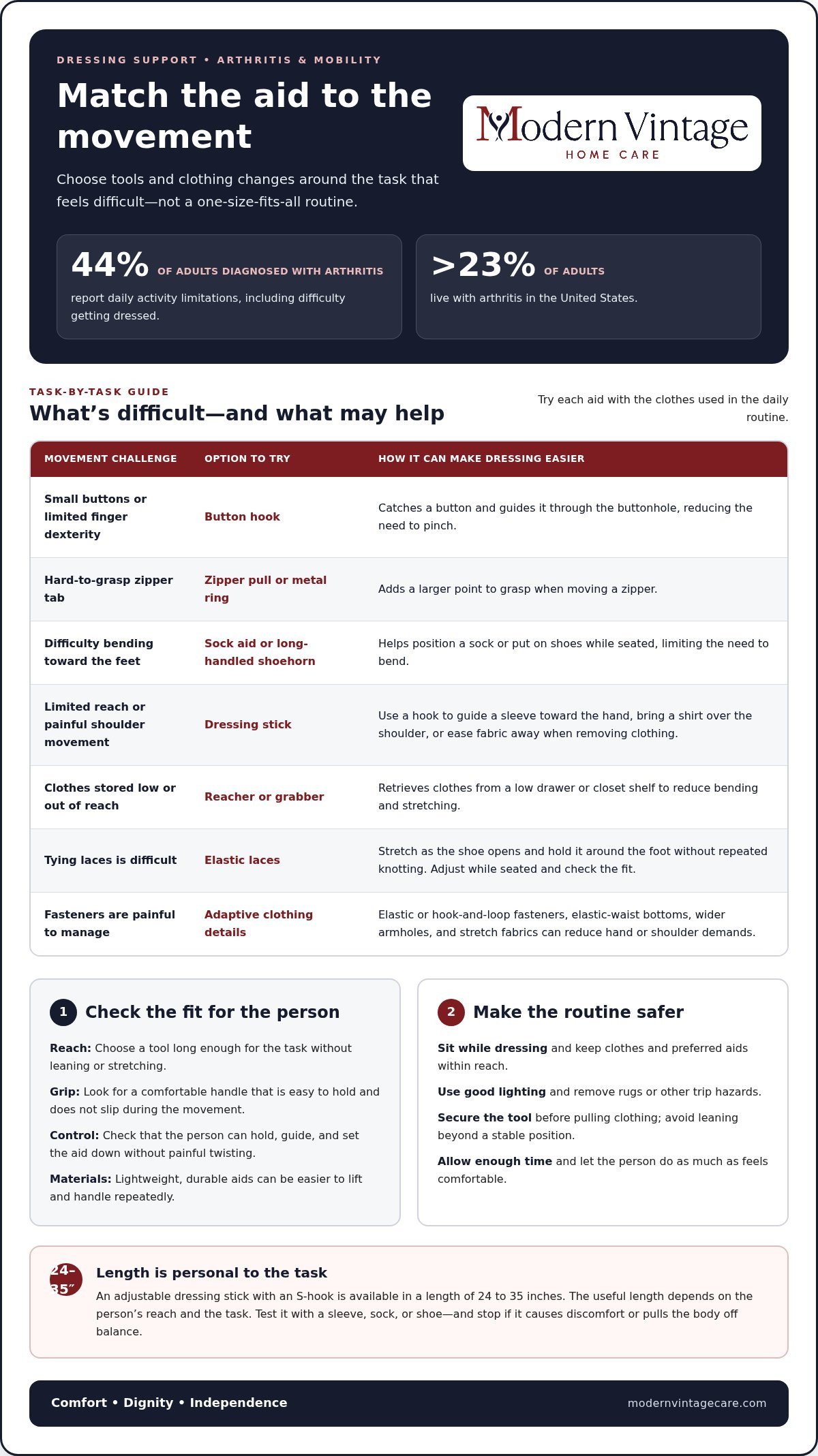
Arthritis can turn familiar clothing tasks into painful, tiring work. In the United States, 44 percent of adults diagnosed with arthritis report daily activity limitations, including difficulty getting dressed, and more than 23% of adults live with arthritis. Practical dressing assistance for elderly with arthritis can reduce twisting, bending, and reaching, while supporting comfort and independence. A safer routine starts by identifying which movement causes the most difficulty.
A dressing stick is a lightweight rod with hooks at both ends. Use one hook to guide a sleeve toward the person’s hand or bring a shirt over the shoulder without reaching behind the body. To remove clothing, use the hook to ease fabric away from the shoulder or pull a hem upward. Practise while seated and keep the stick beside the chair for easy access.
Clothing details can reduce strain on painful fingers and joints. Adaptive clothing may have elastic or hook-and-loop fasteners instead of small buttons and zippers. Wider armholes can make shirts easier to put on when shoulder movement hurts. Stretch fabrics move with the body, while cotton and bamboo offer soft, breathable options. Choose familiar styles where possible, so easier fasteners do not require replacing the person’s whole wardrobe.
Elastic-waist pants and skirts avoid the hand movements needed for traditional fasteners. Well-fitting, wide-leg pants can be easier to pull on while seated. A reacher or grabber can retrieve clothes from a low drawer or closet shelf, reducing the need to bend or stretch. For socks and shoes, a sock aid or long-handled shoehorn can limit bending. Families arranging dressing assistance for elderly with arthritis can match each tool to a specific daily task.
How much do dressing aids cost, and are they covered by Medicare? Prices vary by the aid’s design and materials. Medicare coverage depends on the specific item and applicable coverage criteria.
Where can older adults buy or borrow dressing aids? Pharmacies, medical-supply stores, and online retailers sell dressing aids; community loan closets may lend them. Look for a local loan program if the equipment is needed occasionally.
What safety concerns should be considered? Sit while dressing, use good lighting, and remove rugs or other trip hazards. Make sure a stick or grabber is secure before pulling clothing, and avoid leaning beyond a stable position.
2. Choosing aids for mobility, grip, length, and durability
Choose a dressing aid based on the movement that feels difficult. Someone who can reach their feet but struggles to grip may need a different tool from someone who cannot bend comfortably. Try each aid with the clothes used in the daily routine. Check whether the person can hold, guide, and set it down without painful twisting or stretching.
For small buttons, a button hook catches the button and guides it through the buttonhole, reducing the need to pinch. A zipper pull or metal ring attached to a zipper tab gives fingers a larger point to grasp. A sock aid can help position and pull up a sock without bending down. A long-handled shoehorn helps put on shoes while seated. Each aid reduces a specific hand or reach demand, rather than doing every dressing task.
Match the tool to mobility and hand strength:
- Limited finger dexterity: Try a button hook or zipper pull on the person’s usual shirt or jacket.
- Difficulty bending: Test a sock aid or long-handled shoehorn while seated.
- Limited reach: Choose a dressing aid long enough to reach without leaning or stretching.
- Unsteady grip: Look for a comfortable handle that’s easy to hold and doesn’t slip during the movement.
Lightweight, durable materials can make aids easier to lift and handle repeatedly. A dressing stick with an S-hook is available in an adjustable length of 24 to 35 inches, but the useful length depends on the person’s reach and the task. Test the tool with a sleeve, sock, or shoe before relying on it. Stop if it causes discomfort or pulls the body off balance.
What is the best way to dress with hand arthritis and limited grip? Sit down, lay clothes within reach, and choose garments with easy fasteners. Use a button hook for small buttons and a zipper pull for hard-to-grasp tabs. Allow enough time to complete each step.
What occupational therapy techniques help with dressing and arthritis? Break dressing into manageable steps, arrange clothes in the order they’ll be worn, and practise with aids that suit the person’s mobility and grip. Sitting while dressing and choosing aids recommended by a healthcare professional can also make the routine easier to manage.
Keep the preferred aids near the dressing area, such as a shoehorn beside the shoes. If dressing becomes difficult to manage alone, support with daily dressing routines may help maintain comfort and independence.
3. Elastic laces and magnetic shoe closures
Tying conventional laces requires finger control and reaching toward the feet. Elastic laces stretch as the shoe opens, then hold it around the foot without repeated knotting. For seniors with arthritis, they can make everyday footwear easier to put on and remove. Choose laces that let the shoe open wide enough for the person’s foot, then adjust them while seated. They should feel comfortable, not too tight or too loose.
Try the change with the shoes the person already wears. Remove the standard laces, thread the elastic laces through the eyelets, and adjust the tension evenly across the shoe. Check that the heel stays in place during a few steps. If the shoe still requires forceful pulling, a slip-on style or a shoe with Velcro straps may be easier. These options reduce tying, but fit and stability still matter.
Magnetic closures can replace small, fiddly fasteners in clothing and may help with footwear designed to use them. Their main benefit is avoiding a tight pinch between thumb and fingers. Check that the closure lines up easily and fastens with a gentle movement. If it takes a strong pull to open, it may not make dressing easier. A zipper pull attached to a tab can also provide a larger grip.
Waistbands can simplify dressing, too. Elastic-waist pants and skirts avoid traditional buttons and zippers, which can be challenging when hand joints hurt. Choose a waistband that stays comfortably in place without digging into the body. Stretch fabric can make it easier to pull clothes over the hips while seated. A one-handed belt with a simple fastening may help someone who needs a belt, but it should not replace a comfortable fit.
Test each change during the actual dressing routine, not just while holding the item. Sit in a stable chair, place the shoes nearby, and try putting them on without leaning far forward. Check the closure, heel fit, and comfort after walking indoors. If elastic laces make the shoes hard to loosen, adjust them before the next wear. The aim is to eliminate repeated tying or pinching, not add another task.
Small adjustments can help preserve choice. Let the person select familiar shoes and clothes, then adapt the fasteners where practical. Elastic laces can keep a preferred pair in rotation, while elastic-waist pants can reduce effort at the waist. If a closure causes discomfort or feels difficult to use, choose a simpler fastening or another clothing option.
4. Dressing challenges related to arthritis and reduced hand strength
Arthritis can affect the hands and other joints, making small dressing movements difficult. Buttoning a shirt, tying shoes, or pulling a zipper may require finger control that feels painful or tiring. Tasks can also combine movements, such as holding fabric steady while fastening a button. Identifying the hardest step helps families adapt the routine without taking over every part of getting dressed.
Notice where the difficulty occurs. If an older adult struggles with a shirt cuff, larger fasteners or a button hook may help. If pulling up a zipper hurts, a zipper pull can provide a larger grip. When arthritis affects one hand, putting the affected arm into a shirt first may reduce awkward positioning. Move at a comfortable pace and let the person guide which steps need support.
Morning stiffness can make getting dressed more challenging. Planning an outfit the night before reduces decisions in the morning and leaves time to ease into movement. A short walk or gentle stretching in the morning may help someone move their hands and legs more easily. Keep the clothes in order, with the easiest garment to put on first.
Small adjustments can conserve effort. Sit while dressing, keep clothing within reach, and choose garments with elastic fasteners or waistbands when buttons are difficult. For a button-down shirt that feels unfamiliar, allowing an extra 10 minutes can reduce pressure and frustration. If a task remains hard, offer help with that step, such as guiding a sleeve, while leaving manageable steps to the individual.
Caregivers can support independence by asking before helping and noticing what the person can do comfortably. Someone may manage a loose shirt but need help fastening a cuff. Offer steady support for balance when needed, then pause so the person can continue. This keeps assistance focused on the task without replacing the person’s choices.
Repeated difficulty may mean the clothes or dressing sequence need to change. Try a looser sleeve, simpler closure, or different order, then notice which option reduces effort. If pain or stiffness changes the routine, note the difficult movements and when they occur. These details can help the person and their care team discuss practical ways to make dressing more manageable.
5. Professional in-home personal care
When arthritis makes dressing difficult each day, an in-home caregiver can provide practical personal care. Support can focus on steps that cause pain or frustration, such as guiding an arm into a sleeve, steadying someone as they dress, or helping with a difficult fastener. The person can still choose their clothes and complete movements they can manage comfortably.
A respectful routine starts by asking what help the person wants. For dressing assistance for elderly with arthritis, a caregiver can lay out chosen clothes, explain the next step, and allow time to respond. They might help with a shirt cuff, then pause while the person fastens the remaining buttons independently. This keeps support focused and preserves choice.
A stable chair gives the person a place to sit while dressing. Good lighting makes sleeves, seams, and fasteners easier to see. Keep clothes and lightweight aids within reach, and remove rugs from the path between the chair and closet. These changes limit unnecessary movement and reduce balance challenges.
How can caregivers help an older adult with arthritis dress safely and respectfully? Ask before assisting, offer help with the difficult step, and let the person do what they can. A caregiver can arrange clothes in order, encourage seated dressing, and provide steady support without rushing or taking over.
Families can describe specific challenges, such as pain when raising one arm or difficulty reaching a waistband. This helps shape a personal care routine around the person’s abilities and preferences. Dressing assistance for elderly with arthritis should adapt when stiffness or comfort changes during the day.
Professional support may help when dressing becomes a regular source of strain for the person or family. It can also give a family caregiver respite while daily personal-care tasks continue. Explore help with personal care at home when hands-on dressing support could make the routine easier to manage.
Small adjustments can make dressing more manageable while leaving the person in control of the routine. Sitting down to put on pants and shoes can help someone with arthritis maintain balance. A caregiver can offer a stable place to sit and keep chosen items close, then ask whether help is wanted before beginning. The person sets the pace, can pause if a movement is uncomfortable, and can take over any step they manage comfortably. This focuses support on the difficult parts instead of turning dressing into a task done for them.
Sock assistance can be offered gradually and with clear communication. A caregiver can place the sock over the person’s toes, carefully slide it over the heel, and then pull it up the leg. Explain each movement and check that the person is comfortable before continuing. Pause if they want to adjust position or try the next part independently. A calm, responsive approach preserves choice during personal care. Families can tell the caregiver which steps are most challenging and what kind of help feels welcome, so the routine reflects the person’s preferences.
Modern Vintage Home Care: Alzheimer’s & Dementia Care
Modern Vintage Home Care provides Personal Care to help older adults manage daily routines, including dressing when arthritis makes certain movements difficult. A caregiver can help with clothing while respecting the person’s preferences and encouraging them to do what they can independently.
If memory changes make choosing clothes or following familiar steps harder, Alzheimer’s & Dementia Care can support a calmer, more consistent routine. Companionship can also bring a familiar, supportive presence to daily life. Families in Sugar Land, Missouri City, and Southwest Houston can consider in-home support when dressing becomes a regular source of stress or they need help maintaining a person-centered routine.
Contact Modern Vintage Home Care to discuss support for dressing and daily care.
Make the Next Dressing Routine Feel More Manageable
A helpful next step is to notice which part of getting dressed causes the most difficulty, then shape support around that need. A brief note about pain, stiffness, or fastening challenges can help families discuss practical support while preserving the older adult’s choices. That is the heart of dressing assistance for elderly with arthritis: helping with difficult steps while respecting what the person can do independently.
When regular hands-on help would ease daily life, Modern Vintage Home Care offers Personal Care and Companionship. Its Alzheimer’s & Dementia Care and 24-Hour Care can also support families whose needs extend beyond dressing assistance. The right level of help depends on the person’s daily routine and the support their family needs.
Contact Modern Vintage Home Care to discuss support at home. A thoughtful conversation can help you consider a comfortable next step for your family.
Frequently Asked Questions
Why are dressing aids so important for older adults?
Dressing aids can make daily clothing tasks easier when joint pain limits hand movement or reach. In the United States, 44 percent of adults diagnosed with arthritis report daily activity limitations, including difficulty getting dressed. For example, a zipper pull can make a small tab easier to grasp. A useful aid can reduce strain while letting the person handle the parts of dressing they can manage independently.
What dressing aids help older adults with arthritis get dressed independently?
The most useful aid depends on the task causing difficulty. A button hook can help with shirt buttons, while a sock aid supports putting on socks. A long-handled shoehorn helps with shoes, and a dressing stick can guide clothing within reach. Match one aid to one specific challenge, such as using a zipper pull on a jacket, rather than introducing several unfamiliar tools at once.
How do long-handled shoehorns and sock aids work for arthritis?
A long-handled shoehorn guides the heel into a shoe while the person stays seated, reducing the need to reach down and hold the shoe open. A sock aid holds the sock open so the foot can slide inside; the person then pulls the straps to bring the sock up. Practise with familiar shoes or socks and adjust the method if it causes discomfort.
What adaptive clothing features make dressing easier for seniors with arthritis?
Choose clothes that reduce pinching, twisting, or difficult reaching. Elastic waistbands avoid fastening a traditional waistband, while hook-and-loop closures can replace small buttons. Wider armholes may help someone put on a shirt with limited shoulder movement. Soft, breathable fabrics such as cotton or bamboo may feel comfortable against sensitive joints. Keep the person’s preferred style and everyday routine in mind.
How do you choose button hooks, zipper pulls, and dressing sticks for arthritis?
Choose an aid by testing the movement it is meant to support. A button hook should pass through the buttonhole and catch the button without forcing the fingers; a zipper pull should provide a loop that is easy to grasp. With a dressing stick, check whether the hook reaches the garment without requiring the person to lean. A comfortable handle and lightweight, durable construction can make an aid easier to control during repeated use.
