

The cost of senior errand services in Missouri City depends on the tasks, time, travel, and scheduling involved. A quote reflects the details of the requested support. The right arrangement can make everyday errands easier while respecting an older adult’s routines and preferences.
It’s understandable to want a clear budget before arranging help, especially when errands become tiring or difficult to manage alone. This guide explains what can affect costs, which everyday tasks errand assistance may cover, and where families can look for potential financial support.
You’ll also learn how to think through transportation and assistance needs, from grocery shopping to prescription pickup, so you can identify a practical next step with care and confidence.
Key Takeaways
- Understand which factors shape errand-service costs, including the tasks involved, time, travel, and scheduling.
- Explore how assistance with shopping, prescription pickup, and other everyday errands can ease routines while supporting independence.
- Consider transportation and personal needs when planning safe, considerate help outside the home.
- Call Missouri’s Senior Resource Line at 1-800-235-5503 to connect with a local Area Agency on Aging and learn about support options.
- See when companionship or personal care may be a better fit than help with errands alone.
How much does the service cost?
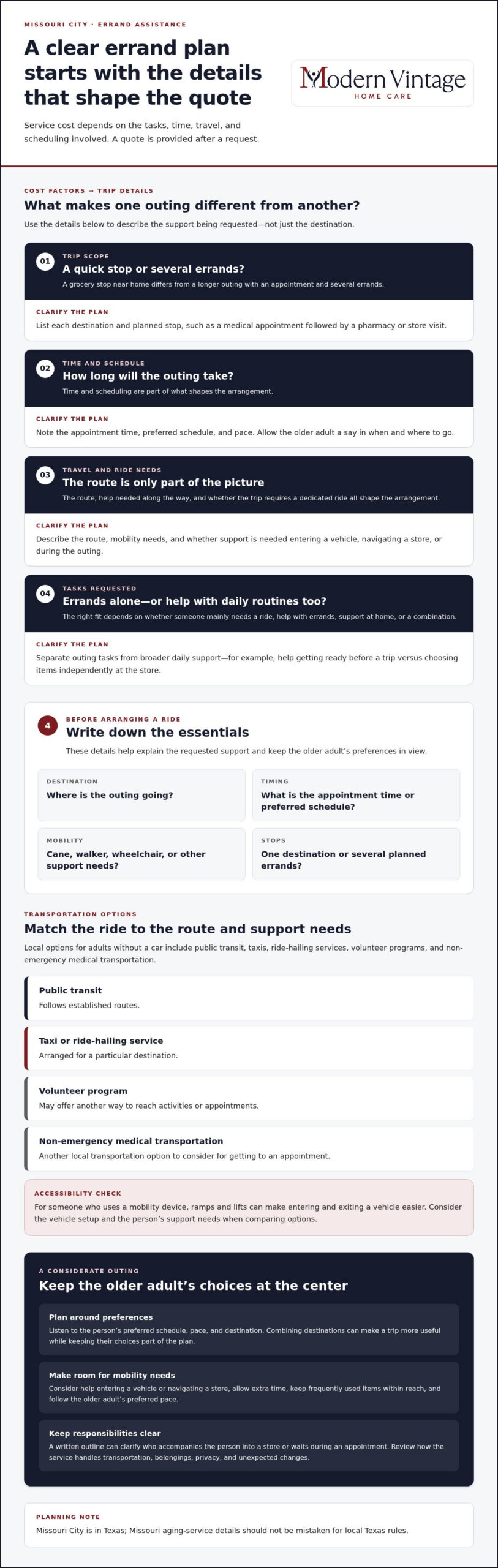
The price depends on the tasks, time, travel, and scheduling, and is provided after a quote request. A grocery stop near home differs from a longer outing with an appointment and several errands. For senior transportation in Missouri City, the route, support needed along the way, and whether the trip requires a dedicated ride all shape the arrangement.
Transportation support can help older adults reach medical appointments, grocery stores, social activities, and community events. A ride to an appointment, for example, might include a stop at a pharmacy or store. Combining destinations can make a trip more useful while giving the older adult a say in where and when to go.
That choice supports independence. Planning a visit with a friend or attending a community activity can help an older adult stay connected to familiar routines. Transportation assistance can also ease the pressure on family members coordinating every outing. Respectful support means listening to the person’s preferred schedule, pace, and destination.
Local transportation options for adults without a car include public transit, taxis, ride-hailing services, volunteer programs, and non-emergency medical transportation. Each works differently: public transit follows established routes, while a taxi or ride-hailing trip is arranged for a particular destination. Volunteer programs may offer another way to reach activities or appointments.
Older adults who use mobility devices may need accessible transportation. Ramps and lifts can make entering and exiting a vehicle easier for people using mobility devices. This may matter for a trip to a clinic, grocery store, or community event. The vehicle setup and the person’s support needs help determine which option is practical.
Senior errand services in Missouri City can help with practical outings and everyday tasks. Home-care agencies may address broader support needs, while volunteer programs provide community-based assistance. The right fit depends on whether the person mainly needs help getting somewhere, support with daily routines, or both.
Missouri City is in Texas, so Missouri’s aging-service details should not be mistaken for local Texas rules. For clarity, the St. Louis Area Agency on Aging serves people with disabilities ages 18-59 who reside within the boundaries of the City of St. Louis. That service boundary does not describe Missouri City.
Before planning a ride, write down the destination, appointment time, mobility needs, and any planned stops. Compare options by route, accessibility, scheduling, and the help needed during the outing. For example, a person traveling by wheelchair may prioritize an accessible vehicle, while someone attending a social event may need a ride that fits the event’s schedule.
Cost planning works best when the trip details are clear. Note whether the outing involves one destination or several, how much time it may take, and whether the older adult needs help beyond transportation. These details clarify the support requested and what the arrangement covers.
Safe and considerate errand assistance
Errand assistance focuses on specific outings and tasks. Home-care agencies may support broader daily routines, while volunteer programs provide community-based help. The best fit depends on whether an older adult needs occasional help with errands, ongoing assistance at home, or both.
Safe support starts with a plan shaped around the older adult’s preferences. Before leaving, note the destination, expected stops, mobility needs, and items to bring. A pharmacy trip, for example, may require a list and enough time to move comfortably. Clear planning can reduce stress for both the older adult and family members.
Mobility needs deserve attention at every stage. Consider whether the person uses a cane, walker, or wheelchair, and whether they need help entering a vehicle or navigating a store. A caregiver can allow extra time, keep frequently used items within reach, and follow the older adult’s preferred pace. Respectful assistance supports independence rather than taking over decisions.
Errands may also reveal a need for help at home. If dressing, preparing for an outing, or moving safely around the home has become difficult, personal care can support daily routines. For example, someone may need help getting ready before a grocery trip, then prefer to choose items independently. Support should reflect the person’s comfort and abilities.
Medical errands call for clear boundaries. Help getting to an appointment or picking up an item is different from medical care. Families can note the destination, appointment time, mobility considerations, and any information the older adult wants shared. Keeping details organized helps the outing stay focused and preserves the person’s privacy.
When choosing assistance for an older adult, look for relevant experience, a clear background-check process, and insurance suited to the assigned duties. Review how the service handles transportation, personal belongings, privacy, and unexpected changes. A written outline can clarify who handles each task, such as accompanying someone into a store or waiting during an appointment.
Information and assistance can also help families identify what kind of support fits. List the tasks that are difficult, such as walking through a large store, carrying bags, or keeping track of an appointment. Then distinguish occasional errand help from regular support with personal routines. If daily activities need attention alongside outings, explore personal care assistance as a related form of support.
Prescription pickup, grocery shopping, and package mailing
Errand assistance can help with prescriptions, groceries, household supplies, and community activities. A short written list organizes each stop around the older adult’s priorities.
Prescription Pickup and Package Mailing
Prescription pickup and package mailing are practical tasks that may involve a pharmacy or mailing location. Before an outing, write down the pharmacy, pickup details, mailing address, and any parcel instructions. Keep prescription errands separate from medical advice or medication decisions. The older adult or family can provide the information needed for the task.
For example, an outing might include a pharmacy visit followed by mailing a package. Grouping nearby stops can reduce repeated trips, while a clear list helps prevent forgotten items. Include timing needs and the preferred order of stops. If the older adult wants to stay involved, they can review the list before leaving.
Access to healthcare also means getting to medical appointments, not just collecting prescriptions. A written appointment address and arrival time can help organize the trip. If the outing includes a pharmacy stop, note whether it comes before or after the appointment. Plan around the person’s energy, mobility, and preferred pace.
Grocery and Household Shopping
Grocery shopping may include fresh food, pantry staples, and household supplies such as soap or paper products. Start with a list organized by store section or household need. Note preferred brands, substitutions, and items the older adult wants to choose personally. This balances practical help with the individual’s preferences.
Shopping can work in different ways: the older adult may go along, or someone may shop from a provided list. For a shared trip, identify heavier items beforehand and plan where bags will go afterward. If the older adult prefers to stay home, a clear list and preferred alternatives can guide the shopping.
Household shopping can reveal needs that routine errands don’t address. A nearly empty pantry, missing cleaning supplies, or difficulty carrying bags may suggest adjusting the list or arranging help putting items away. Light housekeeping is a separate task, so distinguish it from shopping when planning assistance.
Errands can support access to community activities as well as necessities. A grocery stop might be paired with a visit to a familiar community destination, if that suits the older adult’s plans. Keep personal choices central: ask which items matter, allow time to review substitutions, and organize purchases so frequently used supplies stay within easy reach.
Before each outing, use a simple checklist: destination, items or task, and any preference that affects the errand. For example, note the pharmacy name, grocery list, and preferred mailing location. This routine keeps assistance focused and gives family members a clear picture of what the outing covers.
Costs and financial support resources
The cost of errand assistance depends on the tasks, travel, time, and scheduling involved. A grocery trip with several stops differs from a single pickup, so describe the routine when requesting a quote from Modern Vintage Home Care. List the destinations, how often help is needed, and whether the older adult needs support during the outing. These details help families compare the requested assistance with their budget.
For older adults living in Missouri City, Texas, local aging support is coordinated through the Houston-Galveston Area Council (H-AGAC) Area Agency on Aging. This regional agency connects older residents and their families in Fort Bend and surrounding counties with community-based aging services, caregiver support, and resource navigation tailored to local needs.
Because Missouri City is located in the Greater Houston area of Texas, state-specific resources for Missouri do not apply here. For local Texas residents, the Texas Health and Human Services Commission oversees health and human services programs across the state, offering guidance through their website and local offices.
Potential ways to pay for broader home-care services include long-term care insurance and the VA’s Aid and Attendance program. Coverage depends on the policy or program, and home-care support is not automatically the same as a standalone errand. Review the plan’s terms and describe the actual need, such as help reaching a grocery store or support with daily living.
- Long-term care insurance: Review policy language for covered home-care services and any conditions for using benefits with providers like Modern Vintage Home Care.
- VA Aid and Attendance: Veterans and caregivers can explore whether this benefit applies to their home-care needs and daily assistance.
- Medicare guidance: Texas SHIP (State Health Insurance Assistance Program) provides free, unbiased, confidential Medicare assistance to Texans.
Medicare’s GUIDE Model provides resources for people with dementia and family caregivers. Families managing dementia-related routines can include this resource in their planning, alongside a clear list of errands and support needs. Texas SHIP can help with Medicare questions, while the local Area Agency on Aging can explain community programs for eligible residents in Missouri City.
Keep a simple cost-planning record: note the errand, destination, frequency, and assistance needed. For example, separate a regular grocery trip from occasional package mailing or appointment transportation. Caregivers can record the older adult’s preferences and use the list when discussing insurance benefits or community programs. This clarifies the request and helps families identify recurring costs.
Missouri City senior errand services
In Missouri City, transportation assistance can help older adults reach appointments, stores, and community activities. The practical choice depends on whether the person needs a ride, help completing an errand, or broader support with daily routines.
For transportation and grocery shopping in Missouri City, options include taxi and ride-hailing services, volunteer programs, and non-emergency medical transportation. Errand assistance may also help with shopping and other practical tasks. Match the option to the destination, mobility needs, and whether support is needed inside the store.
Start by listing regular destinations: a medical appointment, grocery store, pharmacy, or social activity. Add preferred days and times, mobility considerations, and whether the older adult wants to attend in person. This helps clarify whether a ride alone is enough or whether help completing the errand matters too.
Keeping older adults involved in decisions can support independence and quality of life. They might choose the grocery store, decide which community event to attend, or set the appointment schedule. A family member can organize details while respecting those preferences. For example, an older adult who wants to shop personally may need transportation and help carrying items, not someone to shop instead.
Driving concerns can lead families to consider alternatives. Getting lost in familiar areas, frequent near misses, and minor accidents are potential signs to explore other transportation arrangements. There is no specific age at which an older adult must stop driving. Discussing options in response to specific concerns keeps the focus on safe mobility and daily plans.
Some errands point to needs beyond transportation. If getting ready for an appointment involves difficulty with bathing or other personal routines, a ride alone may not address the challenge. Broader in-home support may be more appropriate when daily activities need assistance alongside outings. Separating these needs helps families identify the right kind of help.
For a useful first conversation, prepare three details: the destination, the task, and the assistance needed. For example, describe a clinic visit, a grocery stop, and whether the person needs help entering either location. Include any mobility device and preferred schedule. This gives a transportation service or agency a clear picture of the outing.
Choose support around the older adult’s actual routine, not a generic checklist. If the need centers on appointments and shopping, focus on transportation and errand help. If daily routines also require attention, explore personalized in-home support as a next step for maintaining comfort and independence.
Options for rides include taxis and ride-hailing services, volunteer programs, and non-emergency medical transportation. Errand assistance may help with grocery shopping or other practical tasks, including support inside a store.
Modern Vintage Home Care: Alzheimer’s & Dementia Care
Modern Vintage Home Care offers Alzheimer’s and dementia care, companionship, and personal care for older adults whose needs extend beyond errands. Consider this support when memory changes make familiar routines harder, or when getting ready for outings and managing daily activities require more assistance. Companionship can add consistent social connection, while personal care supports everyday needs with attention to dignity and individual preferences. Families can describe the routines that feel difficult, such as preparing for an appointment or maintaining familiar activities, and discuss the type of support that may fit. If you’re considering a more personal level of help for someone you love, contact Modern Vintage Home Care.
Choose Support That Can Grow With Changing Needs
Start by identifying what would make the coming weeks feel more manageable. A simple list of errands, daily routines, and concerns can help your family distinguish occasional help from a need for more consistent support. As needs change, the plan can change too, while keeping the older adult’s preferences and dignity at the center.
For families whose needs extend beyond outings, Modern Vintage Home Care offers Alzheimer’s and dementia care, 24-Hour Care, and companionship. These services can support older adults and give families another way to approach changing care needs at home. If you’re considering senior errand services in Missouri City alongside broader help, take the next step by describing the routines that are becoming difficult and the support that matters most.
Contact Modern Vintage Home Care to discuss care for your family. A thoughtful conversation can help you move toward support that feels more manageable and person-centered.
Frequently Asked Questions
What senior errand services are available in Missouri City, Texas?
Options include transportation, grocery shopping, prescription pickup, and help with other everyday errands. Older adults may use public transit, taxis, ride-hailing, volunteer programs, or non-emergency medical transportation for rides. Concierge services can help with routine needs, while companionship or personal care may suit someone who needs broader support at home. The right option depends on the task, mobility needs, and level of assistance wanted.
What tasks do senior errand services in Missouri City typically handle?
Common errands include grocery shopping, prescription pickup, mailing packages, and traveling to appointments. A family can make a written list of preferred brands, destinations, and timing needs. For example, an outing might include a pharmacy stop before grocery shopping. Errand help is distinct from medical care, so prescription instructions should focus on pickup, not medication decisions or clinical advice.
How much do senior errand and companion services cost in Missouri City?
Costs depend on the requested tasks, time, travel, and scheduling. A nearby pickup differs from a longer outing with several stops or added companionship. To understand a quote, describe the usual destinations, how often help is needed, and whether the older adult wants someone to accompany them inside. Modern Vintage Home Care offers a no-obligation care consultation to discuss needs and costs, which vary by type, location, and level of care.
Are there free or low-cost errand services for seniors in Fort Bend County?
To explore lower-cost help, contact Fort Bend County aging-service offices and local community organizations about transportation or volunteer programs. Explain the specific need, such as a ride to an appointment or help carrying groceries. Ask about eligibility, service-area boundaries, or scheduling rules. Program terms can differ, so provide the older adult’s ZIP code and describe their mobility needs when requesting local resource information.
How can a senior or caregiver arrange and schedule local errand services?
Begin with a short plan: list each errand, destination, preferred day, and any mobility or communication needs. Then decide whether the older adult wants a ride only or help completing the task. Share practical details, such as store preferences and appointment times, and update the list when plans change. A caregiver can coordinate while inviting the older adult to choose priorities and maintain control over the outing.
Do Medicare, Medicaid, or veterans benefits cover senior errand services in Texas?
Coverage depends on the benefit, eligibility, and type of support, so don’t assume standalone errands are covered. The VA’s Aid and Attendance program can be used to pay for home-care services. Medicare’s GUIDE Model offers resources for people with dementia and family caregivers, but it is not a general promise of errand coverage. Before budgeting, identify whether the need is transportation, home care, or dementia-related caregiver support.
What qualifications, background checks, and insurance should senior errand providers have?
When choosing help for an older adult, look for relevant experience, a clear background-check process, and insurance suited to the assigned duties. Review how the service handles transportation, personal belongings, privacy, and unexpected changes.
