

Nearly one-fourth of adults aged 65 and older are socially isolated. Loneliness and isolation can affect emotional and physical health, so reducing loneliness in elderly parents involves more than arranging occasional visits. Regular, meaningful connection and a timely conversation with a primary care provider can help families respond to what’s changing.
It’s understandable to worry when a parent seems withdrawn, has fewer social connections, or no longer enjoys familiar routines. Small, thoughtful steps can make connection feel more natural. Noticing changes in mood or daily life can also help you decide when to discuss your concerns with their provider.
This article explains the difference between loneliness and social isolation, how each may affect well-being, and practical ways to stay connected through family contact, community activities, and technology. You’ll also find guidance on what to share with a primary care provider so the conversation reflects your parent’s well-being and preferences.
Key Takeaways
- Learn how loneliness differs from social isolation, so you can better understand what your parent may be experiencing.
- Explore practical ways to make video calls, messages, and online communities feel more comfortable and meaningful.
- Build connection into everyday life with thoughtful check-ins and activities that suit your parent’s interests and abilities.
- Recognize potential mental and physical health effects, and prepare to discuss changes in mood, routines, or social contact with a primary care provider.
- See how companionship and other in-home support may help when your parent would benefit from more connection in daily life.
1. What is the difference between loneliness and social isolation?
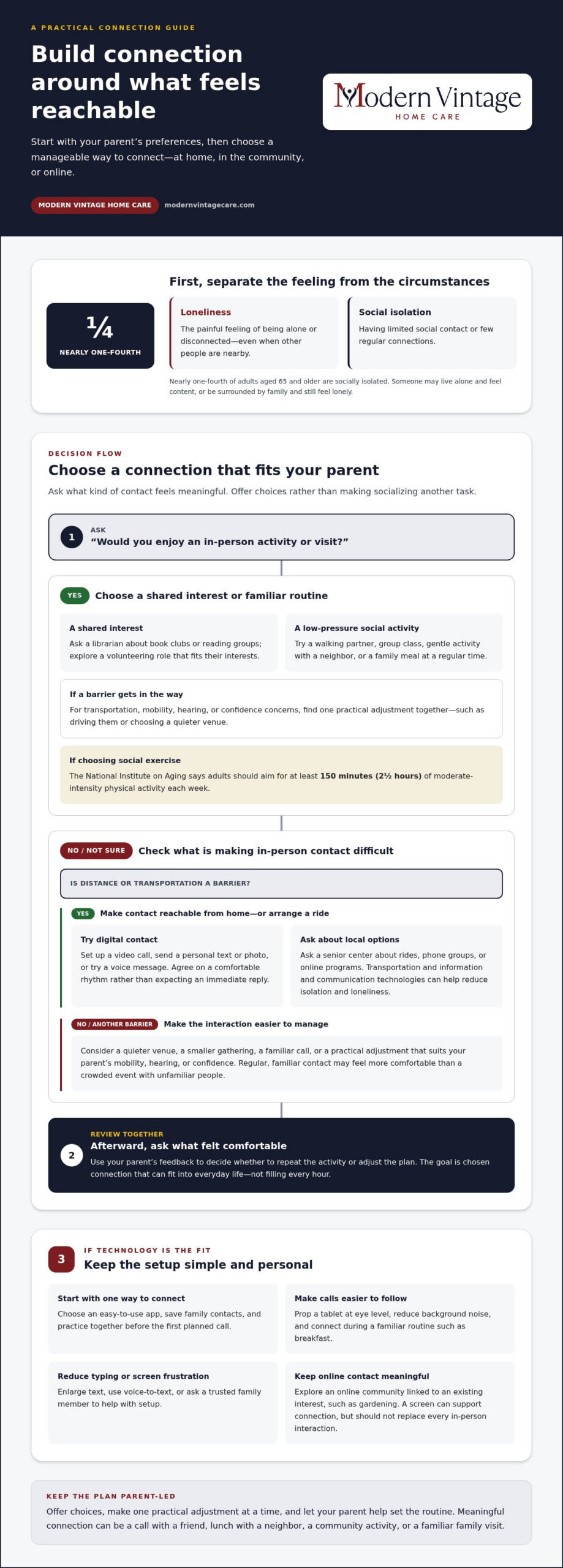
Loneliness is the painful feeling of being alone or disconnected, even when other people are nearby. Social isolation describes having limited social contact or few regular connections. An older adult might live alone yet feel content, while someone surrounded by family may still feel lonely. Nearly one-fourth of adults aged 65 and older are socially isolated, so noticing both feelings and circumstances matters.
To help reduce loneliness in elderly parents, ask what kind of contact feels meaningful, then make it easier to happen. You might arrange lunch with a neighbor, call after a favorite television program, or accompany your parent to a library book club. Regular, familiar contact can feel more comfortable than a crowded event with unfamiliar people.
Offer choices rather than treating socializing as another task to manage. Ask your parent to choose between calling a friend, visiting a community group, or inviting a neighbor over for coffee. Let them help choose the activity and establish a routine. If transportation, mobility, hearing, or confidence is a barrier, find one practical adjustment together, such as driving them or choosing a quieter venue.
- Try a library: Ask a librarian about book clubs, reading groups, or other social programs. A shared interest gives conversation an easy starting point.
- Explore volunteering: Help your parent find a role that fits their interests, such as sorting donations or welcoming visitors at a community event.
- Make exercise social: Consider a walking partner, group class, or gentle activity with a neighbor. The National Institute on Aging says adults should aim for at least 150 minutes (2 1/2 hours) of moderate-intensity physical activity each week.
- Build a familiar routine: Set a regular time for a family meal, a call with a friend, or a visit to a community center.
Keep the plan manageable and shaped around your parent’s preferences. If they enjoy gardening, invite a neighbor to help plant herbs; if they prefer conversation, suggest a small book group instead of a large gathering. Afterward, ask what felt comfortable and whether they would like to do it again. Their feedback can guide the next step.
When local options are hard to find, the Administration for Community Living says older adults and their families in the United States can call the Eldercare Locator at 800-677-1116 for help finding local support resources. For families reducing loneliness in elderly parents, the goal is not to fill every hour. It is to support chosen connections that feel worthwhile and can become part of everyday life.
2. Video calls, messaging apps, and online communities
A video call can bring familiar faces into your parent’s day, especially when distance or transportation makes visits difficult. Choose an easy-to-use app, save family contacts, and practice together before the first planned call. Prop a tablet at eye level, reduce background noise, and build calls into a routine, such as sharing breakfast or discussing a favorite television program.
Messaging works best when it feels personal, not demanding. Send a short text, a photograph of a grandchild’s drawing, or a voice message about a shared memory. If small screens or typing are frustrating, enlarge the text, use voice-to-text, or ask a trusted family member to help with setup. Agree on a comfortable communication rhythm instead of expecting an immediate reply.
Online communities can connect older adults through interests they already enjoy. A parent who likes gardening might join an online discussion hosted by a local gardening group, while someone with chronic illness may value a moderated peer support group. If your parent has cognitive changes or dementia, keep the steps simple and familiar, and join in if they would like company. A screen can support connection, but shouldn’t replace every in-person interaction.
Digital access and transportation both affect whether social opportunities feel reachable. The World Health Organization notes that better access to transportation and information and communication technologies can help reduce social isolation and loneliness. If your parent wants to attend a senior center, ask about rides; if travel is difficult, find out whether it offers phone groups or online programs.
Volunteering and support groups can also create opportunities to connect. Help your parent find a manageable role, such as greeting visitors at a neighborhood event or sorting items for a local donation drive. A shared task gives conversation a natural focus. At home, regular companionship visits can bring interaction into daily routines. Senior living communities may offer group activities and opportunities to meet residents with similar interests.
- Make technology approachable: Set up one device and one preferred way to connect, then write simple instructions beside it.
- Pair online and in-person contact: Follow a video call with a planned visit, community activity, or shared meal.
- Match support to the need: Medicare, Medicaid, and local programs have different eligibility requirements and services. Ask specifically about the support needed, such as transportation, in-home companionship, or a community group, because these are distinct services.
Let your parent choose what feels useful, then revisit the plan after trying it. A video call may suit someone who prefers quiet conversation, while a volunteer role or senior center group may appeal to someone who enjoys being around people. The best approach respects their comfort, abilities, and interests.
3. Keeping in touch with family, friends, and neighbors
Families who live far away can stay connected through regular calls, letters, and planned visits. Agree on a weekly check-in that suits your parent, such as a Sunday phone call or video chat after breakfast. When face-to-face visits aren’t possible, a familiar voice can still create space for conversation. Ask about everyday things, like a favorite meal or a neighbor’s garden, rather than making every call feel like a health update.
Consistency often matters more than lengthy conversations. Your parent might enjoy a short daily call from one family member and a longer weekly conversation with another. Relatives can share updates in a family group message or shared calendar, so your parent doesn’t have to repeat information. Include them in everyday decisions, such as choosing a meal for the next visit, to help them feel involved rather than simply checked on.
Friends and neighbors can offer connection close to home. With your parent’s permission, ask a trusted neighbor to say hello during a walk, bring in the mail, or invite them for coffee. Make the invitation specific and easy to accept: “Would you like to sit outside together this afternoon?” If social plans feel difficult, offer to accompany your parent to a familiar gathering before encouraging independent visits.
Family caregivers also need boundaries that protect their time and reduce stress. Decide what you can reliably offer, then explain it clearly: “I can call after work on weekdays, and we’ll plan visits together.” Invite siblings or other relatives to take on specific tasks, such as arranging transportation or contacting an old friend. Sharing responsibilities helps keep family contact dependable without leaving one person to manage everything.
Stay curious about changes without turning each interaction into an assessment. If your parent stops answering friends, avoids a favorite activity, or seems unusually withdrawn during calls, describe what you’ve noticed and invite a conversation. Note when the change began and which routines have shifted. These details can help you decide whether to discuss possible symptoms or isolation with a primary care provider.
- For distance: Set recurring calls and plan the next visit before ending the current one.
- For local support: Ask your parent which friend or neighbor they’d welcome hearing from.
- For caregiver limits: State what you can offer and share practical tasks among family members.
Keep the routine flexible. If a scheduled call doesn’t work one week, send a message and agree on another time. A dependable pattern built around your parent’s preferences and each caregiver’s capacity can keep relationships warm without making connection feel like an obligation.
4. Mental and physical health risks associated with loneliness
Bereavement, limited mobility, chronic health concerns, and financial strain can make social contact difficult for older adults. A parent who stops driving may lose access to friends, exercise classes, or community events. As social connections shrink, loneliness can develop even when family members stay in touch. Take these effects seriously, while remembering that loneliness isn’t a personal failing.
Loneliness is linked with mental and physical health concerns. The U.S. surgeon general has compared the potential health harm of chronic loneliness to smoking 15 cigarettes a day. In a UCSF study, adults aged 60 or older who reported loneliness had a 45% increased risk of death and a 59% higher risk of mental and physical decline. These findings describe increased risk, not an outcome for every individual.
Social isolation is also associated with health risks. Among adults aged 50 and older, it is associated with a 29% increased risk of heart disease, a 32% increased risk of stroke, and close to a 50% increased risk of dementia. It is also associated with increased emergency room visits and hospitalization. These connections matter because fewer social contacts can make it harder for someone to keep routines, seek help, or stay active.
Look for patterns rather than drawing conclusions from one quiet day. If your parent stops attending a favorite activity, avoids friends, or seems persistently low, gently ask what has changed. Mobility limits, hearing difficulties, health concerns, and transportation costs can all affect participation. Record specific observations, such as missed gatherings or changes in usual activity, to share during a health appointment.
Social media and video calls may help maintain contact, but they don’t replace every kind of connection. A family call, a neighbor’s visit, or a shared activity can offer conversation and a reason to engage. Match the activity to your parent’s interests and abilities. For example, suggest a seated group activity if walking is difficult, or help arrange a ride to a familiar community program.
Small, meaningful activities can support well-being. The National Institute on Aging says meaningful activities can lower the risk of dementia and physical health problems in seniors. Ask your parent to choose something enjoyable, such as talking with a friend, light gardening, or attending a community gathering. If isolation is affecting daily life or mood, discuss what you’ve noticed with a primary care provider.
- Notice changes: Track shifts in social routines, mood, and participation.
- Reduce barriers: Consider whether mobility, health, or transportation makes connection harder.
- Choose together: Find an activity your parent enjoys and can comfortably take part in.
5. Discussing isolation with a primary care provider
Raise the subject when your parent says they feel lonely, withdraws from familiar activities, or has difficulty staying connected. A primary care visit is an opportunity to discuss these feelings alongside sleep, appetite, mood, mobility, and other changes. Start with an observation, such as, “You haven’t been meeting your friends lately. How have you been feeling?” Then ask whether your parent would like you to join the conversation.
Specific examples help a provider understand what has changed. Note when your parent stopped attending a book club, began missing calls, or could no longer drive to social activities. Describe how often these changes occur and what your parent says about them. Rather than labeling them as simply lonely, explain their own words and how daily routines are affected.
Give your parent space to speak first, if they’re comfortable. You can add context respectfully, especially if memory or communication challenges make details difficult. Ask the provider whether health concerns, medication effects, hearing, mobility, or mood could be affecting social interaction. The aim is to identify barriers and discuss meaningful ways to support connection.
- Prepare a brief note: Include changes in social contact, mood, daily activities, and the time those changes began.
- Ask directly: “Could isolation be affecting my parent’s well-being?” and “What could make regular interaction easier?”
- Discuss practical barriers: Mention transportation, difficulty using a phone, financial strain, or health limits that interfere with visits.
- Agree on a next step: Write down the provider’s suggestions, such as addressing a health concern or identifying a suitable community activity.
These conversations matter because loneliness may not come up during a routine appointment. In the past two years, 19% of National Poll on Healthy Aging participants discussed a mental health concern with their primary care provider. Only 10% of medical practitioners asked older adult patients about loneliness and social isolation during routine medical exams. Raising the subject clearly helps bring your parent’s experience into the discussion.
After the appointment, ask your parent which suggestion feels manageable. They might prefer a call with a friend, help getting to a community activity, or another conversation with their provider. Keep track of the agreed step and discuss changes at a future visit. If family members need help supporting daily connection at home, explore options for in-home support.
Modern Vintage Home Care: Alzheimer’s & Dementia Care
Modern Vintage Home Care provides Alzheimer’s & Dementia Care for families whose parent needs support as memory changes affect daily routines and social connection. Companionship offers conversation and familiar interaction at home, while Personal Care helps with everyday personal needs. These services may help when arranging visits and family calls isn’t enough to support your parent’s day-to-day needs.
As you consider support, note what your parent enjoys, which routines feel difficult, and where they would welcome assistance. Share these priorities when discussing care so the support reflects your parent’s preferences and dignity.
Contact Modern Vintage Home Care to discuss support for your parent.
Make connection part of the care plan
A meaningful next step is to ask your parent what kind of support would feel welcome, then turn that preference into a simple plan. They may want a familiar companion during the day, help maintaining daily routines, or more consistent support at home. Let their comfort and choices guide the conversation as their needs change.
Reducing loneliness in elderly parents can take patience, especially when health or memory changes affect familiar relationships. Modern Vintage Home Care offers Companionship, Alzheimer’s & Dementia Care, and 24-Hour Care for families seeking support at home. If you’re considering care, share what your parent enjoys, what has become difficult, and where additional help could make daily life feel more connected.
Contact Modern Vintage Home Care to discuss your family’s needs. A thoughtful conversation can help you find a supportive next step while keeping your parent’s dignity and preferences at the center.
Frequently Asked Questions
How can feeling lonely or being isolated affect older adults’ health?
Loneliness and isolation can affect emotional well-being and are associated with physical health risks. If your parent seems withdrawn, consider whether pain, difficulty getting around, hearing changes, or fewer chances to see others may be contributing. Share specific changes with their primary care provider, such as missing a regular activity or losing interest in a favorite pastime. This context can support a thoughtful discussion about next steps.
What Are the Consequences of Loneliness?
Loneliness can affect mood, motivation, and a person’s sense of connection, while social isolation is associated with health risks including heart disease, stroke, and dementia. These associations don’t mean loneliness leads to the same outcome for every older adult. Watch for changes in daily functioning, such as skipped meals or less interest in usual routines. If these changes persist, share them with a primary care provider and ask what support may help.
What is the difference between loneliness and social isolation?
Loneliness describes feeling alone or disconnected; social isolation describes having limited contact with other people. Your parent may have frequent visitors yet still feel misunderstood, or live alone and feel content. Ask what connection means to them instead of assuming that more visits will solve the problem. They may prefer a quiet conversation with one trusted friend over a busy group gathering. Their perspective can guide the support you offer.
What local senior centers, social clubs, or activities are available for older adults?
In Sugar Land, Missouri City, and southwest Houston, start by looking for nearby senior centers, library programs, faith communities, recreation activities, and interest-based clubs. Availability varies by neighborhood and by what your parent enjoys. Ask local libraries or community organizations about activities such as crafts, discussion groups, or shared meals. The Administration for Community Living says families in the United States can call the Eldercare Locator at 800-677-1116 for help finding local support resources.
How can an elderly parent find suitable volunteer opportunities or community groups?
Match the opportunity to your parent’s interests, energy, and preferred level of interaction. Someone who enjoys animals might ask a local shelter about suitable volunteer tasks; a former teacher might enjoy helping with a community reading activity. List activities they find meaningful, then contact organizations to learn what each role involves. Consider travel, accessibility, and whether your parent would like you to accompany them on an introductory visit.
What technology and video-calling tools are easiest for seniors to use?
The easiest option is usually a device and calling method your parent already recognizes. Set up one familiar contact, place the call button somewhere visible, and practice answering and ending a call together. Larger text, saved contacts, and a written instruction card can reduce frustration. If hearing or vision affects calls, adjust the device’s sound and display settings. Choose a tool your parent finds comfortable instead of adding several new apps at once.
When should loneliness in an older adult prompt screening for depression or professional help?
Discuss the concern with a primary care provider if withdrawal, sadness, loss of interest, or changes in everyday routines persist or interfere with your parent’s life. Share examples and explain when you first noticed them. A provider can discuss mood and health concerns and consider whether further assessment or support is appropriate. If your parent expresses thoughts of self-harm, seek immediate help from emergency services or a qualified medical professional.
How can caregivers encourage social connection while respecting an older parent’s independence?
Offer choices and let your parent decide which invitations feel worthwhile. Ask whether they’d prefer a call with a friend, a visit to a familiar group, or a quiet afternoon together. Get permission before arranging plans or sharing personal concerns with others. If an activity feels difficult, explore a practical adjustment together, such as choosing a more accessible venue. Reducing loneliness in elderly parents should support their preferences, not replace their decisions.
