
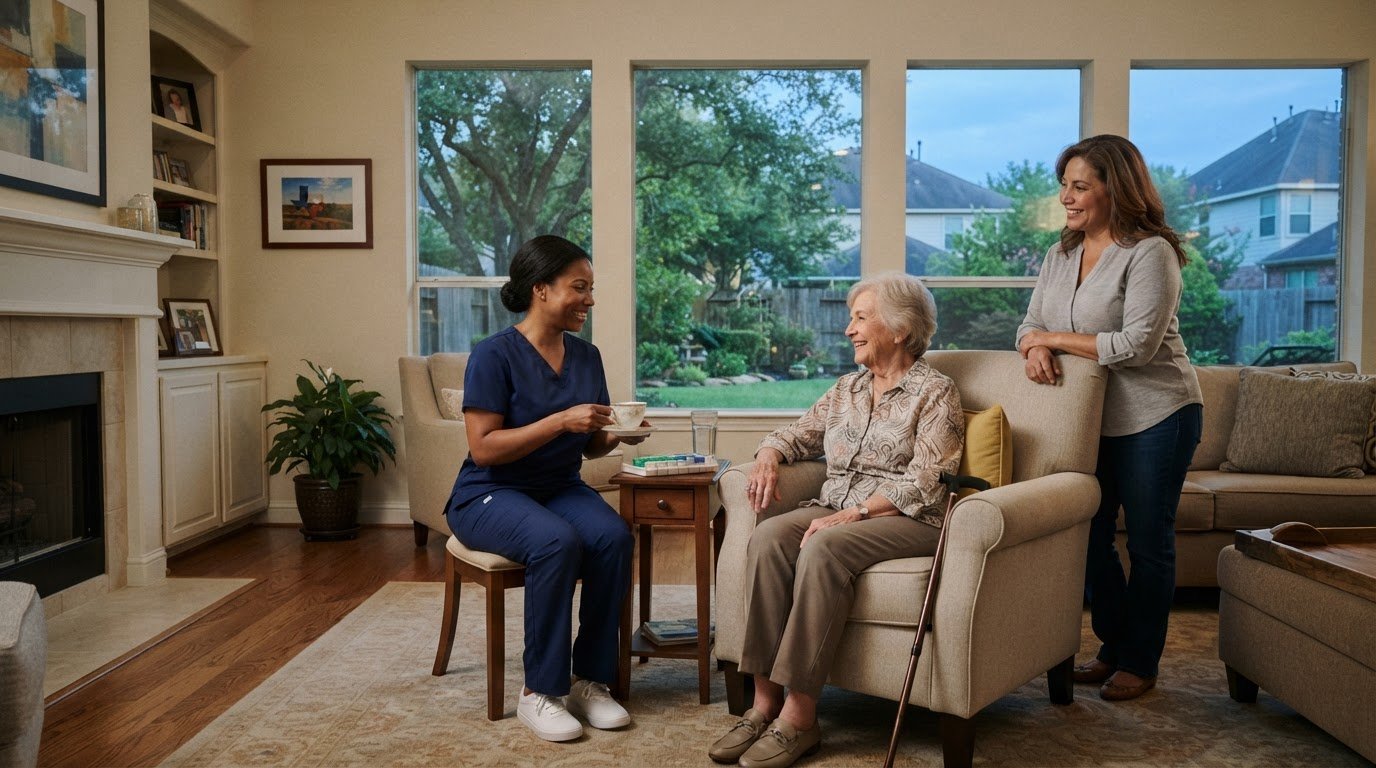
Could a caregiver’s presence at home offer your loved one more support without taking away their independence? Families searching for live-in elder care Sugar Land TX often face a practical question: would daytime assistance with an overnight rest period fit their loved one’s needs, or is round-the-clock coverage more appropriate?
It’s understandable to want reassurance that support is available when daily routines change, while still honoring your loved one’s preferences and familiar home life. The right plan starts with those needs, not simply a care label.
This guide explains how live-in arrangements differ from 24-Hour Care, what daily assistance may include, and how to assess daytime and overnight coverage. You’ll also learn how companionship, personal care, dementia support, and respite care can fit into a personalized plan. For families in Sugar Land, Missouri City, and Southwest Houston, Modern Vintage Home Care provides non-medical in-home support shaped around each person’s routines and preferences. Its 24-Hour Care offers round-the-clock support, a distinct arrangement from live-in care.
Key Takeaways
- Live-in elder care Sugar Land TX describes an in-home arrangement, but the right schedule depends on the older adult’s routines and coverage needs.
- Map daily tasks, companionship needs, and overnight expectations to clarify what support could make home life more manageable.
- Compare live-in arrangements, 24-Hour Care, and assisted living by setting, flexibility, and the type of support each provides.
- Use a practical checklist to consider changing needs, home layout, family capacity, and your loved one’s preferences.
- An assessment and personalized care plan can help match support with caregiver compatibility, skills, and preferences.
What Does Live-In Care in Sugar Land Mean?
How can consistent help fit into life at home without making an older adult feel that their routines or choices are no longer their own? Families considering live-in elder care Sugar Land TX may be looking for a steadier presence as daily support needs change. The term describes an in-home care arrangement, but it does not define one universal staffing pattern or guarantee the same coverage for every household.
In common usage, live-in care involves a caregiver staying in the older adult’s home. The schedule, planned breaks, overnight expectations, and assistance provided depend on the care plan. A caregiver’s presence in the home does not necessarily mean someone is awake and available every moment. By contrast, 24-Hour Care is organized to provide round-the-clock support through caregivers working shifts.
Live-in describes an in-home arrangement, not a promise of uninterrupted, awake coverage. Focus on the practical details: which parts of the day need help, whether overnight assistance is needed, and how the older adult wants to live at home. The broader elderly care landscape includes several settings and types of support, so understanding the arrangement’s details makes comparisons clearer.
What Support Can Live-In Care Help With?
Non-medical in-home support can help with familiar daily routines, such as getting dressed, preparing meals, and keeping everyday household tasks manageable. Companionship might mean conversation, a favorite activity, or a reassuring presence during the day. Medication support, when included in a care plan, consists of reminders and prompts, not medication administration.
The goal is to support the person, not take over their life. A caregiver can follow established preferences, offer choices, and encourage the older adult to do what they can comfortably manage. For example, help with meal preparation can still leave room for the person to choose what to eat or take part in a familiar cooking task.
When Might Families Explore More Consistent In-Home Support?
Families may consider more consistent support when everyday tasks are becoming harder to manage alone, routines are often interrupted, or an older adult misses regular companionship. Relatives may also feel uneasy about long stretches without support, especially if they cannot be present as often as they would like. These concerns are reasons to start a conversation, not a diagnosis.
An assessment can help clarify what assistance would be useful, which routines matter most, what the home environment is like, and what the older adult prefers. From there, a plan can be shaped around daily needs rather than assumptions about what a live-in arrangement includes.
How Live-In Elder Care Fits Daily Routines and Coverage Needs
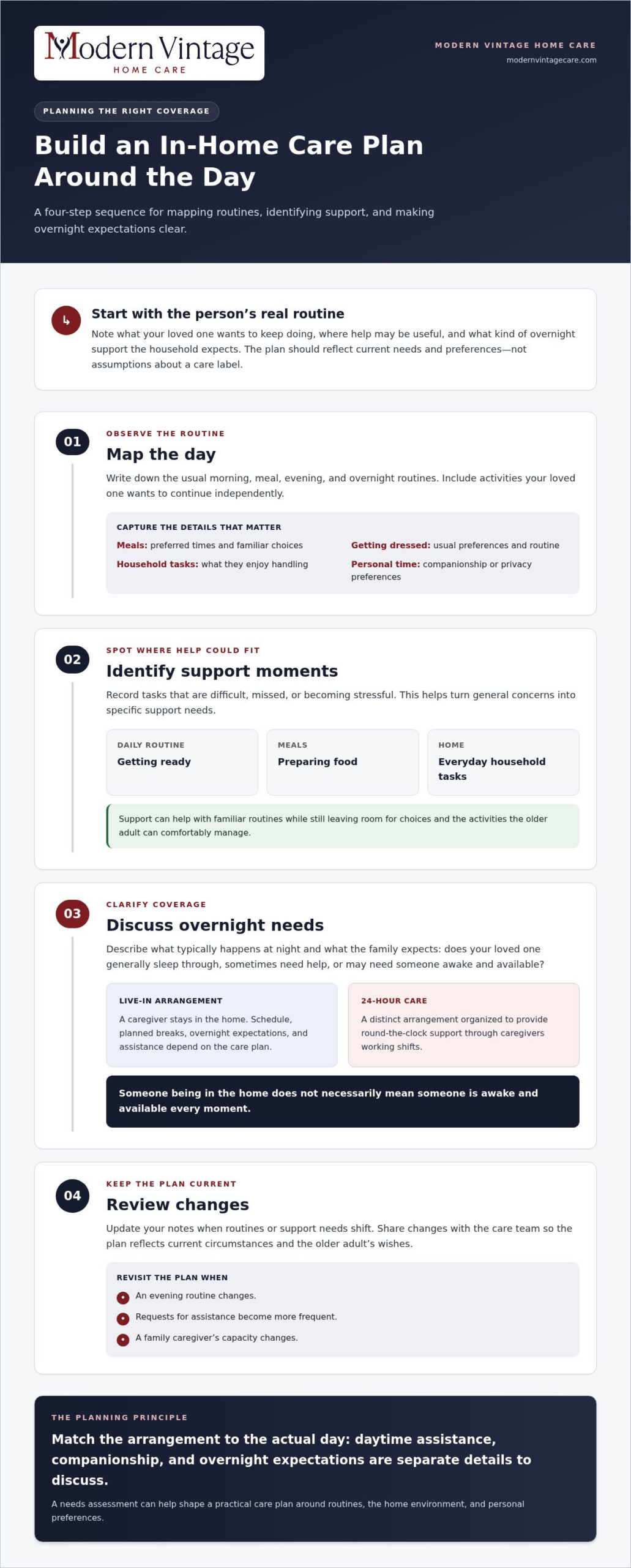
A useful care plan begins with the day your loved one actually lives, not a preset schedule. For families considering live-in elder care Sugar Land TX, writing down routines and moments that call for help can clarify whether an in-home arrangement fits. It also helps separate daytime assistance and companionship from overnight expectations, rather than assuming one caregiver schedule will suit every household.
Use this planning sequence to turn general concerns into a clearer picture of the support that could help:
- Map the day. Note the usual morning, meal, evening, and overnight routines, including activities your loved one wants to continue independently.
- Identify support moments. Record tasks that are difficult, missed, or becoming stressful, such as getting ready, preparing meals, or keeping up with household routines.
- Discuss overnight needs. Describe what typically happens at night and what kind of presence or assistance the family expects. Distinguish occasional requests from a need for someone to remain awake and available.
- Review changes. Update your notes when routines or support needs shift, so the plan reflects current circumstances rather than an outdated snapshot.
Map the Day Before Choosing a Care Arrangement
Include details that can seem small but shape a comfortable day: when your loved one likes to eat, how they prefer to get dressed, and which household tasks they enjoy handling. Note whether companionship during a quiet afternoon would be welcome or whether preserving private time is important. Ask the older adult what they want to keep doing. Their preferences can guide support without unnecessarily taking over familiar routines.
A needs assessment can help turn these observations into a practical care plan that reflects the person’s routines and preferences.
Discuss Overnight Needs and Changes in Support
Overnight expectations deserve a direct conversation because “someone is in the home” can mean different things to different families. Discuss whether the older adult generally sleeps through the night, sometimes needs help, or may need someone awake and available. Do not assume that an arrangement includes continuous awake coverage. If the household needs round-the-clock supervision, that is a distinct coverage consideration from daytime support with an overnight presence.
Revisit the plan as circumstances change. A new evening routine, more frequent requests for assistance, or a family caregiver’s changing capacity may signal that the schedule needs another look. Share these changes with the care team so the plan can be adjusted thoughtfully around the older adult’s wishes and household routines.
Modern Vintage Home Care offers a no-obligation consultation to discuss daily needs and preferences as the basis for a tailored plan. Discuss an in-home care plan that supports familiar routines and independence.
Comparing Live-In, 24-Hour Care, and Assisted Living
These options differ in where support happens and how coverage is organized. A live-in arrangement and 24-Hour Care are not interchangeable: one describes an in-home arrangement, while the other refers to round-the-clock support. Assisted living, by comparison, involves moving to a residential community. The right fit depends on the older adult’s needs, preferences, and household priorities.
| Arrangement | Setting | Routine flexibility | Type of support | Questions to resolve |
|---|---|---|---|---|
| Live-in arrangement | The older adult’s home, with a caregiver residing there as part of the arrangement. | Support can be planned around the person’s established home routines. | In-home assistance and companionship, with schedules and overnight expectations set in the care plan. | What help is needed during the day? What happens overnight, including periods when the caregiver rests? |
| 24-Hour Care | The older adult’s home. | Coverage is organized to provide round-the-clock support. | Continuous support throughout the day and night. | Is someone required to be awake and available overnight? What level of coverage does the care plan need? |
| Assisted living | A residential community rather than the person’s own home. | Daily life takes place within the community’s setting and routines. | Support is based in the residential environment; arrangements vary by community. | Would the older adult welcome a move? How would community living fit their preferences and daily habits? |
Live-In Arrangements Compared with 24-Hour Care
With a live-in arrangement, a caregiver resides in the home, but that alone does not mean someone is awake and available at every moment. The care plan should make daytime responsibilities, breaks, and overnight expectations clear. Modern Vintage Home Care provides 24-Hour Care for round-the-clock support. Families can explore the distinction further in this 24-hour home care guide.
Home Care Compared with Assisted Living
In-home support allows an older adult to stay in familiar surroundings and maintain household routines, with assistance shaped around their needs. Assisted living means living in a residential community, which may appeal to someone who prefers that setting. Neither option is automatically better. Consider the older adult’s wishes, the support needed at home, and what feels manageable for the family.
Before comparing arrangements, be specific about overnight coverage and the routines that matter most. If the person generally sleeps through the night but benefits from help during the day, the discussion may differ from that of a household needing continuous awake support. A clear comparison helps families consider fit rather than choosing based on a label alone.
How to Assess Whether Live-In Elder Care Suits Your Sugar Land Household
Before deciding on a schedule, look at the whole household: the older adult’s daily needs, the home environment, and the support family members can realistically provide. A practical review can turn a general feeling that “more help may be needed” into specific points to discuss. It can also help clarify whether a live-in arrangement seems suitable or another type of coverage deserves consideration.
Use this checklist as a conversation guide, not a diagnostic tool:
- Daily tasks: Which activities does your loved one want or need help with, such as getting ready, preparing meals, or keeping up with household routines?
- Companionship: Would conversation or shared activities during parts of the day help your loved one feel more connected?
- Supervision and coverage: At what times does your family feel most concerned about the person being alone? What does the household expect overnight?
- Home routines and layout: Which rooms and routines are central to daily life? Are there household features or arrangements to discuss when planning support?
- Family capacity: When are relatives available to help, and when are there gaps that feel difficult to manage?
- Changing needs: Have tasks become harder or routines changed? Note specific examples without trying to assign a medical explanation.
- Personal preferences: What does the older adult want to continue doing, and what communication style or caregiver qualities would help them feel comfortable?
Questions to Help Your Family Clarify Support Needs
Invite your loved one into the discussion wherever possible. Ask which parts of the day feel easy, what feels tiring, and which familiar activities they want to preserve. Consider how a caregiver might fit into the household’s rhythm, including preferred meal times, quiet periods, and social activities. Compatibility matters alongside tasks and timing: a caregiver’s skills and communication style, and how well they fit the person’s preferences, can shape how comfortable support feels.
Family members can add another perspective by noting when work, distance, or other responsibilities make it hard to be present. Comparing observations can help distinguish occasional assistance from a more consistent need, while keeping the older adult’s wishes at the center.
Include Safety, Medication Prompts, and Family Involvement
Discuss whether home safety updates may be useful as part of broader planning, taking the household’s layout and daily routines into account. If medication reminders are part of the support discussion, understand their role clearly: they are prompts, not medication administration. Families looking at this topic can find additional context in the medication management safety guide.
Bring your notes and your loved one’s preferences to a no-obligation care consultation. It offers a calm way to explore a personalized plan with Modern Vintage Home Care. To take that next step, discuss your family’s care needs.
Elder Care Planning with Modern Vintage Home Care
A thoughtful care plan should reflect the older adult’s daily life, not force them into a preset routine. For families exploring live-in elder care Sugar Land TX, Modern Vintage Home Care begins with an assessment and a conversation about the person’s needs, preferences, and family priorities. These details help shape a personalized plan for non-medical support at home.
Planning can cover which parts of the day feel challenging, what routines the older adult wants to maintain, and what kind of caregiver relationship would feel comfortable. Families may also discuss the support that could help most, whether that’s companionship, personal care, respite care, or 24-Hour Care. These options are considered in light of the household’s circumstances. 24-Hour Care is round-the-clock support, not another name for a live-in arrangement.
What Families Can Expect from the Initial Care Discussion
The initial assessment and care discussion are an opportunity to explain what daily life looks like. Families can share tasks that have become difficult, preferred routines, and times when relatives are less available. The older adult’s wishes matter, too. A clear picture of the household helps guide the care plan and keeps the conversation focused on support that fits the person.
Caregivers undergo rigorous background checks, and families may select caregivers based on compatibility, skills, and preferences. A good match involves more than completing tasks. It can also mean finding someone whose communication style and approach feel comfortable to the older adult. After discussing the requested care, families receive a customized quote. Care typically begins within a few days after the initial assessment, though timing can vary.
Local, Person-Centered Support in Sugar Land
Modern Vintage Home Care provides non-medical in-home support in Sugar Land and nearby communities, including Missouri City and Houston. The focus is on supporting independence and dignity in familiar surroundings, with a plan shaped around each person rather than a one-size-fits-all schedule. Whether the family is considering companionship, help with personal routines, respite, or round-the-clock support, a care discussion can help clarify what fits.
Gathering a few notes before the conversation can make it easier to describe what’s working, what feels difficult, and what your loved one hopes to preserve. You don’t need to have every detail settled before discussing care. A no-obligation consultation offers space to talk through those questions and consider a personalized next step. Request a no-obligation care consultation with Modern Vintage Home Care.
Take a Thoughtful Next Step Toward Support at Home
Choosing live-in elder care Sugar Land TX does not require your family to have every answer today. A conversation can help turn your questions into a clearer picture of what would make home life more manageable, while keeping your loved one’s preferences at the center.
A good care relationship is about more than a schedule. Modern Vintage Home Care lets families choose caregivers based on compatibility, skills, and preferences, and all caregivers undergo rigorous background checks. After an initial assessment, care typically begins within a few days, giving families a practical path from discussion toward support.
Bring your questions, describe what matters most to your loved one, and explore a plan without pressure. Request a no-obligation care consultation with Modern Vintage Home Care to discuss your family’s needs. A caring plan can begin with one calm conversation.
Frequently Asked Questions
How much does live-in elder care cost in Sugar Land?
There isn’t one fixed cost for live-in elder care in Sugar Land. Cost varies based on the type of support, location, and level of care. Modern Vintage Home Care discusses those details during a no-obligation consultation and provides a customized quote based on the care requested. Sharing the routines and support your family is looking for can make that conversation more specific.
Can I choose the caregiver who supports my family member?
Yes. Families may select caregivers based on compatibility, skills, and preferences. Consider what helps your loved one feel at ease, such as a calm communication style, shared interests, or experience supporting particular daily tasks. Bring those preferences into the care discussion so the caregiver match reflects the person, not just a list of responsibilities.
How soon can in-home care begin after an assessment?
Care typically begins within a few days after the initial assessment, though timing can vary. Before the assessment, it can help to gather notes about daily routines, tasks that need support, and the schedule your family has in mind. Clear details give the planning conversation a useful starting point and help shape a plan around the older adult’s circumstances.
Do caregivers administer medication during home care?
No. Medication support consists of reminders and prompts, not medication administration. Automated reminders provide gentle prompts at planned times. If your family has questions about medication routines, bring them to the care discussion so everyone understands the support being planned.
Is 24-hour home care the same as live-in care?
No. 24-Hour Care means round-the-clock support, while live-in describes an arrangement where a caregiver resides in the older adult’s home. A caregiver living in the home does not automatically mean continuous awake coverage. Consider whether your family needs a caregiver available throughout the night or support on a different schedule, and discuss that distinction as part of care planning.
What should families discuss when planning overnight support?
Describe what a typical night looks like, including how often your loved one may need assistance and whether the family expects someone to be awake and available. Talk about nighttime routines, the older adult’s comfort, and what relatives can realistically provide. If nights vary, explain the pattern during planning so the discussion reflects real needs rather than one unusual night.
What should we do if an older adult has an urgent medical need?
For an urgent medical need, contact emergency services or a qualified medical professional. Non-medical in-home care is not an emergency response service, so do not rely on a caregiver visit or reminder for urgent medical help. If you’re discussing ongoing support in Sugar Land, Missouri City, or Southwest Houston, keep emergency contacts and relevant care information easy for family members to find.