
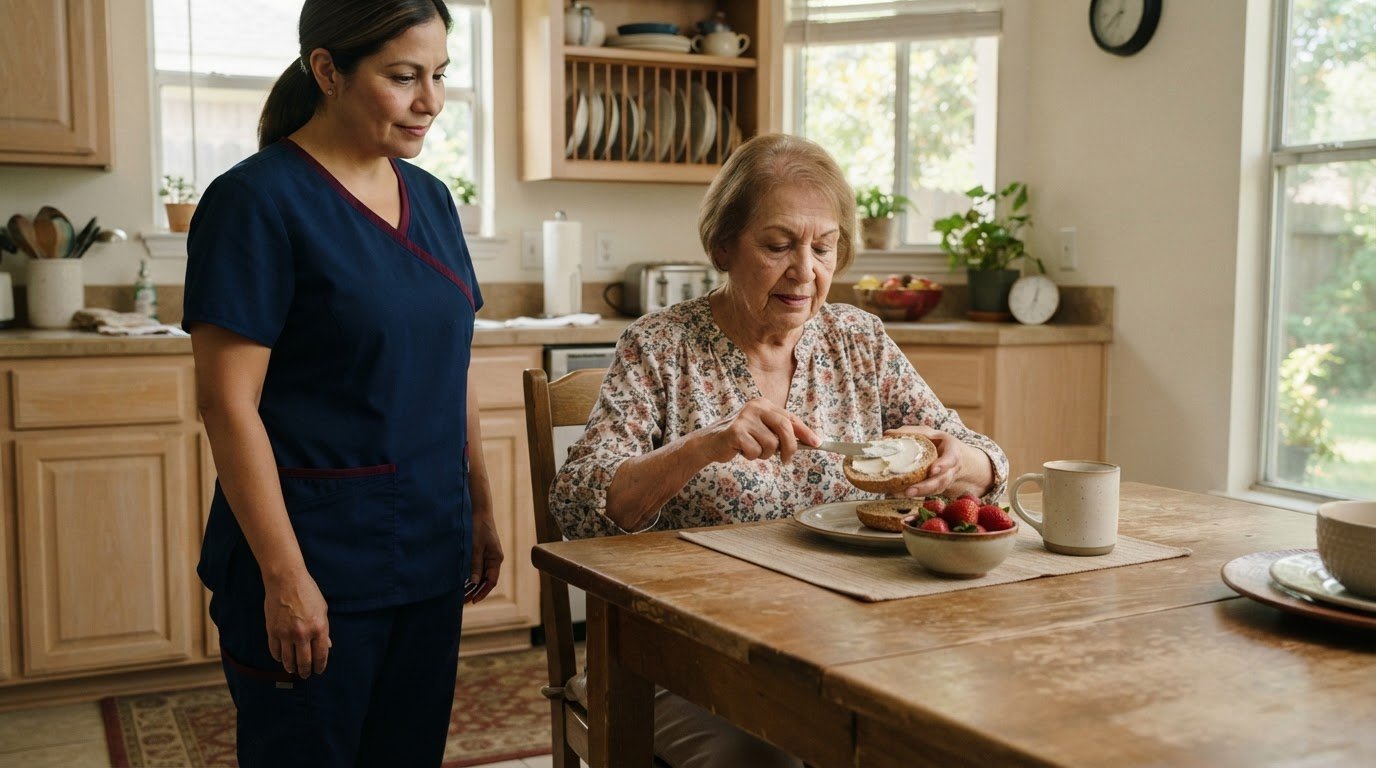
A dementia diagnosis doesn’t mean your family has to plan every part of care at once. Local Alzheimer’s care providers in Sugar Land, Missouri City, and southwest Houston can support someone at home with daily routines, personal care, medication reminders, companionship, and supervision tailored to their needs. A practical first step is to identify which everyday tasks would benefit from support.
It’s understandable to feel unsure about what to arrange first, especially as needs change over time. This guide explains what dementia care can include and how nonmedical home care differs from medical home health care, so you can consider what may fit your family’s situation.
You’ll also learn how local care availability may shape planning, what can affect the scope of professional support, and where families can turn for guidance. The goal is a clearer next step, with your loved one’s comfort, dignity, and familiar routines at the center.
Key Takeaways
- Identify which daily activities, routines, and supervision needs are creating the greatest challenges to help shape a practical care plan.
- Understand how in-home support differs from home health care, so you can look for the kind of help that fits your family’s needs.
- Consider how medication support and consistent supervision can contribute to safer, more settled days.
- Explore how care availability in Sugar Land, Missouri City, and southwest Houston may shape the support options and schedule that work for your family.
- Learn how familiar routines and meaningful activities can support comfort and connection in everyday life.
What does dementia care include near me in Massapequa, NY?
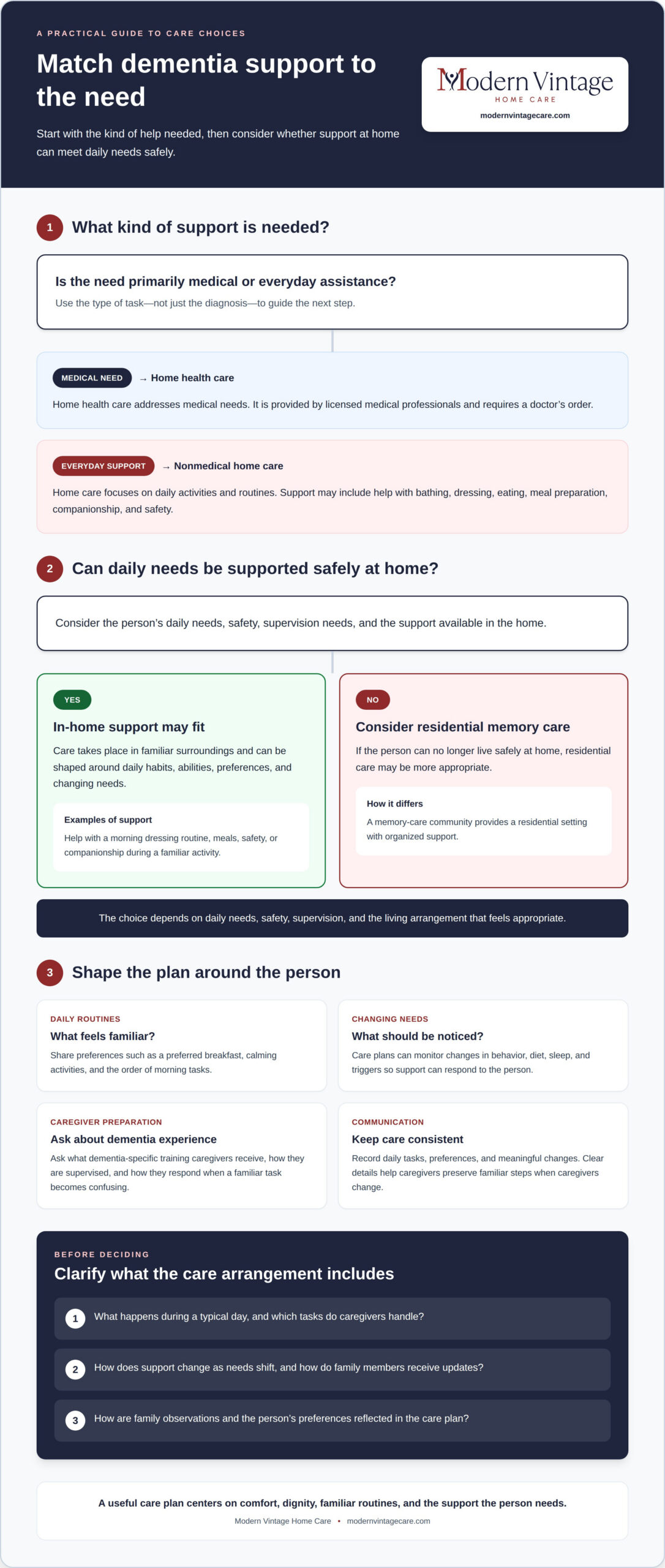
For families in Sugar Land, Missouri City, and southwest Houston, dementia care can include help with daily activities, safety, companionship, and familiar routines. The right arrangement depends on the person’s needs and whether support at home can meet them.
Dementia and Alzheimer’s Care Experience
Experience matters when care involves memory changes, personal routines, and communication. Ask what dementia-specific training caregivers receive, how they’re supervised, and how they respond when a familiar task becomes confusing. For example, a caregiver might use a calm prompt during dressing rather than rushing the person through the task.
Also ask how a care plan reflects individual preferences and changing needs. A useful answer should explain how family observations, such as which activities bring comfort, shape daily support. Modern Vintage Home Care develops individualized care plans and monitors changes in behavior, diet, sleep, and triggers to help keep support responsive.
Nearby Memory Care Providers
Families in Sugar Land, Missouri City, and southwest Houston can consider in-home support or residential memory care. In-home care takes place in familiar surroundings, while a memory-care community provides a residential setting with organized support. The choice depends on daily needs, safety, supervision, and the living arrangement that feels appropriate.
When discussing a care arrangement, ask what happens during a typical day, how support changes as needs shift, and how family members receive updates. A directory listing alone does not establish that a provider is recommended or endorsed. Look for clear descriptions of the care setting and services.
Customized Dementia Programs
Structured dementia care can organize the day around familiar activities, rest, and personal preferences. Ask how activities are adapted if someone becomes tired or unsettled. A familiar conversation, quiet time, or a simple household task may feel more comfortable than following a rigid schedule.
Medicare and most health-insurance plans generally do not cover nonmedical home care. Medicaid and long-term-care insurance coverage depends on eligibility. For questions about training or staffing, ask what dementia-related preparation caregivers receive and how the care plan is followed in daily practice.
In-Home Alzheimer’s Assistance
In-home assistance can include help with bathing, dressing, eating, and safety. It may suit someone whose daily needs can be supported at home. If the person can no longer live safely in that setting, residential care may be more appropriate. The decision depends on supervision needs and the support available at home.
Licensing and accreditation are distinct, and a listing alone does not establish either. Ask what credentials apply to the specific care service and how caregivers are prepared for dementia-related needs. These questions help families in the Houston-area service region understand the nature of the support being considered.
Home care and home health care
Home care can provide practical, nonmedical assistance at home, while home health care addresses medical needs. Knowing the difference helps families match support to daily routines, physical assistance, and clinical needs.
Personalized In-Home Care Plans
A personalized plan can reflect the person’s daily habits, abilities, preferences, and changing support needs. For example, a caregiver may help with dressing in the morning, prepare meals, or provide companionship during a familiar activity. The plan should clarify which tasks caregivers handle and how family observations shape care.
Home care is different from home health care. Home health care for a person with dementia is provided by licensed medical professionals and requires a doctor’s order. Nonmedical home care, by contrast, focuses on assistance with everyday activities and routines. Understanding the distinction helps families describe the support they need.
Coverage options also differ. The Centers for Medicare & Medicaid Services says its Program of All-Inclusive Care for the Elderly, or PACE, may cover some or all long-term care needs for a person with dementia living in the community. Whether PACE fits depends on the person’s circumstances and program requirements.
Continuity of Care at Home
Consistent caregivers can become familiar with a person’s preferred routines, communication style, and sources of comfort. Families can share details such as a preferred breakfast, a calming activity, or the order of morning tasks. These specifics help caregivers provide more consistent assistance and notice when a routine becomes harder.
Continuity also depends on clear communication. A practical care plan records daily tasks, preferences, and changes that matter to the family. If caregivers change, these details help preserve familiar steps rather than leaving each new visit to start from scratch.
In-Home Respite and Community Support
In New York, respite may be provided by volunteers or paid individuals. Support is shaped by the person’s level of function and the caregiver’s needs. It can give a family caregiver time away while the person with dementia receives assistance at home. Respite may also be available through programs for people in early stages of memory and cognitive impairment.
Community resources can support both the person and family caregivers. New York State Alzheimer’s Association chapters offer care planning, caregiver education, and support groups. Association support groups are free, led by trained facilitators, and offered by phone, video, or in person. The Alzheimer’s Association helpline is 800.272.3900 and is available 24 hours a day, 7 days a week.
For families considering community-based long-term care, programs such as PACE may be relevant alongside in-home support. Comparing the person’s daily needs, the caregiver’s capacity, and available program support can clarify which arrangement fits. A combination of home care, respite, and community resources may address different needs over time.
Medication management and enhanced supervision
Medication routines and supervision can be part of a dementia care plan. Support should reflect the person’s established schedule, daily activities, and need for assistance, with clear responsibilities for caregivers and family members.
Medication Support as Part of a Daily Routine
Medication support can be defined as part of everyday care. For example, a care plan can identify when a caregiver provides assistance and how it fits alongside meals, personal care, or other familiar routines. A clear plan helps everyone understand the caregiver’s role without changing instructions from the person’s medical team.
Automated medication reminders can add a prompt to the routine. They can support consistency, but don’t replace personalized care or communication with family. Consider how reminders fit alongside caregiver assistance, especially if the person needs help staying oriented to the day’s activities.
What Enhanced Supervision Can Address
Supervision can focus on practical needs at home, such as staying nearby during daily activities or offering a calm prompt when a familiar task becomes confusing. For example, a caregiver might provide support while the person moves between rooms or begins a planned activity. The appropriate level of attention depends on the person’s abilities and routine.
A specialized care plan should describe support in everyday language. It can note which activities call for closer attention, what helps the person feel settled, and how caregivers share relevant observations with family. This makes supervision more purposeful than simply being present in the home.
Keeping Care Person-Centered
Dementia can affect a person’s ability to follow familiar routines. A caring approach uses respectful prompts and gives the person time to respond. For instance, a caregiver can offer one clear cue during a daily task instead of rushing through several instructions. That small adjustment supports dignity and participation.
Social connection can also be part of attentive supervision. A caregiver might include a familiar conversation or shared activity in the day while remaining available for practical assistance. The care plan can capture which interactions the person enjoys and when quiet time feels more comfortable.
Coordinating the Care Plan
For medication reminders and supervision to work together, the plan should distinguish reminders from hands-on assistance. It should also explain how family members and caregivers communicate routine changes or concerns. Clear responsibilities prevent relatives from having to guess what happened during a visit.
Caregivers can follow the agreed care plan and provide support within their assigned role. Families can discuss what assistance is needed, such as reminders, companionship, or closer presence during a particular activity. A thoughtful plan connects these needs with consistent, respectful care while leaving medical decisions to the person’s healthcare team.
Care availability in Nassau County
In Nassau County, care availability depends on the type of support needed, the preferred setting, and the schedule that fits family life. Local planning can include in-home assistance, community programs, caregiver support, and residential options, each addressing different needs.
New York State’s Alzheimer’s Disease Regional Caregiver Support Initiative connects families with support through ten regional community-based organizations. The initiative includes caregiver assessments and outreach to underserved communities. A caregiver assessment can help clarify which kinds of support would be useful, such as education, wellness activities, or help planning care.
Activities through the initiative can include support groups, caregiver education, joint enrichment activities, and caregiver wellness programs. For example, a family caregiver who feels isolated could explore a support group, while another seeking practical guidance could consider education. The available activity depends on the participating organization and the family’s needs.
New York State also has ten Centers of Excellence for Alzheimer’s Disease, serving as regional experts on Alzheimer’s disease and related dementias. These centers support physicians caring for individuals and promote clinical trial referrals. Their role is distinct from arranging daily home care, but they form part of the wider support network for families.
Seven New York State Alzheimer’s Association chapters provide community assistance for people affected by dementia and their families. Their services include care planning and consultation, caregiver education, and support groups. Families can use these resources alongside direct care, especially when they need guidance about planning or a connection with other members facing similar experiences.
For day-to-day arrangements, start by describing the person’s current routine and support needs. For example, note when supervision is most important, which activities require assistance, and whether family members need time away. These details help clarify the type and timing of care to arrange in Nassau County.
Availability depends on the setting and level of support. In-home assistance keeps care in familiar surroundings, while residential memory care offers a different living arrangement. If a senior needs more consistent supervision, families can reassess whether home support still fits. Comfort, safety, and the caregiver’s capacity all inform that decision.
Respite is another part of availability planning. New York respite services can be provided by volunteers or paid individuals, according to the person’s level of function and the caregiver’s needs. A family might arrange respite when a primary caregiver needs time away. Matching support to those circumstances helps families plan care without treating every situation alike.
Daily routines and cognitive engagement
A familiar daily rhythm can make care more understandable for a person with dementia. In Nassau County, a routine can include waking, meals, rest, and enjoyable activities. Caregivers can adapt the pace and offer simple choices, such as selecting between two shirts or choosing music for breakfast.
Start with activities the person already knows and enjoys. A family member might mention gardening, folding towels, or listening to a favorite song. These examples can guide a caregiver toward meaningful engagement without making each activity feel like a test of memory or ability.
Consistent cues can make transitions clearer. For example, a caregiver might use the same gentle reminder before lunch or place a familiar cup near the breakfast setting. If a person seems tired or frustrated, pausing an activity may be more appropriate than insisting they finish it.
Cognitive engagement does not need to involve complicated exercises. Conversation about a familiar family photo, sorting everyday objects, or choosing a recipe can invite participation. The caregiver can focus on the person’s response and enjoyment, rather than whether they recall every name or complete each step independently.
Emotional comfort matters alongside activity. A familiar song or quiet time with a trusted family member may feel more welcome than a busy task. Caregivers can observe which settings and interactions help the person settle, then share those examples with family to support a more consistent approach.
Routine planning also needs room for change. A person may enjoy a morning walk one day and prefer a quieter activity the next. Caregivers can keep the structure familiar while adjusting activities to the person’s energy, interests, and comfort. That balance preserves choice without demanding the same response every day.
Families can share practical details that make routines more personal, such as preferred names, favorite topics, and activities the person avoids. A brief note about a beloved hobby can give a caregiver an easy starting point for conversation. These details help keep engagement connected to the individual, rather than a generic schedule.
For help shaping care around familiar activities and daily rhythms, explore personalized dementia care support.
Modern Vintage Home Care: Alzheimer’s & Dementia Care
Modern Vintage Home Care provides Alzheimer’s and dementia care for families in Sugar Land, Missouri City, and southwest Houston. Support can include personal care, companionship, medication reminders, and help with familiar daily routines. The individualized approach keeps the person’s preferences and dignity at the center while easing demands on family caregivers.
Care needs can change over time. Families may seek assistance when daily tasks become harder to manage alone or when regular companionship would make the day more comfortable. Contact Modern Vintage Home Care to discuss Alzheimer’s and dementia care for your family.
Take the Next Step Toward Support
Choosing among local Alzheimer’s care providers is ultimately about finding support that fits your loved one’s needs and your family’s priorities. Consider which parts of the day feel hardest to manage and what assistance would make them easier. That can focus your conversation and make the next decision more manageable.
Modern Vintage Home Care offers Alzheimer’s and dementia care, companionship, and 24-hour care. If you’re ready to discuss support for your family, contact Modern Vintage Home Care. A thoughtful next step can bring greater clarity to care planning and help your loved one feel supported with dignity.
Frequently Asked Questions
Just Diagnosed and Don’t Know Where to Start?
Start by identifying what has changed in everyday life and what support would help now. Note examples such as difficulty preparing meals, managing familiar tasks, or feeling unsettled when alone. Share these observations with family members and the person’s healthcare professional. Then decide whether the next priority is help at home, family guidance, or a care consultation. Addressing one immediate need can make longer-term planning easier.
What Types of Help Are Available?
Available help can include in-home personal care, companionship, medication reminders, and respite for family caregivers. The right type depends on the person’s daily needs and preferred setting. For example, a family might arrange companionship during work hours or consider whether a residential setting is more appropriate. Caregiver support groups and education can also offer guidance and connection.
What should I expect during the initial consultation?
An initial consultation is a chance to discuss the person’s needs, preferences, and the support the family is seeking. Modern Vintage Home Care offers a no-obligation care consultation. Families can describe practical priorities, such as familiar routines and caregiver compatibility. Care typically begins within a few days after an initial assessment, depending on the assessment and support needed.
Where Can I Find Help?
For Nassau County resources, the Alzheimer’s Association Long Island Chapter offers care consultations by phone, video, or in person, including with family members in separate locations. The New York State Alzheimer’s Disease Regional Caregiver Support Initiative also connects caregivers with support activities. Modern Vintage Home Care serves Sugar Land, Missouri City, and southwest Houston, so Nassau County families should seek resources serving their local community.
What types of local Alzheimer’s care providers are available?
Local options can include in-home care agencies, individual caregivers, residential memory-care communities, and organizations offering caregiver support. Each serves a different need. An in-home agency may arrange daily assistance, while a residential community provides care in a different living setting. Support organizations can offer education or family guidance. Consider whether the person needs help at home, a residential arrangement, or support for family caregivers.
How can I find Alzheimer’s care providers near me?
Search by town and care setting, then compare the services each listing describes. In Massapequa, include nearby communities in your search if you’re considering surrounding areas. Listings can help identify potential options, but directory inclusion alone doesn’t establish endorsement. Modern Vintage Home Care’s service area is Sugar Land, Missouri City, and southwest Houston, not Nassau County. Families in Nassau should focus on services based in their region.
What services do local Alzheimer’s care providers offer?
Services vary, but in-home providers may offer personal care, companionship, medication support, and respite. Modern Vintage Home Care provides automated medication reminders and check-ins alongside its other home care services. These services support daily life at home; medical treatment is separate. Consider which tasks the person needs help with, the family’s priorities, and the setting that fits best.