
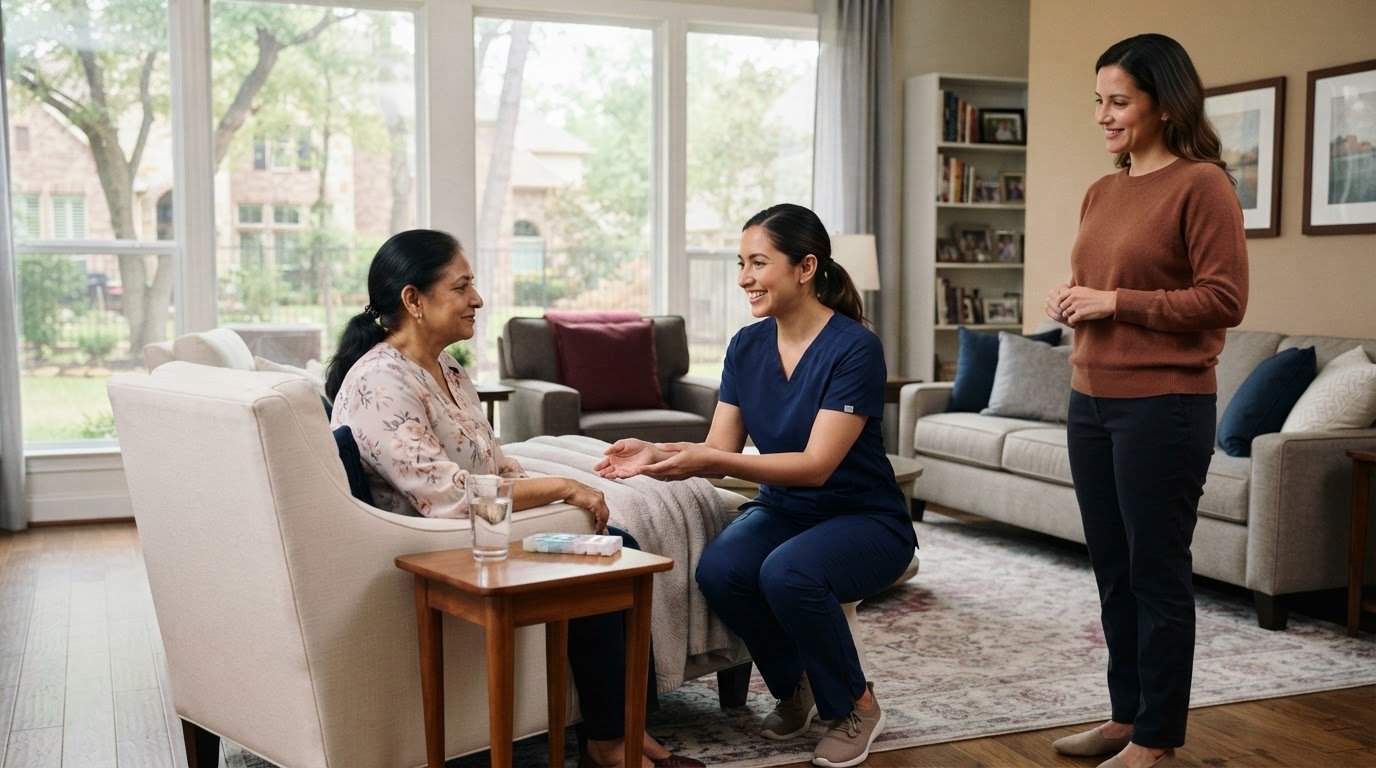
What if the right support could meet a changing need without asking your loved one to give up familiar routines? Care needs can shift before a family has a long-term plan, while work and other responsibilities keep moving. Exploring on-demand caregiver services Sugar Land families can tailor to the moment may offer a steadier way to respond.
It’s understandable to wonder whether a loved one needs help with everyday activities, companionship, or medical care. Flexible in-home support can include non-medical services such as personal care, companionship, dementia care, medication management, and respite. Modern Vintage Home Care also offers Quick Care Services as part of its broader support for families in Sugar Land.
This guide will help you match support to your loved one’s needs and preferences, understand where non-medical caregiving fits, and describe what’s happening at home. You’ll also see how flexible care can support a short-term need while keeping the person, their routines, and their comfort at the center. A calm next step starts with understanding what would help today.
Key Takeaways
- Learn what on-demand caregiver services Sugar Land families can consider and how flexible support differs from emergency response.
- Identify whether companionship, personal care, respite, or Quick Care Services may fit the support your loved one needs.
- Use your loved one’s preferences, routines, and specific needs to help shape a comfortable, consistent care arrangement.
- Prepare for a care conversation by describing the need, sharing daily routines, and agreeing on how to communicate.
- Explore how Modern Vintage Home Care’s local services can support changing needs while keeping the individual at the center.
What on-demand caregiver services mean for Sugar Land families
On-demand caregiving is flexible, non-medical support at home arranged around a particular need, rather than a fixed assumption about what every older adult requires. For one family, that may mean companionship while a relative is away. For another, it may mean help with personal care during a change in routine. The role can vary, as this overview of Understanding the role of a caregiver explains. For families exploring on-demand caregiver services Sugar Land, flexibility means identifying what support would help now and how it can respect the person’s preferences.
A useful definition: Flexible caregiving is non-medical in-home help shaped around daily needs and changing routines. It is not emergency medical care or a guaranteed immediate visit.
That distinction matters. “On-demand” can sound like a caregiver will arrive as soon as a family calls, but flexible service doesn’t promise an immediate response. It describes a way to consider support as needs shift, including short-term help that may fit alongside family care. The aim is to make daily life more manageable without treating a temporary change as a permanent care plan.
When Sugar Land families may consider flexible in-home care
A relative who usually provides support may have a temporary schedule gap. A familiar routine may also change, leaving an older adult wanting more company or assistance with everyday tasks. The reason can be as simple as a family member being unavailable for a planned period. Added support may help fill that gap while preserving the person’s choices and usual rhythms.
For example, a Sugar Land family might arrange companionship during a time their relative would otherwise spend alone. In Missouri City, a family could consider personal care support if a loved one wants assistance with part of a daily routine. In southwest Houston, a change in household schedules may prompt relatives to seek help with practical daily activities. These are possibilities, not assumptions. Each person’s preferences and abilities are different.
On-demand caregiving versus emergency or medical care
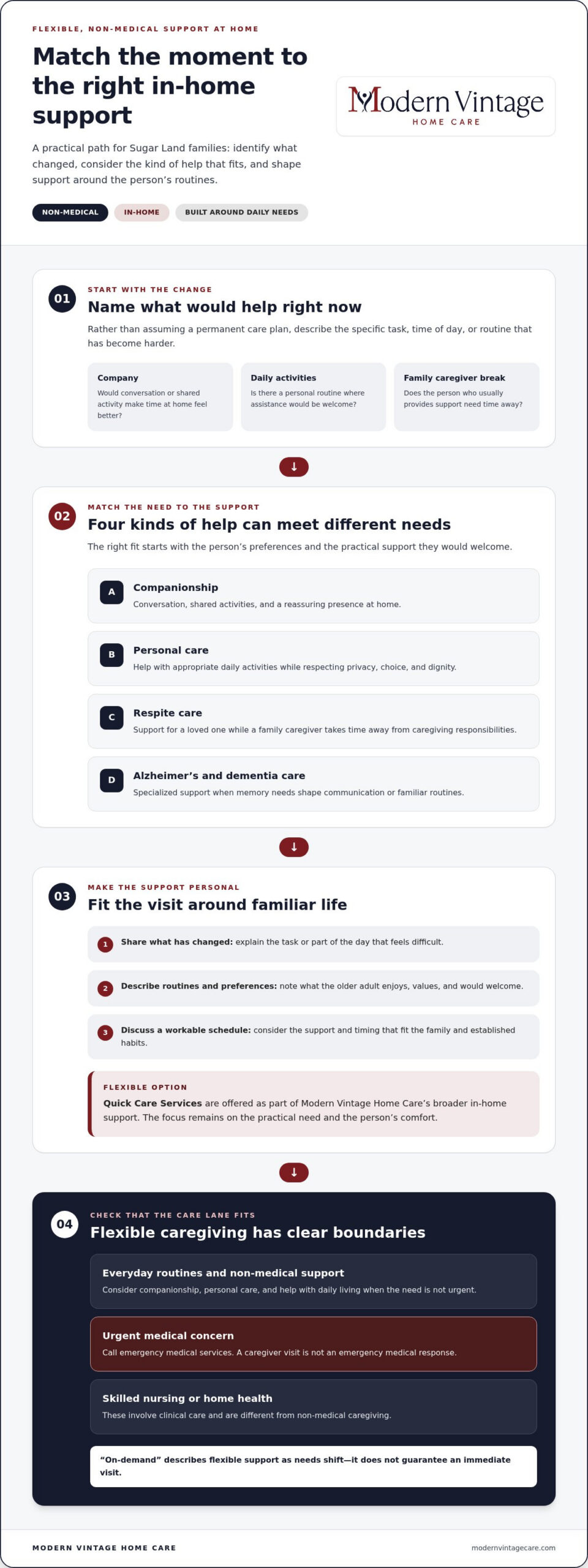
Caregiving can support ordinary routines through companionship, personal care, and help with daily living. Families can describe the specific task or time of day that feels difficult, then consider whether non-medical help may fit. Modern Vintage Home Care offers Quick Care Services, companionship, and personal care, alongside broader in-home support.
Urgent medical concerns call for emergency medical services, not a caregiver visit. Non-medical caregiving is also different from skilled nursing or home health, which involve clinical care. Keeping these roles clear helps families choose the right kind of response without expecting a caregiver to handle a medical emergency.
When the need isn’t urgent, describe what has changed: what support is wanted, when it may be useful, and which routines matter to the older adult. This gives the family a clear starting point for discussing flexible care, while leaving room for the person’s preferences to guide the plan.
What flexible caregiver services in Sugar Land can include
Flexible in-home support can be shaped around the kind of help that would make a particular part of the day easier. A family might be looking for conversation and engagement, assistance with personal care, or a break for the relative who usually provides support. With on-demand caregiver services Sugar Land families can explore, the focus is on matching support to the person’s needs and preferences, rather than assuming every visit should look the same.
Different services can meet different needs:
- Companionship offers conversation, shared activities, and a reassuring presence at home.
- Personal care can help with appropriate daily activities while respecting privacy, choice, and dignity.
- Respite care gives a family caregiver time away from caregiving responsibilities, with support for their loved one during that period.
- Alzheimer’s and dementia care provides specialized support when memory needs shape how a person communicates or follows familiar routines.
For families deciding what kind of help to consider, AARP’s guide to in-home care offers broader guidance on assessing support needs. A useful starting point is the specific task or routine that feels harder right now, rather than a label for the person.
Matching a short-term visit to the support someone needs
Think about what would make the time at home more comfortable. If the main need is company, companionship might center on conversation or an activity the older adult enjoys. If a daily task has become difficult, personal care may be a better fit. If a family caregiver needs time away, respite can provide support for the loved one while the relative steps back from caregiving for a while.
Quick Care Services offer a flexible option within broader in-home support. Describe what has changed and what the older adult would welcome, then consider how the service can fit around established habits. Start with the practical need and the person’s comfort, and discuss the schedule that would work for the family.
How check-ins and medication reminders fit into care
Automated check-ins and medication reminders can support awareness of a client’s routine. A check-in can serve as an additional touchpoint, while a reminder can prompt someone about a scheduled medication. These features are prompts and supports, not medication administration or clinical oversight.
Families can consider these tools alongside in-person caregiver support, rather than treating them as replacements for human help. For example, a reminder may complement a routine that also includes caregiver assistance, while conversation and personal care remain centered on the older adult’s expressed needs. The right combination depends on what the person finds useful and how their day is organized.
For families ready to explore options that can be tailored to changing routines, explore flexible in-home care with Modern Vintage Home Care.
How to judge whether on-demand care is a reliable fit
Flexible support can still feel dependable when expectations, communication, and the kind of help fit the older adult. Timing matters, but it isn’t the only measure. For families considering on-demand caregiver services Sugar Land, reliability also means knowing what support is intended to accomplish, how it fits around familiar routines, and how relevant updates will be shared.
Person-centered continuity means carrying the older adult’s preferences and familiar routines into flexible care, even as the timing or type of support changes. It doesn’t require assuming that every visit or caregiver arrangement will be identical. Instead, it gives the family and care team a shared understanding of what matters to the person.
A family checklist for assessing care fit
Before comparing care arrangements, write down the need in everyday language. A clear description helps distinguish the desired support from broader assumptions about what an older adult should need.
- Name the gap: Identify the task, time of day, or caregiving responsibility the family wants help addressing.
- Include the person’s preferences: Note how they like to communicate, what they enjoy, and which parts of their routine they want to keep unchanged.
- Clarify the type of support: Separate companionship or personal care needs from skilled medical needs, which call for a different kind of care.
- Agree on updates: Decide which family members should receive relevant care updates and who should take part in planning.
These notes can make a conversation more concrete. Instead of saying “help around the house,” describe the daily activity where assistance is wanted and what the older adult prefers to do independently. Keep their voice in the discussion wherever possible and appropriate.
Balancing flexibility with familiarity and communication
A flexible arrangement may involve changing support needs, but familiar cues can help it feel more comfortable. Share preferences about conversation, privacy, daily rhythms, or how assistance is offered. If something changes, communicate the update so everyone can keep the support aligned with what the person wants.
When comparing arrangements, consider four practical factors:
- Schedule flexibility: Does the arrangement account for the family’s changing need without implying an immediate or guaranteed visit?
- Service fit: Does the proposed support match the task, rather than stretching into medical care?
- Communication: Is there a clear understanding of how relevant information and updates will be shared?
- Continuity: Can the person’s preferences and routines guide the support as needs evolve?
Automated check-ins can add a point of awareness around a client’s routine, but they don’t replace conversation among the older adult, family, and care team. Think of them as a supporting feature, not the whole communication plan. A good fit depends on clear expectations, respectful support, and attention to the individual.
How Sugar Land families can prepare for flexible caregiver support
A clear starting point can make a care conversation feel less overwhelming. Before exploring on-demand caregiver services Sugar Land families can tailor to a changing need, gather a few practical details: what kind of help would be useful, when it matters, and what helps your loved one feel at ease. You don’t need to map out every possible future change. Focus first on the current caregiving gap.
Wherever possible and appropriate, include the older adult in planning. Ask what support they would welcome, what they prefer to do independently, and which routines they want to preserve. Their answers can help shape a plan that feels respectful rather than imposed.
Information to gather before arranging care
Make a short note to guide the conversation. Specific examples can clarify what assistance means in daily life, while preferences and communication details help keep support centered on the individual.
- Describe the need: Write down the activity or caregiving gap and when the family usually needs help.
- Share routines: Note preferred daily rhythms, activities, and how your loved one likes caregivers to communicate.
- Choose a family contact: Identify who should receive care updates and help coordinate information.
- Flag changes: Share relevant changes in needs or preferences so the support plan can be revisited.
For example, “help with the morning routine” is a useful start, but explaining which task is difficult and what the person prefers to manage themselves gives the conversation more direction. Keep the notes simple. They’re there to make planning clearer, not to create a rigid script.
Planning around changing needs without overcomplicating care
Begin with the support that would make the present routine easier. Flexible non-medical care can address a particular need without requiring the family to plan for every future scenario at once. If routines or circumstances change, revisit the support discussion and adjust the focus. This keeps planning manageable while allowing the older adult’s preferences to remain part of the conversation.
As families in Sugar Land, Missouri City, and southwest Houston consider local support, distinguish a specific caregiving gap from a need for ongoing, around-the-clock supervision. Flexible support and 24-hour care are different arrangements. The right discussion depends on the level of coverage the person needs. A short-term need doesn’t automatically call for a broader plan.
These preparation steps can make it easier to compare care arrangements and understand what information matters in a planning conversation. As you weigh options, list the tasks, timing, communication preferences, and level of supervision that matter most to your family.
When you’re ready to discuss the current need and the routines that matter, talk with Modern Vintage Home Care about flexible support.
Modern Vintage Home Care for on-demand support in Sugar Land
Modern Vintage Home Care is a local agency serving Sugar Land, Missouri City, and southwest Houston. Its in-home support helps families respond to a specific caregiving need while keeping the older adult’s preferences and daily life in view. Quick Care Services are one flexible option within a broader range of care, which also includes companionship, personal care, respite, and Alzheimer’s and dementia care.
That range can be useful when a family’s situation doesn’t fit neatly into one category. A loved one may appreciate conversation and companionship, need help with a daily activity, or benefit from respite support while a family caregiver steps away. Start with the person, not a preset package: what would help, what matters to them, and how can support fit around familiar routines?
Flexible care grounded in the individual’s routine
Care feels more personal when the team understands how someone likes to spend the day, communicate, and receive assistance. Sharing those details connects practical support to the person’s preferences. Families can also discuss what the older adult wants to continue doing independently, so the conversation considers both needed help and valued routines.
Automated check-ins and medication reminders can support awareness of a client’s routine. They’re additional features, not substitutes for caregiver support or communication with family. If memory changes shape the kind of help a loved one needs, Alzheimer’s and dementia care provides specialized support. Families considering that need can explore Specialized Dementia Home Care Services in Sugar Land as part of their planning.
For families considering on-demand caregiver services Sugar Land, the first conversation doesn’t have to solve every future question. It can begin with one current need: the daily activity that’s become difficult, the companionship the older adult would welcome, or the caregiving gap the family is trying to manage. From there, the discussion can consider which kind of support may fit and what routines should guide it.
A calm next step for families in the service area
Before reaching out, note what’s changed, what support would be useful, and any preferences that would help a visit feel comfortable. Include the older adult in that conversation wherever possible and appropriate. A complete long-term plan isn’t required to start describing a specific need. Families can revisit support as routines and circumstances evolve.
Modern Vintage Home Care serves Sugar Land, Missouri City, and southwest Houston. Whether you’re beginning to explore flexible support or have a particular caregiving gap in mind, start by describing what’s happening at home and what matters to your loved one.
Explore caregiver support with Modern Vintage Home Care.
Take the next step at your own pace
Care planning doesn’t have to begin with every answer in place. A useful next step can be a conversation with your loved one about what would make daily life feel more manageable, followed by a clear description of the support your family hopes to explore. That small, specific starting point can help keep the person’s wishes at the center as needs evolve.
For families considering on-demand caregiver services Sugar Land, the goal is not to rush into a decision. It’s to find a thoughtful way forward that feels comfortable for the older adult and workable for the family. Modern Vintage Home Care’s flexible options include Quick Care Services, automated check-ins, and medication reminders to support routines across its local service area.
Explore flexible caregiver support in Sugar Land and take the next step when your family feels ready. A calm conversation can be a meaningful beginning.
Frequently Asked Questions
Is on-demand caregiver service the same as emergency care?
No. On-demand caregiver support helps with non-medical needs at home, such as companionship or assistance with everyday activities. It shouldn’t be treated as an emergency response or a way to get urgent medical attention. If someone may be experiencing a medical emergency, contact emergency medical services. For non-urgent support, describe what has changed and discuss what kind of caregiving may suit the situation.
Can on-demand caregiver services help with short-term needs in Sugar Land?
Yes. Flexible support can address a temporary caregiving gap, such as when a family member’s usual availability changes or an older adult could use added help with a routine. Modern Vintage Home Care’s Quick Care Services are one option within its in-home support. Share the need and preferred schedule to discuss an appropriate arrangement.
What can a caregiver help with during an in-home visit?
A caregiver may provide companionship, personal care, and appropriate help with daily activities, depending on the person’s needs and preferences. Support might include conversation, assistance with a personal routine, or practical help that makes the day more manageable. These services are non-medical and are distinct from skilled nursing. Share the specific task your loved one wants help with so the support can be discussed clearly.
Can on-demand caregivers provide medication reminders?
Medication reminders can serve as prompts that support a client’s established routine. They don’t replace a prescription, clinical guidance, or a caregiver’s in-person support. A reminder also isn’t the same as medication administration. If your family is considering reminders, describe the routine and how the older adult prefers to receive prompts. This helps clarify how reminders may fit alongside other support at home.
How much do on-demand caregiver services cost in Sugar Land?
Modern Vintage Home Care provides personalized caregiving by the hour or through 24-hour care. The arrangement depends on the type and amount of support a person needs. Companionship, personal care, and other support needs can differ, as can the schedule a household is seeking. Outline the tasks, preferred schedule, and current caregiving gap to discuss an arrangement suited to your family.
Can a family arrange flexible care if a loved one has dementia?
Yes. Modern Vintage Home Care provides specialized in-home Alzheimer’s and dementia care when memory-related needs affect a loved one’s day. Sharing familiar routines, communication preferences, and activities the person enjoys can help shape thoughtful support. For example, families might explain which parts of the day feel confusing or what helps their relative feel more at ease. The care discussion can begin with those individual details.
What should families prepare before arranging caregiver support?
Write down the current need, when help would be useful, and the routines your loved one wants to maintain. Include preferences such as how they like to communicate or approach daily activities. Note schedule considerations and identify a family contact to receive updates. In Sugar Land, Missouri City, or southwest Houston, these details can make an initial care conversation more focused, without requiring a complete long-term plan.