
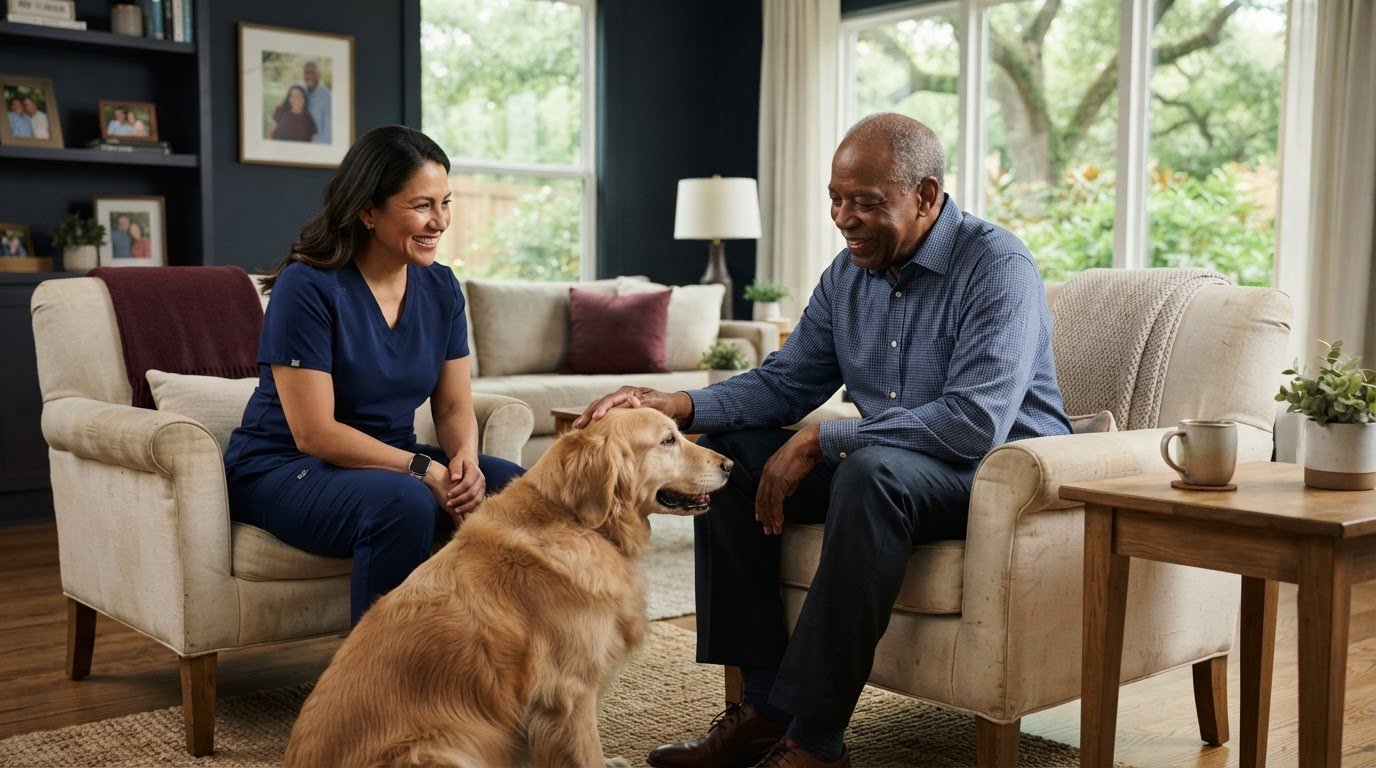
What if a familiar pet could bring more connection to an ordinary day at home? Families exploring senior companion care Sugar Land has to offer often hope to ease loneliness and add enjoyable moments to a loved one’s routine. A pet may be part of that picture if the person welcomes the interaction and it feels comfortable and safe. Not every senior wants an animal nearby, and companionship can be meaningful without a pet.
This article explains how everyday time with a household pet differs from formal animal-assisted therapy, a structured intervention with therapeutic aims. It also covers practical considerations such as allergies, mobility, comfort, and safe interactions, while keeping your loved one’s preferences at the center.
You’ll find practical ways to decide whether pet companionship fits into daily life and how personalized in-home companionship can support social connection and familiar routines in Sugar Land. The goal is a thoughtful choice that respects the person, whether that means sharing time with a pet or finding another enjoyable way to feel connected.
Key Takeaways
- Senior companion care Sugar Land families arrange can support social connection and meaningful routines, with or without a pet.
- Everyday interaction with a household pet differs from formal animal-assisted therapy. A comforting visit is not automatically clinical therapy.
- Consider the senior’s wishes, past experiences, comfort, allergies, mobility, and household routines when deciding whether pet-related companionship is a good fit.
- A simple plan helps families introduce an activity, notice how the senior responds, and adjust the routine to suit them.
- Personalized in-home companionship can reflect a senior’s interests and preferred level of social engagement.
What Senior Companion Care in Sugar Land Can Offer Beyond Conversation
Could an animal be a welcome source of connection for your loved one? Some older adults look forward to spending time with a familiar pet. Others prefer a favorite book, music, or conversation without an animal nearby. Senior companion care Sugar Land families arrange should begin with the person’s interests, not an assumption about what they ought to enjoy.
Companion care is non-medical support that makes room for social engagement and familiar routines. A companion might talk with a senior, share a hobby, or make a quiet afternoon feel less solitary through attentive company. The senior guides the interaction. An activity should feel comfortable and meaningful to them, not like a task to complete.
Companion care supports connection and everyday routines. It is not medical treatment. That distinction matters when a pet is involved. Enjoying an animal’s company can be a personal interest, but it doesn’t automatically make the interaction clinical therapy. Animal-assisted therapy has therapeutic aims and is distinct from ordinary time with a household pet.
What does senior companion care include?
Activities can reflect the older adult’s interests and energy that day. They might include reading aloud, discussing a favorite topic, looking through family photographs, playing a familiar game, or sitting together while the person enjoys a hobby. Sharing attention and letting the senior set the pace can make the time feel personal, whether they feel talkative or prefer a quieter activity.
A familiar rhythm can make visits easier to settle into. For example, a senior might enjoy starting with tea and conversation, then choosing whether to read or listen to music. A routine need not be rigid. It can offer a comfortable starting point while leaving room to follow the person’s mood and preferences. Companionship is not clinical care or a substitute for medical treatment.
Where might pets fit into a senior’s routine?
If an older adult already enjoys animals, a pet might be part of a familiar moment at home. They could talk about the pet, watch it from a comfortable seat, or enjoy its presence during a usual time of day. These small interactions can give a visit a personal focus without making the animal the center of every interaction.
Preferences can change. A senior may enjoy seeing a pet but not want close contact, or may prefer not to include animals at all. Companion care should respect those choices. Conversation or another activity the senior enjoys can take its place, while any pet interaction follows the person’s comfort and the household routine.
For families, this person-led approach makes it easier to focus on what a loved one actually enjoys. Whether a pet is part of the picture or not, meaningful companionship starts with listening and making room for connection in ways that feel natural at home.
Pet Companionship and Animal-Assisted Therapy Are Not the Same
Families may use “pet therapy” broadly to describe positive time spent with an animal. The distinction matters: a senior enjoying a pet’s company is not automatically receiving clinical therapy. For families exploring senior companion care Sugar Land offers, understanding the difference helps set realistic expectations and keeps the older adult’s preferences at the center.
These categories describe different relationships and purposes. They aren’t interchangeable, and an animal’s presence alone doesn’t turn a social visit into a therapeutic intervention.
| Type of interaction | What it generally means | Key distinction |
|---|---|---|
| Everyday pet interaction | An informal moment with an animal, such as enjoying its company or talking about it. | It’s shaped by personal interest and comfort, without an assigned clinical purpose. |
| Pet ownership | Living with an animal and having an ongoing relationship with it. | It can be meaningful, and it also involves responsibility for the pet’s daily needs. |
| Formal animal-assisted therapy | A structured intervention with therapeutic aims. | It differs from casual interaction and is planned around a therapeutic purpose. |
What counts as everyday pet companionship?
Everyday pet companionship is an informal interaction rooted in the senior’s own relationship with an animal. A person might enjoy sitting near a family pet, welcome its presence during a visit, or simply like hearing stories about it. The interaction can matter to the family without needing a medical label or a promised health benefit. An existing household pet remains part of home life; its presence alone does not make an interaction an organized therapy program.
What makes animal-assisted therapy different?
Animal-assisted therapy is a structured intervention, not simply a casual visit with a pet. It has therapeutic aims, while everyday interaction is based on personal interest and comfort. This article does not promise health benefits or clinical results. A warm interaction may be personally meaningful, but that alone does not establish treatment or show that a health condition has improved.
Use clear language when describing an animal’s role. If a loved one enjoys a pet, families can value that connection as a familiar personal interest. If they are considering formal therapy, distinguish it from ordinary companionship and avoid assuming that a comforting interaction is treatment.
Companionship at home can still make room for the senior’s interests, including a fondness for animals, without presenting that time as therapy. Personalized in-home companionship can be shaped around the person’s routines and preferred ways of connecting.
How to Decide Whether Pet-Related Companionship Suits a Sugar Land Senior
A pet can be a welcome part of a visit, but the senior’s comfort should guide the decision. Families arranging senior companion care Sugar Land can use a simple fit check before making animal interaction part of a routine. The goal is not to persuade someone to enjoy pets. It is to understand what feels familiar, pleasant, and manageable to them.
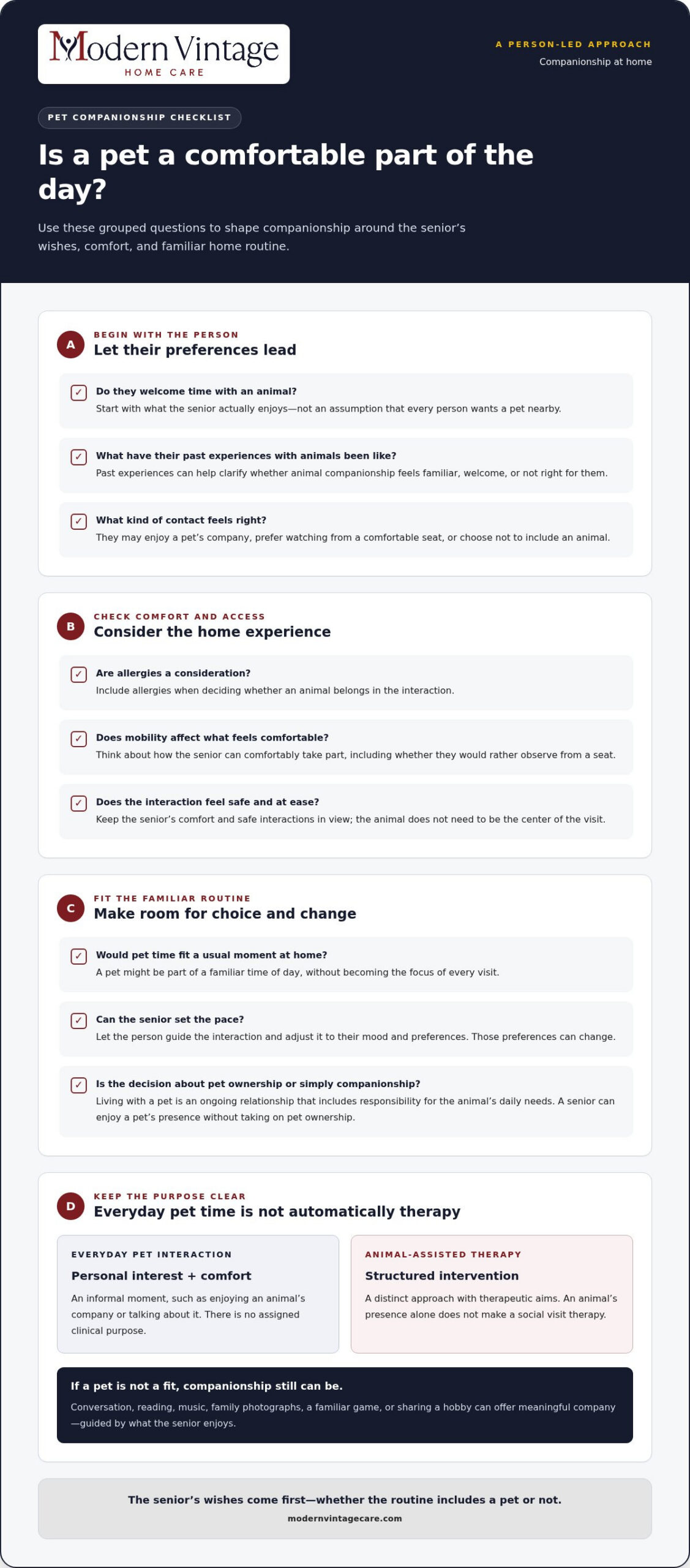
Start with the person, not the animal. Ask what they would like, listen to the answer, and leave room for it to change. A senior might enjoy animals generally but feel uneasy around a particular pet, or prefer to watch from a distance rather than touch or hold one.
Start with the senior’s preferences and comfort
Ask open questions such as, “Would you enjoy having the pet nearby?” or “Would you rather choose another activity today?” Past experiences can help clarify what feels welcome. Consider whether the person has lived with pets, feels comfortable around unfamiliar animals, or has personal or cultural preferences to take into account. Respect a clear no, a request to stop, or a decision to switch activities without pressing for an explanation.
- Comfort: Does the senior seem willing to have the animal nearby, or would they prefer more distance?
- Past experience: Have previous interactions been pleasant, neutral, or uncomfortable?
- Sensory preferences: Could an animal’s sounds, movement, fur, or closeness feel overwhelming?
- Choice: Can the senior easily decline, pause, or move on to another activity?
Notice observable responses, such as whether the person chooses to stay, turns away, asks for space, or appears tense. Treat these as signals to check in and respond respectfully, not as evidence of a diagnosis or a conclusion about their health. If their preference is unclear, pause and offer an activity without an animal.
Consider practical home and daily-life factors
Even a welcome interaction needs to fit the home and the day. Consider allergies, mobility, fall risks, household routines, and whether the animal is calm around older adults. For example, a senior who uses a walker may need a clear pathway and a comfortable place to sit, away from where an animal might move underfoot. Keep the interaction supervised and appropriate for both the person and the pet.
- Consider whether the senior can enjoy the animal without bending, reaching, or moving in a way that feels uncomfortable.
- Choose a calm time and setting that fit the household’s usual routine.
- Keep the interaction optional, and don’t assume the senior or companion caregiver will handle or care for the animal.
A pet isn’t required for meaningful companionship. Conversation, reading, music, and other person-led activities are equally valid ways to spend time together. If broader everyday support is part of the family’s planning, this personal care guide for seniors in Houston offers related information about support at home.
Plan a Comfortable, Person-Centered Companionship Routine
A routine should make companionship easier to enjoy, not turn an activity into an obligation. For families coordinating senior companion care Sugar Land, a simple plan can help relatives and an in-home companion stay aligned while leaving the senior free to change their mind. Pet-related time is one option among many; it should not be prescribed or treated as a required part of a visit.
Build the routine around the senior, not the activity
Begin with the older adult’s preferences and build the plan together. Keep it flexible enough to fit family visits, the household’s usual rhythm, and how the senior feels that day.
- Discuss preferences. Ask whether the senior wants an animal nearby, what kind of interaction feels comfortable, or whether they would rather choose another activity. Agree on a convenient time and whether they want to participate actively or simply have company.
- Select a familiar, low-pressure activity. If they welcome it, they might sit in a comfortable spot while a familiar pet is nearby. Conversation, a book, or music can be just as good a choice. Don’t arrange animal interaction simply to fill a visit.
- Observe comfort. Pay attention to what the person says and whether they seem willing to continue. Make it easy to pause or switch plans.
- Adjust the routine. Keep a backup activity in mind and share relevant preferences with family members who help coordinate visits. A familiar plan can provide a starting point without becoming fixed.
It also helps to distinguish companionship activities from tasks that require a different kind of support. Spending time together or talking about a pet is social engagement. Assistance with personal care, medication, or other daily needs should be planned around the support the person needs, rather than folded into an animal-related activity.
Notice what feels comfortable and adjust
Check in with the senior instead of assuming that quietness means enjoyment or that a change in mood has a particular cause. If they say they’re tired, ask to stop, or seem uncomfortable, pause and offer another option. The plan can change without making the visit a failure.
Preferences, energy, mobility, household routines, and comfort with an activity can change over time. Revisit the plan and adapt it to what the senior wants now.
Family members also need room to coordinate support and take breaks. If you’re balancing visits with ongoing caregiving responsibilities, this respite care guide for family caregivers offers related guidance. For personalized in-home companionship in Sugar Land, explore companionship support shaped around a senior’s interests and routines.
Find Senior Companion Care in Sugar Land That Respects Individual Preferences
Choosing companionship is less about filling time than making room for the things that help a person feel like themselves. Modern Vintage Home Care provides in-home companionship and personalized senior support in Sugar Land and the greater Houston area. The focus is on the older adult’s interests, familiar routines, dignity, and preferred level of social engagement, whether they enjoy conversation, shared activities, or quieter company.
What individualized in-home companionship can look like
Companionship can adapt to the person and the day. One senior may enjoy lively conversation, while another may prefer reading together or having company during a familiar routine. A fondness for a household pet can be part of the person’s interests if they welcome it. The senior’s choice remains central.
Modern Vintage Home Care serves Sugar Land, Missouri City, and Southwest Houston. In-home companionship can complement family involvement by creating space for social connection within the senior’s established routines. Relatives can share what their loved one enjoys, which topics they like to discuss, and whether they prefer active conversation or a quieter visit. Those details help make companionship personal rather than relying on a one-size-fits-all activity.
Take a gentle next step with Modern Vintage Home Care
If you’re considering senior companion care Sugar Land families can arrange at home, begin with a conversation about what your loved one wants from time with a companion. Describe the activities they enjoy, the routines they value, and the kind of company that feels comfortable. If pets matter to them, share that as one interest among many, without assuming it needs to be part of every visit.
Your knowledge of a loved one’s stories, habits, and small preferences can help a companionship routine feel familiar. Sharing those insights supports a thoughtful approach while leaving room for your loved one to express their own wishes and change activities as they choose.
For some families, companionship is the support they’re looking for. Others may also be coordinating respite or additional personalized assistance at home. Start with the everyday question: what would make time at home feel more connected and comfortable for this person? You don’t need to have every detail settled before taking that step.
When you’re ready, explore in-home senior companionship with Modern Vintage Home Care and share what matters most to your loved one. A calm, person-centered discussion can help your family consider support that respects their preferences and routines.
Let Your Loved One’s Preferences Guide the Next Step
A meaningful routine doesn’t need to be elaborate. It starts with making space for your loved one’s voice, including the freedom to welcome an activity one day and choose something different the next. That flexibility helps families keep companionship personal as interests, energy, and comfort shift over time.
If you’re considering senior companion care Sugar Land families can arrange, think about what you’d like your loved one to feel during a visit: heard, at ease, engaged, or simply accompanied. Sharing that intention can be a helpful first step toward support that honors who they are, rather than focusing on one activity or expected result.
Modern Vintage Home Care offers in-home companionship and personalized senior support. Explore compassionate in-home companionship in Sugar Land and start a conversation about support that keeps your loved one’s dignity and preferences at the center.
Frequently Asked Questions
Is pet therapy the same as having a companion animal?
No. A companion animal may be part of someone’s home life, while animal-assisted therapy is a structured intervention with a therapeutic purpose. Enjoying a pet’s company during an ordinary afternoon doesn’t by itself make the interaction clinical treatment. A comforting experience does not guarantee a particular health benefit.
Can pet companionship help a senior who feels lonely?
A familiar animal may feel comforting to some older adults, but there’s no guaranteed result, and not everyone wants animal company. Consider what your loved one already enjoys: a regular call with a relative, working on a puzzle, or talking about a favorite interest may be more welcome. Pets shouldn’t replace human connection or professional support when those are needed. Let the senior’s preferences guide the choice.
What happens if a senior is uncomfortable around animals?
Don’t insist on contact. Ask what would feel better, then offer a specific alternative, such as reading a chapter aloud, listening to music, or looking through familiar photographs. A senior can change their mind at any point, even if they previously enjoyed animals. For families in Sugar Land, in-home companionship can focus on interests the older adult welcomes, without making a pet part of the visit.
How can families make pet-related visits more comfortable for an older adult?
Talk with the senior before planning a visit, and consider allergies, fear, mobility, or tiredness. If they welcome the animal, keep the setting calm and make it easy to take a break. For instance, choose a comfortable seat with clear space around it rather than expecting the senior to move toward the pet. Check in during the visit and switch activities if the person wants to stop. A pet’s presence isn’t therapy.
Does senior companion care include medical treatment or animal-assisted therapy?
No. Senior companion care is non-medical support centered on social engagement and everyday routines. Talking about a pet or enjoying its presence doesn’t turn a companionship visit into animal-assisted therapy, and a companion visit shouldn’t be relied on for medical assessment or treatment. Keep health concerns separate from planning social activities and seek appropriate professional guidance for those concerns.
How much senior companion care does an older adult in Sugar Land need?
There isn’t one schedule that fits every older adult. Consider when companionship would feel most useful, such as during a quiet part of the day or when family members can’t be present. Then discuss your loved one’s routines, preferences, family involvement, and desired support with Modern Vintage Home Care. A personalized plan can be shaped around those needs instead of starting with an assumed number of visits.
Can senior companion care support someone who already has a pet at home?
Yes. Companionship can make room for a senior’s interests, which may include talking about a beloved pet or enjoying its presence as part of a familiar routine. Keep the roles clear: pet ownership and animal care are separate from companionship, so don’t assume a caregiver will handle pet-care tasks. Families can discuss the older adult’s preferred activities and household routine when planning support at home.