
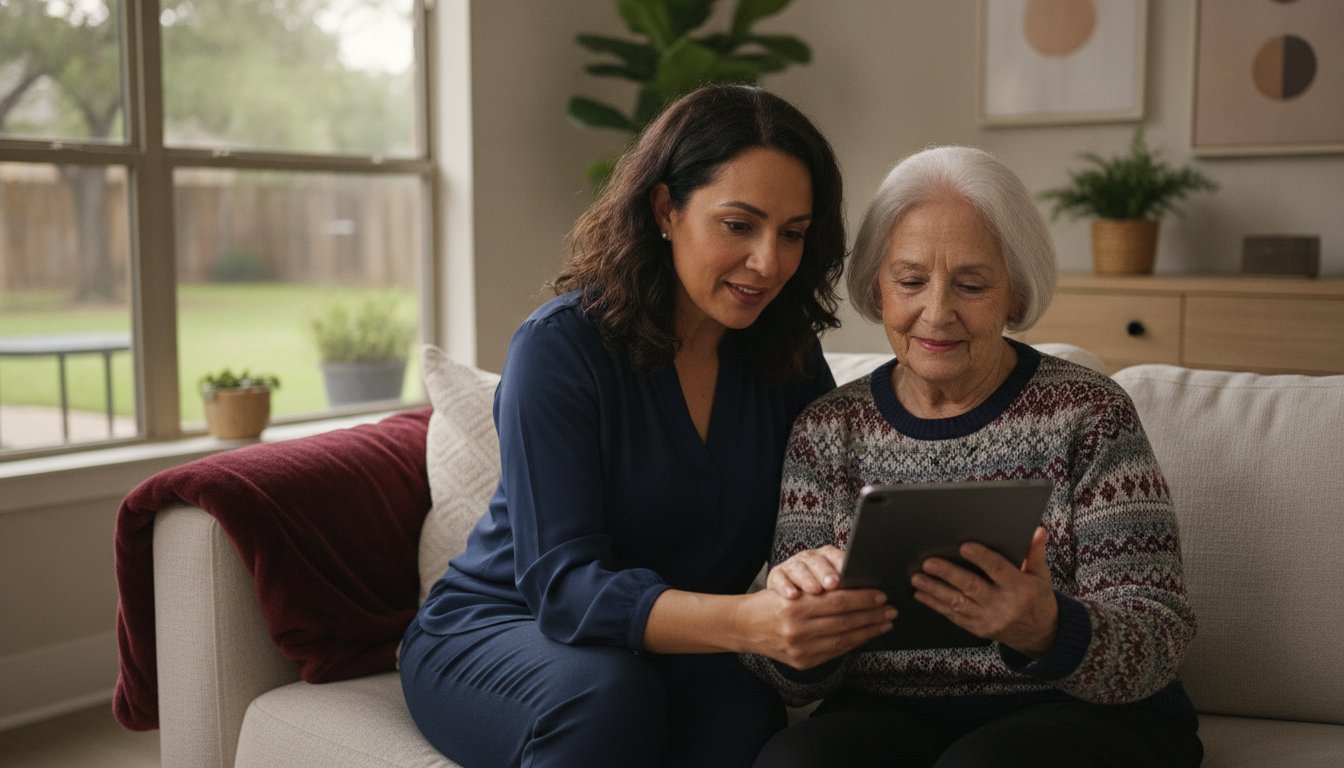
Imagine the moment you realize your mother has stepped out into the backyard at midnight, or the heavy silence when a conversation with your father feels like it’s slipping away. With over 460,000 Texans currently living with Alzheimer’s, many families in our community face these same quiet crises every day. You want your loved one to stay in the home they love, yet the constant fear of wandering or a missed medication can lead to overwhelming caregiver burnout. Professional in-home companion care for dementia patients Sugar Land offers a bridge between these fears and the peaceful, dignified life your family deserves.
We understand that you aren’t just looking for a sitter; you’re looking for a partner who values your loved one’s spirit as much as you do. This guide explores how specialized companionship preserves independence and enhances safety through professional monitoring and high-touch engagement. You will learn how modern safety tools and dedicated social interaction can help your family move from a state of constant worry to one of meaningful connection and quiet confidence. By focusing on the individual’s unique requirements, it’s possible to maintain a sense of routine and joy right here in Sugar Land.
Key Takeaways
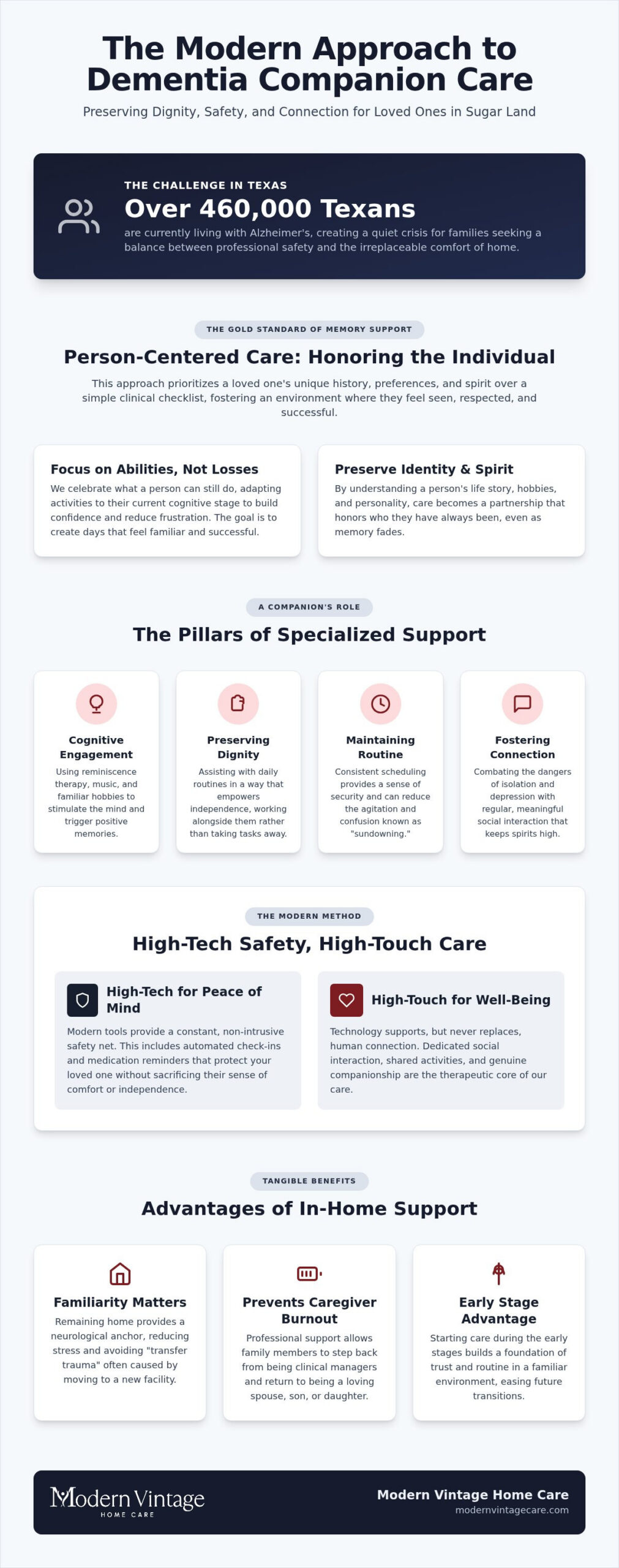
- Understand why person-centered care is the gold standard for memory support, prioritizing your loved one’s unique history and spirit over a clinical checklist.
- Learn how a “high-tech, high-touch” approach uses automated check-ins and medication reminders to provide constant safety monitoring without sacrificing comfort.
- Identify the subtle “red flags” that signal it’s time to consider in-home companion care for dementia patients Sugar Land to help prevent caregiver burnout.
- Explore how specialized companionship reduces the depression and isolation often felt after a diagnosis by fostering meaningful social engagement.
- Discover the benefits of starting care during the early stages of dementia, allowing your family to build a foundation of trust in a familiar environment.
Sugar Land In-Home Companion Care for Dementia
Sugar Land is a community built on history and deep-rooted connections. When a family member is diagnosed with Dementia, the world can suddenly feel like an unpredictable and shrinking place. Families across Fort Bend County often find themselves at a difficult crossroads, weighing the benefits of a clinical facility against the comfort of the family home. Many are choosing to stay put. Choosing in-home companion care for dementia patients Sugar Land allows your loved one to remain in the space where they feel most secure, surrounded by the sights and sounds they’ve known for decades. Dementia companion care is a non-medical support system focused on safety and social health.
This type of care looks at the home through the specific lens of cognitive decline. It isn’t just about preparing a meal or checking a box; it’s about understanding why a hallway might look frightening in the evening or why a simple task like buttoning a shirt has become a source of frustration. By bringing specialized support into the home, we create a safety net that protects the senior while allowing them to maintain their lifestyle. It’s a proactive way to manage the daily challenges of memory loss without the upheaval of a move.
The Role of a Dementia Companion
A true companion does much more than just “sit” with a senior. They provide active cognitive engagement tailored to the individual’s interests and history. This might mean looking through old photos of the local area or listening to favorite music to stimulate recall. It’s about assisting with daily routines in a way that preserves the senior’s dignity. If they can still fold laundry or set the table, the companion works alongside them rather than taking the task away. Consistent scheduling is also vital. By maintaining a steady routine in Sugar Land homes, we can often reduce the agitation and confusion known as “sundowning” that frequently occurs as the day ends.
Why Familiarity Matters in Memory Care
The brain relies on environmental cues to navigate the day. When those cues disappear in a facility, cognitive decline can sometimes accelerate due to stress. Staying in a known environment offers significant neurological benefits because it provides a sense of “place” that acts as an anchor. Local companions can even use Sugar Land landmarks or community stories to keep the senior connected to their world. This approach helps avoid “transfer trauma,” which is the physical and emotional distress caused by moving a vulnerable senior to a new environment. By keeping them home, you’re protecting their spirit and their physical safety at the same time.
The Therapeutic Power of Dementia-Focused Companionship
Person-centered care isn’t just a medical buzzword; it’s the gold standard of memory support because it prioritizes the human being over the diagnosis. When we provide in-home companion care for dementia patients Sugar Land, we look beyond the symptoms of Alzheimer’s to see the person’s history, preferences, and spirit. This approach recognizes that every individual retains their personality even as their memory fades. By focusing on what a person can still do, rather than what they’ve lost, we foster an environment where they feel seen and respected. It is about creating a day that feels successful and familiar.
Isolation is one of the most dangerous side effects of cognitive decline. It often leads to deep depression, which can actually accelerate the progression of symptoms and physical health issues. Regular social interaction acts as a form of therapy that keeps the brain active and engaged. Perhaps the most significant gift of professional companionship is the relief it brings to the family unit. When a trained professional manages the daily needs, the child or spouse can step back from being a clinical caregiver and return to being a loving family member again.
Cognitive Stimulation and Social Engagement
Real engagement requires more than just simple conversation. It involves structured activities like reminiscence therapy, where we use old photos or familiar objects to trigger positive memories and stimulate the mind. Music and sensory engagement also play a huge role in reaching someone who might be struggling with verbal communication. We adapt these hobbies to match the senior’s current cognitive stage so they feel successful rather than frustrated. Whether it’s a quiet afternoon of tactile crafts or facilitating Meaningful Engagement for People with Dementia through safe social outings in the Houston area, the goal is always purposeful connection.
Managing Behavioral Challenges with Empathy
Agitation and confusion are often the brain’s way of communicating an unmet need. A “Steady Advocate” approach focuses on understanding the “why” behind the behavior instead of just reacting to it. Is the senior hungry, tired, or overwhelmed by noise? Professional companions provide a calm, steady presence that family members, often exhausted by their own stress, might struggle to maintain. If a situation becomes tense, a trained companion uses de-escalation techniques rooted in empathy rather than clinical detachment. This specialized Alzheimer’s and dementia care ensures that your loved one feels safe and understood even during their most difficult moments.
Safety and Technology: Modernizing Memory Care in Fort Bend County
“What if something happens when I’m not there?” This single question is often the biggest barrier to keeping a loved one at home. It’s a valid fear, especially when dealing with the unpredictable nature of memory loss. Modern in-home companion care for dementia patients Sugar Land has evolved to meet this challenge through a “high-tech, high-touch” philosophy. By blending human intuition with 2026 safety technology, we create a secure environment that allows seniors to age in place with dignity. This approach doesn’t replace the caregiver; instead, it provides them with the tools needed to be more attentive to subtle changes in health or behavior.
Fall prevention is a critical priority in many older Sugar Land neighborhoods where floor plans might not be optimized for limited mobility. We work with families to implement a home safety checklist for dementia to identify risks like cluttered walkways, loose rugs, or slippery surfaces. It’s about being proactive rather than reactive. If we can spot a hazard before it causes an accident, we’ve succeeded in our role as a steady advocate for your loved one’s health and independence. Consistent safety checks ensure the home remains a sanctuary rather than a source of anxiety.
Automated Check-Ins and Safety Monitoring
Many Sugar Land residents spend their days commuting to the Houston Energy Corridor or the Medical Center, leaving them worried about their parents back home. Automated check-in services offer a vital safety net for seniors who may spend portions of the day alone. This technology provides immense peace of mind by monitoring daily patterns without being intrusive. Real-time reporting keeps you connected to the home through your smartphone, offering instant alerts if a routine is missed or a potential issue arises. It ensures that even when you aren’t physically present, your parent is never truly alone or out of reach.
Medication Adherence and Reminders
Cognitive decline often makes it impossible for a senior to manage a complex pill schedule, which can lead to dangerous health complications. Effective medication management for elderly involves more than just setting an alarm on a phone. While automated reminders are excellent for preventing double-dosing and missed prescriptions, the companion oversees the human element of the process. They make sure the senior is comfortable, hydrated, and actually taking the medication as prescribed by their physician. This dual approach minimizes medical risks and helps maintain a stable mood and better overall symptom control throughout the day.
Planning for the Future: When to Start Dementia Home Care
Deciding when to invite a professional into your home is one of the most personal choices a family will make. It’s often tempting to wait until a crisis occurs, but starting in-home companion care for dementia patients Sugar Land during the early stages of a diagnosis can be transformative. This early introduction allows a senior to build a genuine bond with their companion before memory loss makes new relationships more challenging to navigate. It creates a foundation of trust that makes future transitions much smoother for everyone involved. Being proactive ensures that the senior remains the center of the care plan rather than just a recipient of it.
As dementia progresses, the level of support required naturally increases. While companion care is excellent for maintaining social health and safety, late-stage symptoms may eventually require 24-hour home care in Houston to ensure round-the-clock safety and monitoring. Planning for this progression early on helps families manage the logistical and financial aspects of long-term support without the pressure of an immediate emergency. It allows you to explore options with a clear mind and a steady heart.
Recognizing the Signs of Need
Sometimes the need for help is subtle. It isn’t always a dramatic event that signals it’s time for support; rather, it’s a collection of small changes that begin to affect daily life. You might notice changes in personal hygiene, such as wearing the same clothes for several days, or nutritional neglect like an empty fridge or spoiled food. New wandering patterns or getting lost in familiar Sugar Land neighborhoods are also significant red flags. Perhaps the most telling indicator is your own well-being. If you find yourself constantly exhausted or feeling guilty when you aren’t with your loved one, it’s time to explore respite care for family caregivers. This allows you to recharge while ensuring your parent remains safe and engaged.
Navigating the Transition to Professional Care
Introducing a new face into the home can feel daunting, especially if your loved one is resistant to help. We often suggest the “Quick Care” approach. This involves starting with short, focused visits that feel like a friendly social call rather than a clinical shift. It allows the senior to get used to the companion’s presence on their own terms. When evaluating in-home companion care for dementia patients Sugar Land, look for providers who prioritize specialized dementia training. This ensures the staff understands how to communicate with empathy and patience, turning a potential point of friction into a source of comfort. If you are ready to discuss a personalized plan, reach out to a local care coordinator today.
Modern Vintage Home Care: Sugar Land Memory Care
Modern Vintage Home Care serves as a bridge between professional clinical expertise and the warm, familiar presence your family deserves. We believe that caring for a senior with memory loss is a sacred trust. It requires a delicate balance of reliability and deep empathy. By choosing our specialized dementia home care services in Sugar Land, you aren’t just hiring a service; you’re gaining a dedicated advocate who understands the specific nuances of our community. We know that many of our local seniors are heroes who served our country, which is why we also help families access veterans home care benefits in Sugar Land to ensure they receive the support they’ve earned.
Our approach to in-home companion care for dementia patients Sugar Land is rooted in the belief that support should be as flexible as it is thorough. Whether you need comprehensive 24-hour oversight or just a few hours of relief through our “Quick Care” options, our services are designed to adapt to your specific situation. Our concierge approach means we are always ready to adjust the level of engagement as your loved one’s needs change. This flexibility is essential because dementia is not a static condition; it requires a partner who is proactive and attentive to the small details of daily life.
Our Compassionate Caregivers
Our selection process is rigorous, prioritizing empathy and dementia expertise above all else. We don’t just assign a name to a shift. Instead, we carefully match companions to the unique personality, interests, and history of the senior. This “Trusted Partner” philosophy ensures that we are working with your family, not just for you. We look for caregivers who act as a steady presence, capable of managing behavioral challenges with a calm and neighborly spirit. It’s about finding the right person to protect your loved one’s spirit while ensuring their physical safety.
Taking the Next Step for Your Loved One
What can you expect when you reach out? The process begins with an initial in-home assessment right here in Sugar Land. We take the time to listen to your concerns and understand the daily routines that matter most to your family. From there, we customize a care plan that evolves alongside the progression of the diagnosis. We encourage a proactive approach to memory care because starting early builds the trust necessary for long-term success. Don’t wait for a safety crisis to seek support. Reach out today to discover how we can help your loved one maintain their independence and dignity in the home they love.
Restoring Peace and Connection for Your Family
Transitioning from a state of constant worry to a place of supported safety is possible when you have the right local partner. By integrating specialized Alzheimer’s and dementia training with advanced safety technology, we ensure your loved one remains secure in the home they cherish. Choosing in-home companion care for dementia patients Sugar Land allows you to step back from the heavy stress of constant monitoring and return to your role as a daughter, son, or spouse. It’s about shifting the focus from managing a diagnosis to enjoying the time you spend together.
Modern Vintage Home Care is locally owned and licensed in the state of Texas, acting as a steady advocate for families across Fort Bend County. We are here to help you navigate this sensitive life transition with quiet confidence and professional reliability. If you’re ready to create a safer, more engaged environment for your senior, we invite you to Schedule a Compassionate In-Home Assessment with Modern Vintage Home Care today. You don’t have to walk this path alone; let’s work together to preserve the spirit and safety of those you love most.
Frequently Asked Questions
What is the difference between companion care and personal care for dementia?
Companion care focuses primarily on cognitive engagement, social interaction, and safety monitoring. It involves activities like conversation, meal preparation, and light housekeeping to keep the senior active and safe. Personal care goes a step further by providing hands-on physical assistance with activities of daily living, such as bathing, dressing, and incontinence care. We tailor the support to your loved one’s specific stage of decline to ensure they receive the right level of help.
Is in-home companion care safe for dementia patients who wander?
Professional in-home companion care for dementia patients Sugar Land is an excellent solution for managing wandering behaviors because a dedicated companion provides constant, one-on-one supervision. We combine this human presence with modern safety technology, such as automated check-ins and monitoring systems, to ensure the home remains secure. This proactive approach allows families to keep their loved ones in a familiar environment while significantly reducing the risk of accidents or unauthorized exits.
How many hours of care should I start with for a newly diagnosed loved one?
We typically recommend starting with a modest schedule of 12 to 15 hours per week, spread across three or four days. This “slow-start” approach allows the senior to build a relationship with their companion without feeling overwhelmed by a sudden change in routine. As the condition progresses or as your loved one becomes more comfortable, you can easily scale the hours up to provide more comprehensive support and safety monitoring.
Does Medicare cover in-home companion care in Sugar Land?
Medicare typically does not cover non-medical companion care or long-term support in the home. It focuses primarily on acute medical needs and short-term home health services after a hospital stay. However, many families in our community utilize long-term care insurance, private pay, or veterans home care benefits to fund these essential services. We can help you explore these local options during an initial assessment to find a sustainable financial path for your family.
Can companion care help with dementia-related sundowning?
Companions are specifically trained to manage the increased confusion and agitation that often occurs in the late afternoon. By maintaining a steady routine and providing calming activities during these hours, they can help minimize the symptoms of sundowning. This might include adjusting lighting, reducing environmental noise, or engaging in soothing reminiscence therapy to keep the senior grounded and comfortable as the day ends.
How do you handle a dementia patient who refuses to have a caregiver in the home?
We use a gentle, indirect approach that focuses on building a friendship rather than providing “care.” We might introduce the companion as a “helper” or a “friend” who is there to assist with household projects or share a specific hobby. Starting with short, non-intrusive visits helps the senior acclimate to a new presence at their own pace. This strategy preserves their sense of independence while slowly building the trust necessary for more involved support.
What local Sugar Land neighborhoods do you provide dementia care for?
We serve seniors throughout the entire Sugar Land area and surrounding Fort Bend County communities. Our caregivers are frequently in neighborhoods like First Colony, Sweetwater, Greatwood, and Telfair. We also provide support to families in Avalon, Riverstone, and New Territory. Being a local partner means we are familiar with the area and can easily facilitate safe social outings to local landmarks or community centers that your loved one enjoys.
Do you offer respite care for family members who need a break?
We provide specialized respite care designed to give family caregivers the essential time they need to rest and recharge. Caregiver burnout is a serious risk when managing dementia alone, and taking a break is vital for your own health and the quality of care you provide. Whether you need a few hours a week or support during a family vacation, we step in to ensure your loved one stays safe and engaged while you attend to your own needs.