

Most families worry that bringing assistance into the home signals a loss of independence, but the reality is quite the opposite: the right support is often the single best way to protect their autonomy. Still, it’s difficult to determine whether an aging mother or father is simply slowing down or if you are seeing the clear signs your parent needs in-home help. Balancing your career and family while worrying about sudden falls or unattended emergencies is exhausting, especially when you fear that raising the subject will trigger defensive pushback.
You deserve peace of mind, and your loved one deserves to remain safe and respected in the home they cherish. In this guide, you’ll gain an objective framework to assess behavioral, physical, and household changes without second-guessing your instincts. We’ll explore twelve subtle indicators that care is needed, followed by actionable conversation strategies and a practical roadmap for introducing non-medical support gracefully.
Key Takeaways
- Spot early physical warning signs, from subtle balance hesitations to difficulty rising from chairs, to prevent dangerous falls and preserve mobility.
- Distinguish normal absentmindedness from the crucial signs your parent needs in-home help, such as missed medication doses or routine disorientation.
- Identify revealing household clues, including scorched cookware, spoiled groceries, and unopened bills, that point to declining daily independence.
- Use empathetic communication strategies and supportive framing to discuss care options without triggering defensive pushback or compromising dignity.
- Create a sensible roadmap for introducing non-medical support at a comfortable pace, keeping your loved one safe in their cherished home.
Evaluating Daily Independence: Physical and Mobility Warning Signs
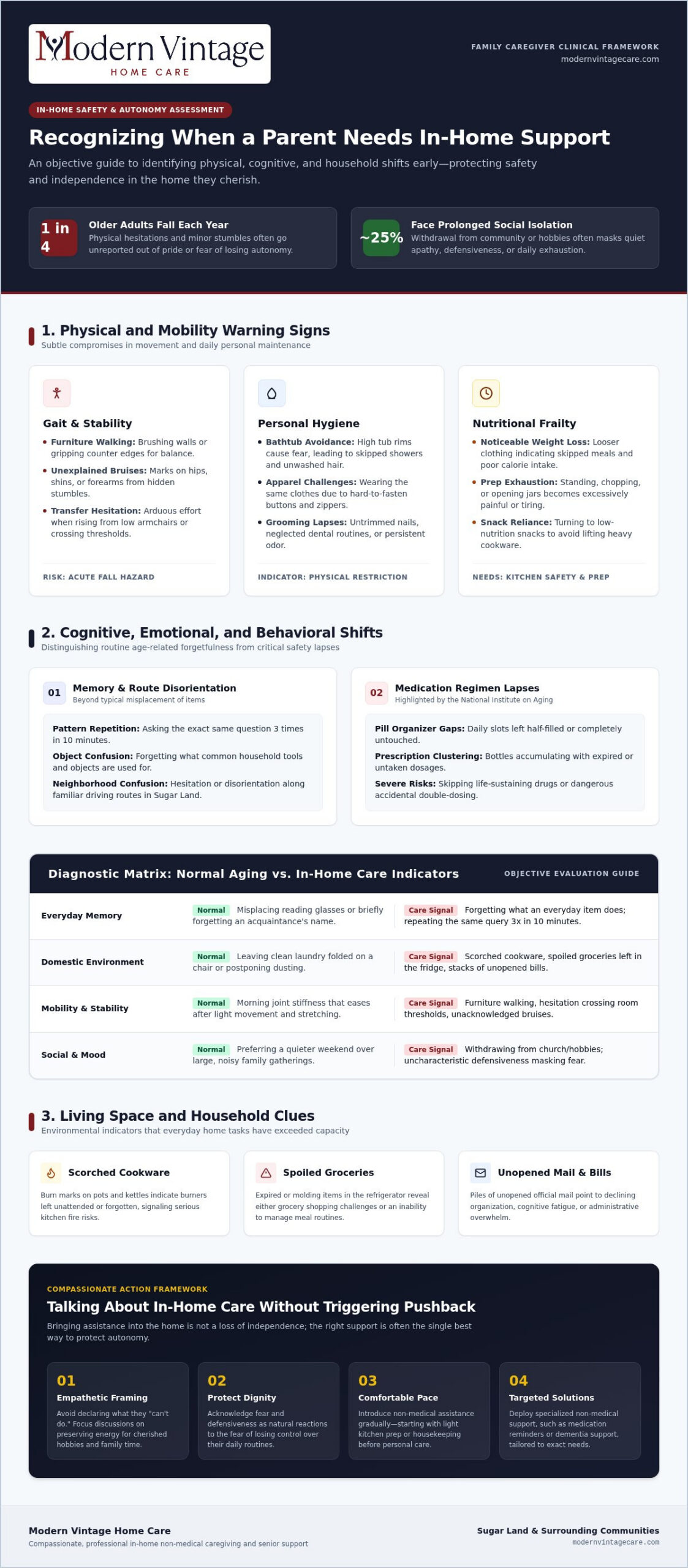
Physical changes rarely happen overnight. Instead, they unfold through small, quiet compromises that aging parents make to get through the day. Recognizing the physical signs your parent needs in-home help begins with watching how they move through their familiar routines and whether everyday tasks have started causing anxiety, exhaustion, or physical strain.
Declining Mobility, Balance Issues, and Hidden Falls
Notice whether your loved one brushes against walls or grips counter edges while walking across a room. This habit, often called furniture walking, signals an unspoken insecurity about balance. Gently check for unexplained bruises along hips, forearms, or shins, which frequently indicate minor stumble incidents they felt too proud or embarrassed to report. About 1 in 4 older adults falls each year. When basic transfers like rising from a low armchair become arduous, or thresholds and stairs cause visible hesitation, stability has crossed from standard stiffness into genuine hazard.
Neglected Personal Hygiene and Changes in Grooming Habits
A sudden change in grooming habits often stems from physical limitation rather than personal neglect. Stepping over a high bathtub rim is terrifying for someone with unsteady footing, leading to skipped showers, lingering body odor, or unwashed hair. Look for untrimmed nails, neglected dental care, or the same mismatched clothes worn repeatedly because buttons and zippers have become difficult to fasten. Bringing compassionate non-medical home care services into the home provides discreet personal support that restores hygiene while preserving personal dignity.
Unintentional Weight Loss and Physical Frailty
Noticeable weight loss or looser clothing often reveals hidden frailty in the kitchen. Preparing a balanced meal requires standing for extended periods, chopping produce, lifting heavy pans, and wrestling with stubborn jar lids. If arthritis, fatigue, or hand tremors turn cooking into an exhausting chore, older adults often skip meals entirely or rely on low-nutrition snacks. Reduced appetite combined with physical fatigue serves as one of the clearest signs your parent needs in-home help to assist with grocery shopping, meal preparation, and kitchen safety.
Cognitive, Emotional, and Behavioral Shifts That Signal the Need for Support
Beyond physical movement, subtle cognitive and emotional adjustments often provide the earliest clues that an aging parent is struggling. Recognizing these behavioral signs your parent needs in-home help allows you to step in with loving assistance well before a safety crisis occurs.
Normal Forgetfulness vs. Cognitive Decline
Misplacing reading glasses or briefly forgetting an acquaintance’s name is an expected part of aging. Forgetting what an everyday household object does, or repeating the exact same question three times in ten minutes, points to deeper cognitive changes. Pay attention to moments of confusion along familiar driving routes around Sugar Land neighborhoods. When memory gaps begin to disrupt predictable daily habits, specialized dementia home care services can provide comforting routines that reduce anxiety and preserve dignity.
Missed Medication Regimens and Health Routine Lapses
Take a gentle, supportive look at your parent’s medicine cabinet or counter. Are daily pill organizers sitting half-full, or are prescription bottles clustering with untaken doses? The National Institute on Aging identifies lapses in routine health management among the primary signs someone needs extra support. Skipping vital prescriptions or accidentally double-dosing creates severe risks for seniors living alone. Introducing structured non-medical reminders and reliable medication management for elderly loved ones ensures critical schedules stay organized and accurate.
Social Isolation and Sudden Mood Swings
Loneliness often masks itself as quiet apathy, uncharacteristic defensiveness, or sudden irritation. Nearly a quarter of older adults experience prolonged social isolation, which can prompt them to withdraw from community groups, church functions, and long-loved hobbies. When daily tasks become overwhelming, fear of losing independence frequently presents as pushback against well-meaning family suggestions. Regular companion visits gently break this cycle by offering conversation, mental stimulation, and compassionate encouragement. If you notice these emotional shifts, connecting with Modern Vintage Home Care can help you arrange gentle companionship that brightens daily routines and restores your family’s peace of mind.
Home Environment and Financial Clues: What Their Living Space Reveals
A house often tells the story an aging parent tries to keep quiet. When managing a home becomes too taxing, the living environment reflects the strain. Unwashed dishes in the sink, dusty surfaces, neglected pet care, and growing clutter offer critical insight into the practical signs your parent needs in-home help before a domestic accident occurs.
Kitchen Hazards, Nutrition Gaps, and Spoiled Groceries
Open the refrigerator door and take a discreet inventory. Multiple cartons of sour milk, rotting produce, or expired convenience foods indicate that grocery shopping and meal planning have become overwhelming. Look closely at the stovetop and the bottoms of cookware. Scorched teakettles or blackened pans signal unattended burners, which represent an immediate household fire hazard. When preparing fresh food feels exhausting, older adults easily drift into poor nutrition and chronic dehydration.
Financial Disarray, Unopened Mail, and Vulnerability to Scams
Take note of paperwork accumulating on entry tables or kitchen counters. Piles of unopened correspondence, past-due utility notices, or duplicate bill payments often point to executive cognitive fatigue. More than half of adult children with parents aged 65 to 74 already assist with household errands, and financial disarray is a frequent catalyst. Diminished focus leaves seniors vulnerable to predatory sweepstakes mailers, aggressive telemarketing solicitations, and fraudulent charitable appeals that silently drain household savings.
Automobile Dents, Driving Safety, and Vehicle Upkeep
Walk around the family car parked in the driveway or garage. Fresh scrapes on the bumper, side mirror scuffs, or paint transfer matching the garage door frame frequently point to diminished peripheral awareness and slower reflexes. If your parent expresses anxiety about driving after dusk or mentions near misses at intersections, their safety is at risk. Spotting these automotive signs your parent needs in-home help allows you to arrange reliable non-medical transportation and errand support, keeping them mobile without compromising road safety.
Talk Compassionately to an Aging Parent About In-Home Care
Observing the behavioral and household signs your parent needs in-home help is often simpler than starting the conversation itself. Bringing up care touches on deep fears of losing control and privacy. Rather than suggesting an institutional facility or taking over their life, frame the conversation around protecting their independence so they can stay comfortably in their beloved home.
Choosing the Right Setting and Tone for the Conversation
Plan this discussion during a relaxed afternoon when neither of you feels rushed or stressed by a recent emergency. Keep the conversation one-on-one or within a small family circle so your parent never feels cornered or judged. Lead with affectionate “I” statements such as, “I want to make sure you stay safe and comfortable here for years to come,” rather than pointing fingers at messy countertops or unsteady walking.
Overcoming Common Parental Objections and Resistance
Expect some initial hesitation. When aging parents push back, they are usually protecting their sense of agency. You can disarm resistance with gentle re-framing:
- Rebrand the role: Describe in-home helpers as personal assistants or domestic concierges rather than caregivers.
- Start with a trial: Propose a short-term trial of just a few hours a week for light housekeeping or meal prep.
- Bring in trusted allies: If your parent remains skeptical, ask their family doctor to endorse the idea as a sensible wellness safeguard.
Preventing Family Caregiver Burnout Early
Nearly 1 in 4 adults nationwide currently provides care for an aging family member. Juggling career responsibilities, raising children, and managing an aging parent’s household quickly leads to physical and mental exhaustion. Bringing in professional respite care for family caregivers provides essential relief so you can recharge without worrying about safety gaps. Accepting outside support preserves your relationship, allowing you to return to being an attentive son or daughter instead of an exhausted manager.
If you have spotted the signs your parent needs in-home help, explore personalized support options today by visiting Modern Vintage Home Care to learn more about compassionate in-home care plans designed for your family’s needs.
Finding the Right In-Home Care Solution: Next Steps for Peace of Mind
Identifying the clear signs your parent needs in-home help is the first hurdle; matching those observations to the right level of support is the next. Seeking professional assistance doesn’t mean taking away your parent’s voice. Instead, it creates a practical framework that keeps them safe, connected, and dignified in their private residence.
Matching Care Levels to Your Parent’s Lifestyle
Every person requires a distinct level of attention based on their daily habits and physical abilities. Some seniors thrive with friendly companion visits, simple meal preparation, or short Quick Care visits to check safety. Others need hands-on assistance through specialized personal care for seniors to manage bathing, dressing, and walking transfers without fear. For parents facing progressive memory conditions, tailored dementia routines reduce confusion, while around-the-clock or 24-hour support provides continuous security throughout the night.
What to Look for in a Trusted Local In-Home Care Provider
Selecting an agency requires careful due diligence to ensure your loved one feels completely safe. Look for providers that focus on relationship building rather than simple shift-filling. Consider these essential standards:
- Rigorous caregiver vetting: Confirm comprehensive background checks, credential verification, and ongoing training.
- Customized care planning: Choose an agency that molds support around your parent’s preferred wake-up times, meals, and social habits.
- Attentive communication: Partner with local teams that offer supervisory check-ins and responsive updates for family members.
Taking the First Step with Modern Vintage Home Care
Once you spot the signs your parent needs in-home help, taking deliberate action brings immediate relief to the entire family. Modern Vintage Home Care delivers personalized, non-medical support to families across Sugar Land, Missouri City, and the Greater Houston area. Whether your loved one benefits from automated check-ins and medication reminders, flexible daytime visits, or comprehensive Alzheimer’s routines, local care coordinators work alongside you to craft a thoughtful plan. Schedule a home assessment to evaluate your parent’s living environment and establish the gentle support they deserve.
Protecting Your Parent’s Independence and Well-Being at Home
Recognizing subtle shifts in your loved one’s balance, daily routines, and household upkeep takes honest observation and courage. When you begin to notice the progressive signs your parent needs in-home help, stepping forward is not an admission of defeat; it is the single most effective way to help them stay autonomous and secure in familiar surroundings. Addressing these needs early prevents avoidable hospital visits, preserves family harmony, and relieves the quiet strain of caregiver burnout.
You don’t have to carry this responsibility alone. Modern Vintage Home Care supports families across Sugar Land and the Greater Houston community with licensed, compassionate non-medical assistance. Whether your parent benefits from simple Quick Care check-ins, automated reminders, or dedicated 24-hour companionship and memory routines, reliable caregivers adapt around their unique lifestyle. Take a gentle, proactive step today and Schedule a Free In-Home Consultation with Modern Vintage Home Care to restore your family’s peace of mind.
Frequently Asked Questions
What is the difference between non-medical home care and home health care?
Non-medical home care assists with everyday living activities, while home health care provides clinical medical treatment prescribed by a physician. Non-medical care includes companionship, personal hygiene assistance, meal preparation, and medication reminders. Home health focuses on clinical procedures like wound dressing or physical therapy. Agencies like Modern Vintage Home Care specialize exclusively in supportive, non-medical care that keeps seniors living safely and comfortably in their Sugar Land homes.
How do I know if my parent’s forgetfulness is normal aging or dementia?
Normal age-related forgetfulness involves occasionally misplacing car keys or forgetting an appointment, whereas dementia impairs judgment, language, and the ability to perform familiar daily tasks. If your loved one forgets how to use familiar appliances, gets lost on neighborhood roads, or shows sudden personality shifts, these are serious signs your parent needs in-home help. Dedicated memory care routines can provide gentle structure and safety without taking away their comfort.
What should I do if my aging parent refuses to accept in-home help?
Start by validating their feelings and reframing the conversation around retaining control over their life rather than losing it. Focus on minor support rather than drastic changes. You might suggest a trial run for light housekeeping, or introduce non-medical caregivers as personal assistants or concierges. Involving a trusted family doctor or geriatric professional can also reassure skeptical parents that supportive assistance is simply a proactive safety measure.
Can in-home care help prevent seniors from falling at home?
Yes, non-medical caregivers significantly reduce fall hazards by assisting with balance-heavy tasks and mobility transfers. Caregivers provide steady physical support during risky routines, such as stepping into the shower or rising from low chairs. They also maintain clear walkways, remove clutter, and ensure adequate lighting throughout the house. Having a dedicated set of hands nearby brings stability, helping your parent navigate their living spaces with confidence.
How many hours of in-home care should a senior start with?
Most families begin with just a few hours a week and adjust the schedule as their parent’s comfort and needs evolve. A gradual introduction often works best. You might schedule Quick Care visits for short morning check-ins or a few hours of companionship several afternoons a week. For seniors living with advanced dementia or significant mobility decline, plans can expand naturally up to 24-hour continuous support.
Does non-medical in-home care include meal preparation and transportation?
Yes, non-medical care plans routinely include nutritious meal planning, grocery shopping, and local transportation. If you notice expired groceries or dents on the car, these environmental clues are clear signs your parent needs in-home help. Caregivers can prepare wholesome meals tailored to specific dietary preferences, restock pantries, and provide reliable rides to medical appointments or community events across Missouri City and Sugar Land.
What are automated check-ins and how do they support senior independence?
Automated check-ins are scheduled phone calls or alerts that verify an older adult is safe, awake, and following daily routines. These non-intrusive check-ins provide a gentle first step for seniors who aren’t ready for in-person visits yet. Paired with automated medication reminders, they give independent parents peace of mind while ensuring adult children receive immediate alerts if a scheduled call goes unanswered.