

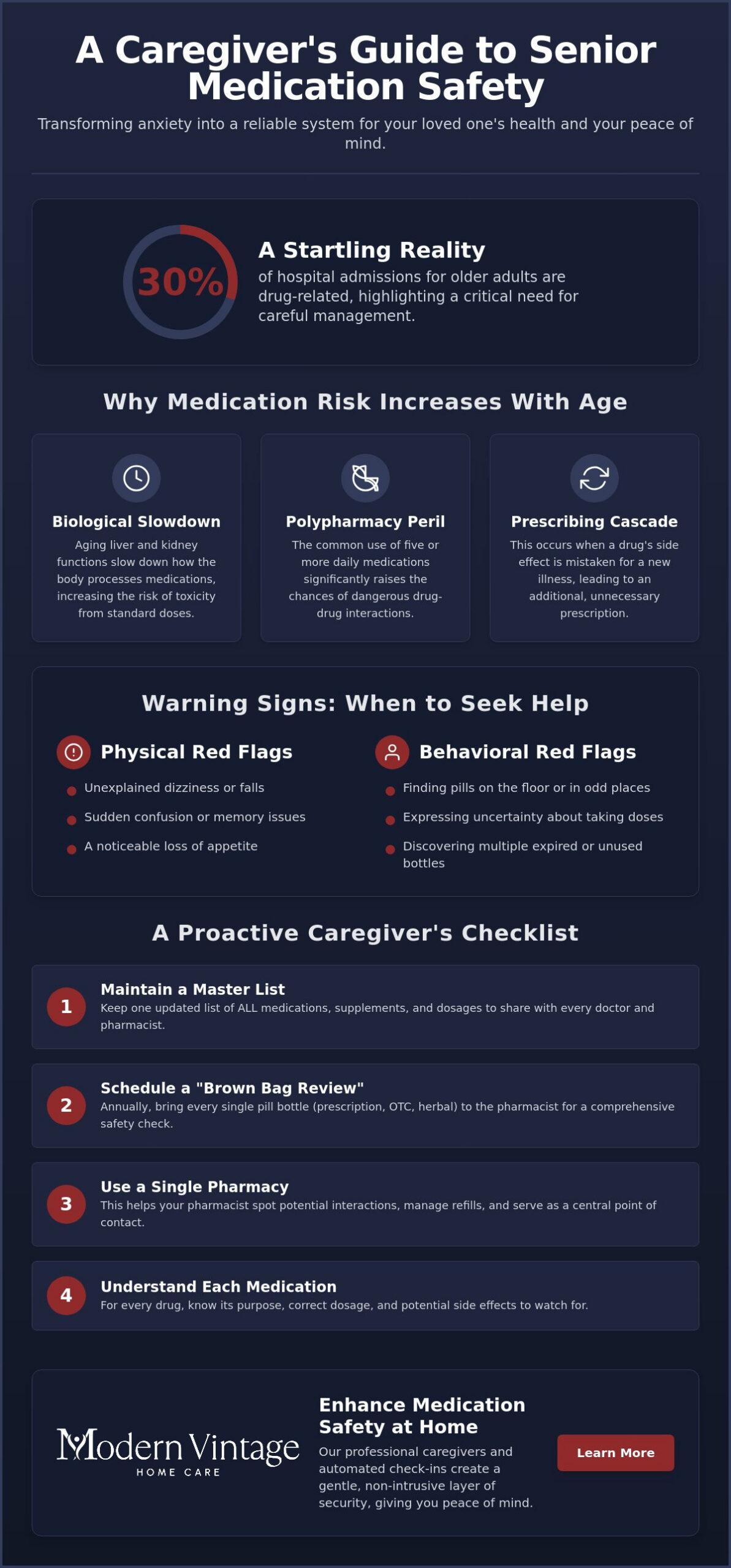
Did you know that approximately 30% of hospital admissions for older adults are actually drug-related? It’s a startling figure that highlights just how precarious the balancing act of multiple prescriptions can be for a senior. When you’re coordinating care between different doctors, effective medication management for elderly family members becomes more than just a chore; it’s a vital part of keeping them safe and healthy at home.
You likely feel a constant weight of responsibility every time you look at a cluttered pill organizer or try to decipher conflicting instructions from various specialists. It’s deeply stressful to worry about a missed dose or a dangerous interaction while also managing pharmacy trips across Sugar Land and Houston. You want to ensure their safety, yet the complexity of modern healthcare can feel overwhelming for even the most dedicated family caregiver.
You can transform this source of anxiety into a reliable system that protects your loved one and restores your peace of mind. This guide will help you master senior safety with expert strategies, clear checklists, and professional management solutions. Whether you are managing a few daily pills or a complex regimen, these steps will help you ensure every dose is taken correctly. We’ll explore how to identify risks and implement modern tools, so you can focus on quality time together.
Key Takeaways
- Understand how age-related changes in liver and kidney function make a proactive system for medication safety essential as your loved one grows older.
- Learn to recognize the physical and behavioral red flags that signal a need for professional medication management for elderly family members.
- Compare traditional pill organizers with modern automated medication reminders to determine which safety net provides the best protection for your senior.
- Master a practical caregiver checklist, including how to organize a “Brown Bag Review” with a pharmacist to prevent dangerous drug interactions.
- Discover how integrating professional caregivers with automated check-in services creates a gentle, non-intrusive layer of security for aging at home.
Why Medication Management for Elderly Seniors Becomes More Critical with Age
As our loved ones age, their bodies process medications differently. It isn’t just about memory; it’s about biology. The liver and kidneys, responsible for filtering and clearing drugs, naturally slow down. This means a dose that was safe at age fifty might stay in the system longer at age eighty, increasing the risk of toxicity. Keeping a close eye on these changes is a vital part of protecting a senior’s health.
Effective medication management for elderly family members isn’t just about putting pills in a box; it’s a dedicated strategy for safety. It goes beyond remembering to take a pill. It involves a holistic look at how drugs interact with a senior’s lifestyle and health goals. For families prioritizing overall vitality, the Houston Medical Wellness Clinic offers specialized wellness and anti-aging treatments that can complement a comprehensive care plan. A key part of this process is Medication therapy management, which helps families identify unnecessary medications and ensure current ones are working effectively. By shifting from a reactive approach to a proactive one, you can significantly reduce the risk of accidental errors.
One dangerous pattern we often see is the “prescribing cascade.” This happens when a side effect of one drug is mistaken for a new medical condition, leading to another prescription to treat that side effect. Before you know it, your parent is taking three drugs to manage the consequences of the first one. Being aware of this cycle allows you to ask better questions during doctor visits.
The Reality of Polypharmacy in Senior Care
Polypharmacy is the daily use of five or more medications. For many seniors, this increases the chance of drug-drug interactions. Seniors across Sugar Land and Houston face unique risks because our world-class healthcare is often fragmented. If specialists at different hospital systems don’t communicate, conflicting prescriptions occur. Keeping a single “master list” of every drug and dosage for all providers is the best way to prevent these dangerous overlaps.
Common Medication-Related Problems (MRPs)
Medication-related problems are preventable events that interfere with desired health outcomes. These often stem from adverse drug reactions (ADRs) that families mistake for “just aging.” Watch for signs such as:
- Sudden confusion or memory issues
- Unexplained dizziness or falls
- A noticeable loss of appetite
Additionally, mixing prescriptions with over-the-counter (OTC) herbal remedies is risky. Supplements can change how a body absorbs medicine, making professional medication management for elderly seniors even more vital.
Identifying the Risks: When to Seek Medication Adherence for Seniors
Recognizing when a loved one is struggling with their prescriptions is a delicate process. It often begins with a subtle gut feeling that something has changed. While we want to respect their autonomy, maintaining consistent medication adherence for seniors is the most effective way to help them stay in their own homes. Safety is the foundation of independence; without it, the risk of a health crisis increases significantly.
Physical red flags are often the first visible signs of a problem. You might notice unexplained falls or a sudden increase in dizziness. Confusion that seems to come and go, or a noticeable change in appetite, can also signal that a medication isn’t being processed correctly or is being taken at the wrong time. When these signs appear, it’s time to consider a formal plan for medication management for elderly relatives to prevent these symptoms from escalating into a hospital visit.
Behavioral changes are equally revealing. You may find pills on the floor, discover multiple expired bottles in the cabinet, or notice your loved one “losing” their medication frequently. They might express uncertainty about whether they already took their morning dose. These moments of forgetfulness are common, but they can lead to the dangerous mistake of “doubling up” on powerful drugs. To keep your family informed, the FDA provides a helpful list of 5 Medication Safety Tips for Older Adults that every caregiver should review.
The Link Between Memory Loss and Medication Errors
Cognitive decline makes following a complex multi-dose schedule nearly impossible. For those in the early stages of Alzheimer’s, the logic required to track different pills at different times of day often fades first. This creates a high-risk environment for errors. For families managing these specific challenges, our specialized dementia home care services Sugar Land offer a compassionate way to bridge the gap between safety and comfort. Professional oversight ensures that memory loss doesn’t lead to a life-threatening dosage mistake.
Environmental Hazards and Improper Storage
Where you store medicine matters as much as how you take it. The bathroom cabinet is often the worst choice. Heat and humidity from the shower can cause medications to break down and lose their effectiveness faster than expected. It is also vital to keep all prescriptions in a secure, high location to protect visiting grandchildren or curious pets. Make it a habit to check expiration dates every six months. If you feel overwhelmed by these logistics, professional medication management can provide the steady oversight needed to keep your home environment safe and organized.
Comparing Strategies: DIY Tools vs. Automated Medication Reminders for Seniors
Choosing the right strategy for your loved one feels like a heavy decision. You want to protect their safety without stripping away their dignity or independence. Many families start with DIY methods, believing that a simple pill box is enough. However, as health needs become more complex, the gap between a manual tool and a professional system becomes clear. Finding the right balance is the core of effective medication management for elderly relatives.
Traditional methods like paper charts, phone alarms, and standard pill organizers are common first steps. They are inexpensive and easy to find at any local pharmacy in Houston or Sugar Land. While these tools can help those with very simple routines, they rely entirely on the senior’s memory and the caregiver’s availability to reset them every week. If a senior is managing chronic conditions, these manual systems often fail to provide the high-level safety net required to prevent errors. Helpful resources from the American Geriatrics Society emphasize what seniors can do to manage their medications effectively while maintaining a sense of control, but even the most organized person can benefit from a more robust system.
The Limits of Manual Pill Organizers
Standard plastic boxes are a staple in many homes, yet they carry hidden risks. It is surprisingly easy to “spill” a box, mixing up different doses for the entire week. Manual systems also require someone to accurately “load” the box every seven days. This task is often stressful for family members who worry about placing the wrong pill in the wrong slot. If a senior lives alone and begins to experience vision loss or fine motor struggles, a manual box is no longer a safe option. At this stage, the risk of a double dose becomes far too high to ignore. Families navigating this transition may also find it helpful to consult our guide to choosing the best in-home care agencies in Sugar Land to identify a trusted partner who can provide consistent, professional support.
Leveraging Technology: Automated Reminders and Check-ins
Modern technology offers a more reliable path forward. Automated medication reminders for seniors act as a high-tech safety net, using smart dispensers that only release the correct pill at the exact time it’s needed. These devices can even alert family members via a smartphone app if a dose is missed. This provides immense peace of mind for families who cannot be physically present for every dose.
Pairing technology with professional oversight creates a comprehensive solution. For example, Automated check-in services can verify a senior’s well-being throughout the day without being intrusive. If you only need a brief safety check, Quick Care Services for seniors in Houston offer short, focused visits from a professional caregiver to ensure medications are taken correctly. This blend of technology and human touch is often more cost-effective than full-time care while providing a significantly higher level of safety than a DIY approach. For seniors with more complex needs who require continuous monitoring, exploring 24 hour home care Houston services can provide the round-the-clock oversight necessary to prevent dangerous medication errors at any hour.
A Caregiver’s Checklist for Safe Medication Management
Organizing a senior’s health routine requires a methodical approach that removes guesswork. When you take over medication management for elderly parents, you aren’t just filling boxes; you’re acting as their primary safety advocate. This responsibility involves several practical steps to ensure their daily regimen supports their health rather than endangering it.
Step 1 is the creation of a master medication list. This document should include the name of the drug, the exact dosage, and the specific reason it was prescribed. Knowing the “why” behind a pill helps you monitor if it’s actually doing its job. Step 2 involves a “Brown Bag Review.” Gather every prescription bottle, over-the-counter supplement, and vitamin in the house. Take them to your loved one’s primary doctor or pharmacist for a comprehensive audit. This professional review is the most effective way to catch dangerous overlaps or expired prescriptions you might have missed.
Step 3 focuses on supply chain logistics. Coordination is key to ensuring there are no gaps in their treatment. You should sync refill dates so all medications are ready at the same time, reducing the number of trips you need to make. Finally, Step 4 is a routine safety check of the medicine cabinet. Every six months, dispose of any old medications properly and ensure everything is stored in a cool, dry place away from direct sunlight or humidity.
Questions to Ask Your Doctor and Pharmacist
Clear communication with healthcare providers is essential. During your next appointment, ask three specific questions: What is the primary goal of this medication? What are the most common side effects we should watch for? Does this new drug interact with anything they are already taking? It’s also vital to ask if a pill can be safely crushed or split, as many sustained-release medications lose their effectiveness if the outer coating is broken. We recommend using a single pharmacy for all prescriptions. This allows their computer system to automatically flag potential drug-drug interactions before you even leave the counter.
Logistics: Pharmacy Trips and Errands in Sugar Land
For many families in the Greater Houston area, the logistics of pharmacy pickups can become a significant hurdle. Traffic and limited mobility often make a simple errand feel like a major undertaking. If your loved one is no longer comfortable driving, navigating the busy streets of Sugar Land for a monthly refill adds unnecessary stress to their day. You might consider mail-order pharmacies for maintenance drugs, but these don’t replace the need for local support with urgent prescriptions. Our guide to senior transportation and errands Houston provides several local options to keep your loved one mobile and their medicine cabinet stocked. If the burden of these weekly errands is becoming too much, our medication management services offer a reliable way to ensure your senior never misses a dose due to a transportation delay.
How Modern Vintage Home Care Enhances Medication Safety at Home
Modern Vintage Home Care understands that every family situation is unique. We don’t just provide a service; we provide a partnership rooted in reliability and empathy. Our approach to medication management for elderly residents in the Greater Houston area blends the precision of modern technology with the warmth of professional care. By integrating Automated medication reminders with the presence of trained caregivers, we create a safety net that protects your loved one even when you cannot be physically present.
Our Automated check-in services offer a gentle, non-intrusive layer of security for seniors who value their independence. These services verify well-being throughout the day, ensuring that health routines are followed without making the senior feel over-monitored. If your family requires a more focused intervention, our Quick Care Services for seniors in Houston provide short, targeted visits specifically designed for medication oversight. This flexibility allows us to meet your family’s needs whether you require 24 hour home care Houston families depend on for continuous overnight monitoring or just a brief midday check.
Our caregivers and Companionship providers do more than watch the clock. They are trained to observe subtle changes in mood, physical balance, or appetite that might indicate an adverse drug reaction. These professionals act as your eyes and ears, reporting any concerns to the family immediately. This proactive communication ensures that potential side effects are addressed before they lead to a fall or an emergency room visit.
The ‘Compassionate Advocate’ Approach to Resistance
Resistance to taking medication is a common hurdle that can cause significant emotional strain between family members. It’s often rooted in a senior’s fear of losing their autonomy. Our caregivers act as compassionate advocates, using patience and gentle routine to lower these barriers. We focus on maintaining the dignity of the individual, ensuring they feel like a participant in their own care rather than a passive recipient. By pairing medication with social engagement and familiar daily habits, we transform a potentially stressful moment into a calm, predictable part of the day.
Peace of Mind for Houston and Sugar Land Families
As a local, licensed partner in Fort Bend County, we understand the specific needs of our community. We provide specialized support tailored to various life stages, including dedicated Veterans Care and Hospice Support & Respite Care. Having a steady, professional presence allows you to step back from the role of “medication manager” and return to the role of a loving son, daughter, or spouse. If the ongoing demands of coordinating prescriptions and daily care routines are taking a toll on your own well-being, exploring respite care for family caregivers can provide the structured relief you need to recharge and continue advocating effectively for your loved one. We are here to bridge the gap between clinical necessity and familial warmth, ensuring your loved one remains safe, comfortable, and respected at home.
Take the first step toward a safer, more organized health routine for your loved one. Schedule a medication safety assessment with Modern Vintage Home Care today to discover a personalized solution for your family.
Securing Your Loved One’s Health and Independence
Managing complex health needs doesn’t have to be a source of constant worry for your family. By understanding the biological changes of aging and implementing a structured safety system, you can significantly reduce the risks of polypharmacy and adverse drug reactions. Whether you choose to utilize smart technology or rely on professional caregivers to manage daily routines, the goal remains the same: preserving the dignity and quality of life of your senior relative.
Effective medication management for elderly seniors provides the foundation for aging in place safely. As a licensed provider in the state of Texas, Modern Vintage Home Care specializes in Alzheimer’s and Dementia care, offering expert support across Sugar Land, Missouri City, and the Greater Houston area. We act as your steady advocate, ensuring that every dose is correct and every health change is monitored with compassion. You don’t have to navigate these complexities alone. If you are still in the process of evaluating your options, our comprehensive resource on in-home care agencies in Sugar Land can help you make a confident, informed decision for your family. Ensure your loved one’s safety with a personalized care plan today. We are here to help your family find peace of mind while your loved one enjoys the comfort and security of home.
Frequently Asked Questions
What is the best way to organize medications for an elderly person?
The best way to organize medications is to use a system that combines a clear master list with a physical sorting tool like an automated dispenser or a weekly pill organizer. This ensures that you aren’t just relying on memory to track multiple prescriptions. For seniors with complex routines, a professional medication management for elderly plan provides an extra layer of safety by having a second pair of eyes on the schedule.
How do I know if my parent is struggling with their medication management?
You’ll know a parent is struggling if you notice physical red flags like unexplained dizziness or behavioral signs such as “losing” pills and finding expired bottles. They might also express confusion about whether they’ve already taken a dose. These subtle changes often indicate that their current routine is no longer safe or sustainable, signaling that it’s time for a more structured approach to their daily health regimen.
Can a non-medical caregiver administer medication in Texas?
In Texas, non-medical caregivers can provide medication reminders and assistance with opening containers, but they generally cannot “administer” medication in the clinical sense, such as giving injections. Their role is to support self-administration by ensuring the right dose is taken at the right time. This distinction ensures that your loved one stays safe while receiving the gentle, non-intrusive support they need to maintain their daily routine at home.
What should I do if a senior refuses to take their prescribed medication?
If a senior refuses their medication, the best approach is to stay calm and try to identify the underlying reason, such as fear, confusion, or unpleasant side effects. Instead of forcing the issue, try offering the medication at a different time or pairing it with a favorite snack or activity. If resistance continues, consulting with their doctor or a professional caregiver can help you develop a compassionate strategy that respects their dignity while ensuring their safety.
Is it safe to use a pill splitter for all types of senior medications?
No, it isn’t safe to split all medications, especially those labeled as “extended-release” or “sustained-release.” Splitting these pills can cause the entire dose to be released into the body at once, which can be dangerous. Always check with a pharmacist or look for a “score” line on the pill before using a splitter to ensure the medication remains effective and safe for your loved one.
How can automated reminders help a senior living alone in Sugar Land?
Automated medication reminders provide a high-tech safety net for seniors living alone in Sugar Land by alerting them exactly when a dose is due. These systems can even notify family members if a dose is missed, which is a huge relief for local families who can’t be there every hour. When paired with automated check-in services, these tools offer a reliable way to monitor health without being intrusive to the senior’s lifestyle.
What is a ‘Brown Bag Review’ and how often should we do one?
A “Brown Bag Review” is a comprehensive check where you bring every medication, vitamin, and supplement your loved one takes to their doctor or pharmacist for an audit. You should schedule this review at least once a year, or whenever there is a change in their health status or a new prescription is added. This proactive step is essential for identifying potential drug-drug interactions and ensuring that every pill still serves a clear health purpose.
How does dementia affect medication safety at home?
Dementia significantly increases the risk of medication errors because it affects the cognitive ability to follow multi-dose schedules and remember if a pill was already taken. A senior with memory loss might accidentally double their dose or forget their medication entirely for several days. Implementing a professional medication management for elderly system is often the safest path for families dealing with Alzheimer’s, as it removes the burden of memory from the senior. For family members who are feeling overwhelmed by the demands of daily caregiving, learning about respite care for family caregivers can be a vital first step toward preventing burnout and sustaining the quality of care your loved one receives.