
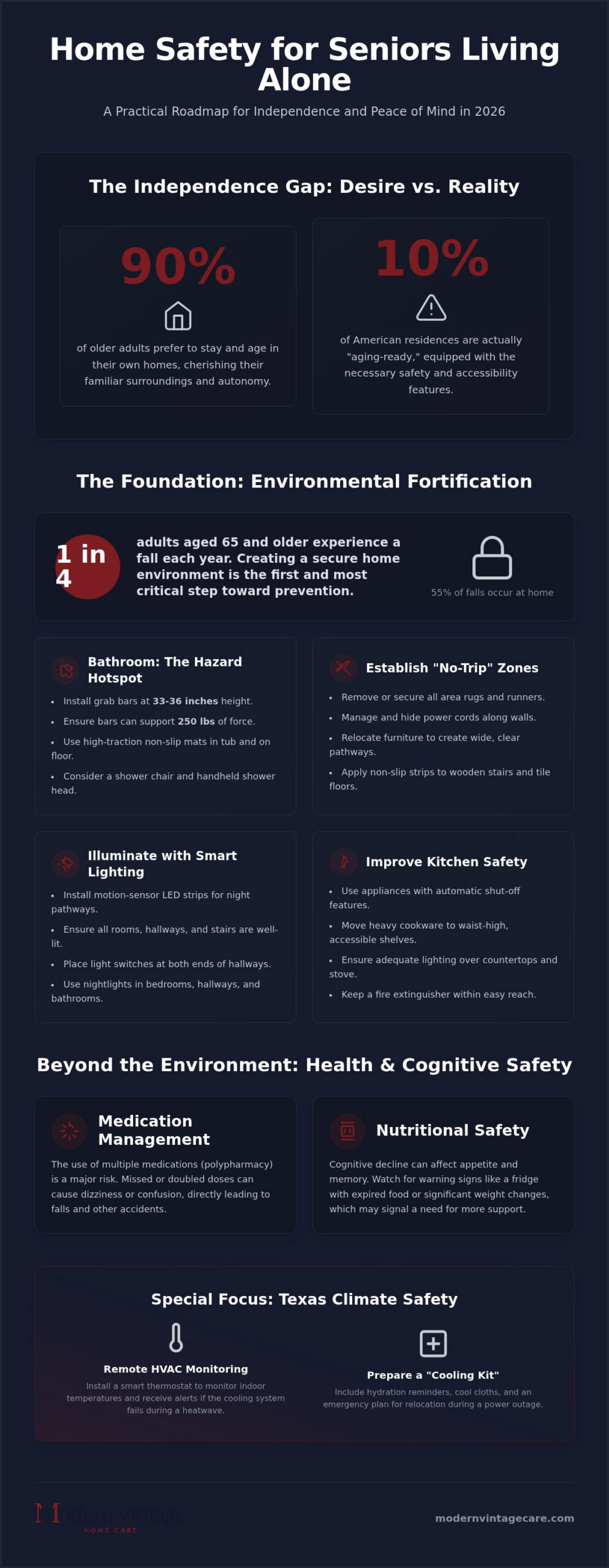
Did you know that while over 90% of older adults prefer to stay in their own homes, only 10% of American residences are actually “aging-ready” with the necessary safety features? This gap often creates a quiet underlying anxiety for families. You might worry about a fall going unnoticed for hours or feel a pang of guilt when you can’t make it across town for a daily check-in. Ensuring home safety for seniors living alone isn’t just about installing a few grab bars; it’s about creating a comprehensive ecosystem that protects their physical health and your peace of mind.
We understand that maintaining independence is a top priority for your loved one, and it’s our mission to help them do so safely. In this 2026 guide, you’ll discover how to transform a private residence into a secure sanctuary through environmental modifications, cognitive support, and professional oversight. We’ll provide a clear safety checklist and explore how modern solutions like automated check-ins can bridge the gap between autonomy and security. By the end of this article, you’ll have a practical roadmap to ensure your relative remains safe, supported, and dignified in the home they love.
Key Takeaways
- Identify and secure the highest-risk areas of the home, such as the bathroom, by following specific 2026 safety standards for environmental modifications.
- Implement a balanced strategy for home safety for seniors living alone that prioritizes accurate medication management and recognizes early cognitive warning signs.
- Leverage modern technology, including AI-driven fall detection and automated check-ins, to provide a safety net that respects a senior’s desire for privacy.
- Combat the physical risks of social isolation by establishing a consistent rhythm of connection that protects both mental well-being and physical health.
- Recognize the specific “tipping point” indicators that suggest it’s time to transition from home modifications to professional 24-hour support.
The Foundation of Home Safety: Environmental Fortification
Creating a secure home environment is the first step toward ensuring a senior’s independence. Statistics show that one in four adults aged 65 and older falls each year, and approximately 55% of these incidents occur right inside the home. The bathroom is frequently the most hazardous room due to the combination of slippery surfaces and the physical effort required for bathing. To address home safety for seniors living alone, modifications should follow the 2010 ADA Standards, which remain the gold standard in 2026. This includes installing grab bars at a height of 33 to 36 inches from the floor that can support at least 250 pounds of force.
Beyond the bathroom, establishing a “No-Trip” zone throughout the house is vital. While many focus on removing area rugs, true fortification involves managing power cords and evaluating furniture placement. If a coffee table or an ottoman obstructs a natural walking path, it should be relocated to ensure a wide, clear lane for movement. Lighting acts as a silent guardian in this effort. In 2026, motion-sensor LED strips are an affordable way to illuminate pathways from the bedroom to the bathroom, reducing the risk of a fall during the night. In the kitchen, solo dwellers benefit significantly from auto-shutoff appliances and moving heavy cookware to waist-high shelves to prevent dangerous overreaching.
Fall Prevention and Mobility Enhancements
Practical modifications don’t have to be overwhelming. You can begin by applying high-traction non-slip strips to wooden stairs and tile floors. If your loved one’s home has multiple levels, evaluating the need for a stairlift or a permanent ramp can prevent the exhaustion that often leads to stumbles. Aging in Place is a sustainable lifestyle choice in 2026 that allows individuals to remain in their familiar surroundings while maintaining their autonomy through thoughtful home design. These physical changes provide a foundation of confidence for both the senior and their family members.
Texas-Specific Hazards: Heat and Humidity Safety
For those living in Houston and Sugar Land, environmental safety must account for the intense Texas climate. Managing indoor temperatures during extreme summer months is a medical necessity rather than a luxury. High humidity can exacerbate respiratory issues and lead to rapid dehydration. If you are coordinating home safety for seniors living alone from a distance, consider installing a smart thermostat that allows for remote HVAC monitoring. This ensures you’re alerted if the cooling system fails during a heatwave. We also recommend creating a “Cooling Kit” that includes hydration reminders and an emergency plan for relocation to a local community center if the power goes out, ensuring your relative stays safe regardless of the weather outside.
Cognitive and Medical Safety: Managing Health Independently
While a secure physical environment is essential, the internal health and cognitive well-being of a senior are equally critical components of a safe home. Polypharmacy, or the use of multiple prescription medications, presents a significant risk for those living without daily supervision. If dosages are missed or doubled, the resulting side effects like dizziness or confusion can lead to serious accidents. Integrating professional home safety tips to prevent falls often involves reviewing how these medications impact balance and coordination.
Nutritional safety is another often overlooked aspect of home safety for seniors living alone. Cognitive decline can sometimes manifest as a loss of interest in cooking or difficulty remembering when food was purchased. If you notice a refrigerator filled with expired items or a significant change in your loved one’s weight, it may be an early warning sign that they need more support. Maintaining a predictable routine helps preserve cognitive function, as the brain relies on familiar patterns to navigate the day. Simple habits, such as eating meals at the same time or following a set morning checklist, provide a sense of security and reduce the mental fatigue that leads to errors.
Advanced Medication Management Strategies
Managing a complex pill schedule requires more than just a plastic organizer. Utilizing medication management for elderly seniors can significantly reduce the stress of daily health tracking. Automated medication reminders are particularly effective because they provide a proactive alert, ensuring the correct dose is taken at the right time. We also recommend organizing a “Medical Master File” that includes a current list of all prescriptions, allergies, and doctor contacts. Keeping this file in a visible location, such as the refrigerator door, allows emergency responders to act quickly if an incident occurs.
Safety for Seniors with Early-Stage Dementia
When forgetfulness begins to impact daily life, adapting the home environment becomes a priority for maintaining home safety for seniors living alone. Utilizing specialized dementia home care services in Sugar Land can help families implement visual cues, such as labeling drawers or using “stop” signs on exit doors, to reduce anxiety and confusion. For those at risk of wandering, door alarms and GPS tracking devices offer a vital safety net without being overly intrusive. If you are feeling overwhelmed by these transitions, a compassionate care consultation can help you identify the specific tools your loved one needs to stay safe while preserving their dignity.
Social Safety: Preventing Isolation and Ensuring Connection
While environmental and medical precautions are vital, the “human element” is the most frequent point of failure in home safety for seniors living alone. Social isolation is often called a silent killer because it accelerates physical health decline and increases the risk of chronic conditions. Research highlights significant health and safety risks for seniors who lack consistent social interaction, ranging from higher blood pressure to weakened immune systems. A reliable connection isn’t just about emotional warmth; it’s a diagnostic tool that helps families catch subtle changes in mobility or cognition before they lead to an emergency.
Residents in Sugar Land and Missouri City have access to excellent community resources, such as the T.E. Harman Center or local senior programs, which offer vital opportunities for engagement. However, getting to these locations safely can be a challenge. Establishing a consistent rhythm of connection at home ensures that a senior’s safety isn’t left to chance. This is where professional oversight bridges the gap between total independence and high-risk isolation. It provides a level of accountability that volunteers or busy family members may struggle to maintain consistently.
Automated Check-In and Wellness Monitoring
A missed phone call can trigger unnecessary panic for family members, but a professional check-in system provides a structured safety net. Unlike a “friend check,” where a volunteer might be delayed or forget, a professional wellness call follows a strict response protocol. If a check-in is missed, a pre-determined chain of action begins immediately. This ensures help arrives even if the senior cannot reach a phone or a medical alert button. This technology offers a non-intrusive way to monitor home safety for seniors living alone without the constant presence of a caregiver, maintaining their privacy while ensuring they are never truly alone in a crisis.
Professional Companionship as a Safety Shield
There is a specific “tipping point” where technology alone isn’t enough to prevent accidents. Utilizing personal care for seniors in Houston provides a physical presence that can identify hazards in real-time, such as a spill on the floor or a forgotten stove burner. This support isn’t about taking away autonomy; it’s about providing the exact frequency of visits needed to maintain dignity. Whether it’s a few hours a week or a daily visit, companionship acts as a shield against the dangers of being solitary during a sensitive life transition. It allows for a proactive approach to care, where health changes are noted and addressed before they escalate into hospitalizations.
Digital and Emergency Preparedness in 2026
Advancements in artificial intelligence have fundamentally changed how we approach home safety for seniors living alone in 2026. While physical modifications provide a sturdy foundation, digital tools act as an invisible safety net that operates in the background of daily life. Modern smart home technology now leverages AI for sophisticated fall detection and stove monitoring, which can identify a hazard before it leads to a disaster. If a sensor detects that a burner has been left on for an unusual amount of time, it can automatically cut power to the appliance and send a notification to a family member’s smartphone.
Digital safety also extends to protecting a senior’s financial well-being. As technology becomes more integrated into our lives, cybersecurity has become a critical pillar of home security. We’ve seen a rise in sophisticated “Medicare Scams” and “Grandparent Scams” that target the trust and kindness of older adults. Setting up secure, monitored communication channels and teaching your loved one to verify any unusual request for funds is just as important as installing a deadbolt on the front door. If you are concerned about the technical setup of these protective systems, our team provides concierge services to help bridge the digital gap and ensure all devices are functioning correctly.
Emergency preparedness in Texas requires a specific focus on our unique weather patterns. Every senior household should maintain a “Go-Bag” that is easily accessible in the event of a hurricane or a prolonged power outage. This bag should include a seven-day supply of medications, copies of the “Medical Master File” mentioned earlier, and a portable battery bank for cell phones. Establishing a clear emergency contact protocol is essential; your relative should know exactly who to call first in different scenarios, whether it’s a minor plumbing leak or a medical emergency.
Modern Safety Tech: Wearables vs. Passive Sensors
Choosing the right monitoring system depends on the individual’s comfort level with technology. Many families now evaluate the benefits of medical alert bracelets versus the fall detection features found in modern smartwatches. While wearables are highly effective, they only work if the senior remembers to put them on each morning. This has led to the rise of passive monitoring sensors that track movement patterns without the use of cameras. These sensors respect privacy while providing peace of mind. If a sensor detects an unusual period of inactivity, then the system can notify a designated contact to check in.
Sugar Land and Houston Emergency Resources
For residents in Sugar Land and the greater Houston area, registering with local “Special Needs” registries is a vital step for safety during power outages. These registries allow Fort Bend County emergency services to prioritize vulnerable residents when restoring power or coordinating evacuations. We also recommend saving the direct contact information for local emergency dispatchers rather than relying solely on 911 during major regional events. Staying informed through local alerts ensures that your loved one has the support they need when the Texas weather becomes unpredictable.
Transitioning to Professional Support: When DIY Safety Isn’t Enough
Even with the most advanced smart home technology and physical modifications, there often comes a moment when environmental changes alone cannot guarantee home safety for seniors living alone. Recognizing this “tipping point” is a delicate process for many families. It typically manifests as a series of small but significant red flags, such as unexplained bruising from minor stumbles, a refrigerator that remains empty despite grocery deliveries, or a growing sense of confusion during phone calls. When these signs appear, moving from DIY solutions to professional support isn’t a sign of failure; it’s a proactive step toward preserving your loved one’s quality of life.
Professional oversight provides a level of security that technology cannot replicate. For those requiring constant supervision due to advanced mobility issues or cognitive decline, 24-hour home care in Houston offers a comprehensive safety net that adapts to the senior’s specific rhythm. If a full-time presence isn’t yet necessary, “Quick Care” services provide flexible support during shorter family absences or recovery periods. This personalized approach empowers the individual, allowing them to maintain their independence in a familiar environment while ensuring that a trained professional is always there to prevent an accident before it happens.
Choosing a Local Partner: Modern Vintage Home Care
Our team understands that every residence in Sugar Land is unique, which is why we begin with personalized safety plans tailored to the specific layout of the home and the needs of the individual. We also recognize the immense pressure placed on family members. Utilizing respite care for family caregivers allows you to recharge while knowing your relative is in capable hands. When starting a conversation about bringing in help, we suggest focusing on the concept of a “safety partnership.” Framing the transition as a way to ensure they can stay in their home longer often reduces defensiveness and centers the conversation on their dignity.
Customizing Care for Veterans and Specialized Needs
For those who have served, navigating veterans home care benefits in Sugar Land can unlock essential resources for maintaining home safety for seniors living alone. These benefits often cover specialized support that goes beyond basic check-ins. Our concierge services further enhance this safety by handling transportation to medical appointments and managing daily errands, which reduces the risks associated with driving or heavy lifting. Choosing a local, licensed care provider ensures that every safety protocol is met with professional accountability and heartfelt empathy, making it the gold standard for families seeking true peace of mind.
Embracing Independence with Confidence and Security
Aging in place is a deeply personal goal that requires a proactive and thoughtful strategy. Throughout this guide, we have explored how environmental fortifications, advanced medical management, and consistent human connection work together to create a secure environment. By addressing home safety for seniors living alone through these three pillars, you can replace the anxiety of the unknown with the peace of mind that comes from professional preparation. These modifications and support systems don’t just prevent emergencies; they empower your loved one to remain in the home they cherish with their dignity fully intact.
You don’t have to manage these complex transitions on your own. As a Licensed Texas Home Care Agency and specialized Dementia Care Specialists, we are here to provide the steady advocacy your family deserves. We design customized safety monitoring plans that meet the unique requirements of each individual we serve. To take the first step toward a more secure future, Schedule a Free Home Safety Assessment with Modern Vintage Home Care. We are ready to help you transform your loved one’s home into a sanctuary of safety and warmth.
Common Questions About Home Safety for Seniors
How can I tell if my parent is no longer safe living alone?
You can identify safety risks by watching for “red flag” behaviors such as frequent unexplained bruising, missed medication doses, or a sudden change in household cleanliness. If your loved one is experiencing weight loss or appearing increasingly confused during routine tasks, then home safety for seniors living alone may be compromised. These subtle shifts often indicate that environmental modifications are no longer enough to ensure their well-being without professional oversight.
What are the most affordable home safety modifications for seniors?
The most cost-effective changes involve removing tripping hazards like area rugs and improving visibility with motion-sensor LED lighting in hallways. You can also significantly increase safety by applying non-slip adhesive strips to tile floors and stairs for a very low cost. If you prioritize the bathroom, then adding a simple tension-based grab bar and a rubber shower mat provides immediate protection against the most common cause of household falls.
Are medical alert systems better than a cell phone for emergencies?
Medical alert systems are typically more reliable because they are wearable and often include automatic fall detection technology. While a cell phone is a great tool, it’s often left on a charger or in another room when a fall occurs. A wearable device ensures that help is accessible even if the senior cannot reach a phone or speak clearly, providing a much faster link to emergency responders during a crisis.
What should be included in a senior’s emergency contact list?
A comprehensive list should include immediate family members, a trusted neighbor who has a spare key, and all primary physicians. It’s also vital to include the contact information for their local home care agency and a clearly labeled “Medical Master File.” This file should list all current prescriptions, known allergies, and insurance details so that emergency personnel can make informed decisions quickly if you aren’t present.
How do I prevent my aging parent from falling in the bathroom?
Start by installing permanent grab bars near the toilet and inside the shower at the ADA-recommended height of 33 to 36 inches. Using a shower chair and a handheld showerhead can also reduce the physical exhaustion that often leads to slips. If the senior has difficulty stepping over a tub wall, then a walk-in shower conversion or a simple tub transfer bench can make the bathing process much safer and more dignified.
What are automated check-in services, and how do they work?
Automated check-ins are scheduled, professional wellness calls designed to bridge the gap between independence and 24-hour care. The system places a call at a pre-arranged time each day to confirm the senior is safe and alert. If the senior doesn’t answer the call after several attempts, then a pre-determined emergency protocol is triggered to notify family members or local authorities, ensuring that a crisis never goes unnoticed.
How does dementia affect home safety for seniors living alone?
Dementia introduces unique risks such as wandering, appliance misuse, and significant medication errors. To maintain home safety for seniors living alone with cognitive decline, you should use visual cues like labels on cabinets and “stop” signs on exit doors. If forgetfulness becomes a daily hazard, then implementing specialized door alarms and GPS tracking can provide a vital safety net while allowing the senior to move freely within their home.
Can home care help with medication management in Sugar Land?
Yes, professional caregivers in Sugar Land provide essential support by organizing pill schedules and setting up automated medication reminders. Whether your loved one needs a “Quick Care” visit to ensure a morning dose is taken or requires more consistent monitoring for side effects, a licensed agency provides the professional oversight needed to prevent dangerous drug interactions. This support allows the senior to manage their health accurately without the stress of complex routines.