
What if a smoother doctor visit begins not with finding a different doctor, but with making the details easier to manage? For families exploring concierge doctor visit coordination Sugar Land, the distinction matters: concierge medicine is a physician’s care model, while non-medical support can help organize the practical details around a visit.
Appointment information, records, questions, and follow-up tasks can be a lot to manage, especially while balancing work and caregiving. A loved one with memory or mobility challenges may also benefit from patient support that respects familiar routines and personal preferences.
This guide explains how concierge medicine differs from non-medical coordination and what families can prepare before an appointment, from relevant records to questions and personal preferences. It also covers how in-home support can complement a clinician’s role and make visit planning more manageable for your loved one in Sugar Land.
Key Takeaways
- Understand how concierge doctor visit coordination Sugar Land can involve practical, non-medical organization rather than diagnosis or treatment.
- Learn a simple way to prepare visit details, relevant information, and questions while keeping your loved one’s preferences in mind.
- See how physician care, family responsibilities, and non-medical home-care support can complement one another.
- Use a before-, during-, and after-visit checklist to keep important details and follow-up tasks easier to track.
- Explore how personalized in-home and concierge support from Modern Vintage Home Care can fit into a family’s caregiving routine.
What concierge doctor visit coordination means for Sugar Land families
A doctor’s appointment can add a surprising number of details to an already full caregiving routine. A family member may be juggling work, household responsibilities, and a loved one’s needs while trying to keep visit information and questions organized. For families exploring concierge doctor visit coordination Sugar Land, it helps to distinguish physician care from the practical support that can make a visit easier to prepare for.
Non-medical doctor visit coordination means organizing appointment details and everyday support without diagnosing, treating, or making clinical decisions. Families can keep information in one place, note the senior’s preferences, and plan a familiar routine around the appointment. The clinician remains responsible for medical guidance and decisions.
Concierge medicine versus doctor visit coordination
Concierge medicine describes a physician-care model that may involve a membership or retainer arrangement and enhanced access to a doctor’s services. It does not automatically include non-medical caregiver support. A physician evaluates health concerns and discusses care; family members and home-care support focus on practical, day-to-day organization.
That distinction matters. A caregiver can help a loved one feel prepared and supported within their routine, while questions about symptoms, treatment, or medication belong with the clinician. Non-medical coordination complements a doctor’s role; it does not replace medical care or provide physician access.
When families may value coordination support
Support can be useful when appointment details are spread across papers, messages, and family members’ memories. One person may know the visit time, another may have recent notes, and the senior may have preferences that are easy to overlook during a busy week. Bringing those details together helps the family prepare without making an ordinary appointment feel like an emergency.
Work and caregiving can be difficult to balance, especially when an older adult benefits from gentle reminders or familiar routines. Review the day’s plan together, allow time to get ready, and keep the senior’s comfort and choices central. Modern Vintage Home Care provides companionship and personal care that can support familiar daily routines while families manage practical responsibilities around a visit.
Coordination is about clarity and consideration, not taking control away from the older adult. Families in Sugar Land can use it to bring scattered details together, share responsibilities thoughtfully, and help a loved one approach a doctor visit with greater comfort.
How home-care support can make a doctor visit easier to prepare for
Preparation is easier when the family breaks it into small steps instead of trying to remember everything at once. Home-care support can help maintain familiar routines and assist with everyday needs, while family members gather information and decide what questions to bring. Modern Vintage Home Care provides personalized in-home support, including companionship and personal care.
A simple preparation sequence is to confirm the visit details, organize relevant information, prepare the older adult in a familiar way, and record follow-up tasks after the appointment.
What families can organize before the appointment
Gather the appointment time, location, clinician’s name, and any instructions the office has provided. Keep them in one place that the older adult and involved family members can access. Then write down questions, recent changes, or concerns in plain language, using the senior’s own words where possible. A brief note such as “I’ve felt more tired in the afternoons” gives the clinician a clear starting point without the family trying to interpret the concern.
An up-to-date medication list can also support a clearer conversation. Include medication names and the information shown on current labels or records, and bring the list for the clinician to review. The purpose is to share accurate information, not to decide whether a prescription should change. Medication questions and decisions belong with the clinician.
How to support a calm, person-centered visit
Invite the older adult into the planning. Ask what would help them feel comfortable, explain the appointment in plain language, and follow familiar routines where practical. If memory-related needs shape how your family prepares, the dementia home care guide offers additional context for supporting a loved one with care and consideration.
A relative may help the senior express questions and preferences during a visit. The National Cancer Institute describes a patient advocate as someone who supports a patient in communicating and getting help. Families can use that idea as a reminder to listen and help make the older adult’s concerns clear, while leaving medical guidance to the clinician.
After the visit, note instructions and follow-up tasks as the clinician explains them. If the family shares responsibilities, agree on who will track each next step. For broader help with familiar routines at home, explore personalized in-home support from Modern Vintage Home Care in Sugar Land.
What to compare when choosing doctor visit coordination in Sugar Land
Concierge medicine, direct primary care, family involvement, and home-care support address different parts of an older adult’s experience. Rather than asking which replaces the others, identify what kind of help is needed and who is responsible for it. Comparing the roles clarifies where clinical care ends and practical help at home begins.
Concierge medicine, direct primary care, and home-care coordination
Concierge medicine and direct primary care are physician-care models focused on the relationship and services provided by a clinician. Non-medical home-care support centers on daily routines and practical assistance. Medical advice, diagnosis, and treatment remain the clinician’s responsibility; home-care support does not provide physician access or make clinical decisions.
| Area to compare | Physician care | Family responsibilities | Non-medical home-care support |
|---|---|---|---|
| Primary focus | Clinical assessment and medical guidance | Sharing the older adult’s concerns and organizing information | Personalized support with everyday needs and routines |
| Communication | Discusses health questions and care with the patient | Helps keep relevant details and preferences together | Can be shaped around the person’s comfort and established routines |
| Flexibility | Depends on the physician’s care model | Changes as family schedules and responsibilities shift | Personalized in-home care can complement family support |
The National Institute on Aging offers a practical plan for coordinating an older adult’s doctor visit, including preparation ideas families can adapt. That planning can complement a clinician’s care and the family’s support arrangements.
Signs the support should fit the senior and family
Good support respects the older adult’s preferences and independence. Notice whether planning makes room for the person’s own questions, preferred routines, and communication style. One senior may appreciate a quiet reminder about the day’s plan, while another may prefer to review details with a family member. The goal is thoughtful assistance, not taking over.
Consider how support fits changing family responsibilities, too. Work schedules and caregiving roles may shift, so clear communication can help everyone understand the plan. If medication organization is a concern, the senior medication management guide offers related information. Questions about prescriptions or changes should be discussed with the clinician.
For families considering concierge doctor visit coordination Sugar Land, personalized in-home support from Modern Vintage Home Care can complement physician care by taking the individual’s routines and support needs into account. Keep clinical decisions with the clinician, and shape family and home-care support around the senior’s preferences.
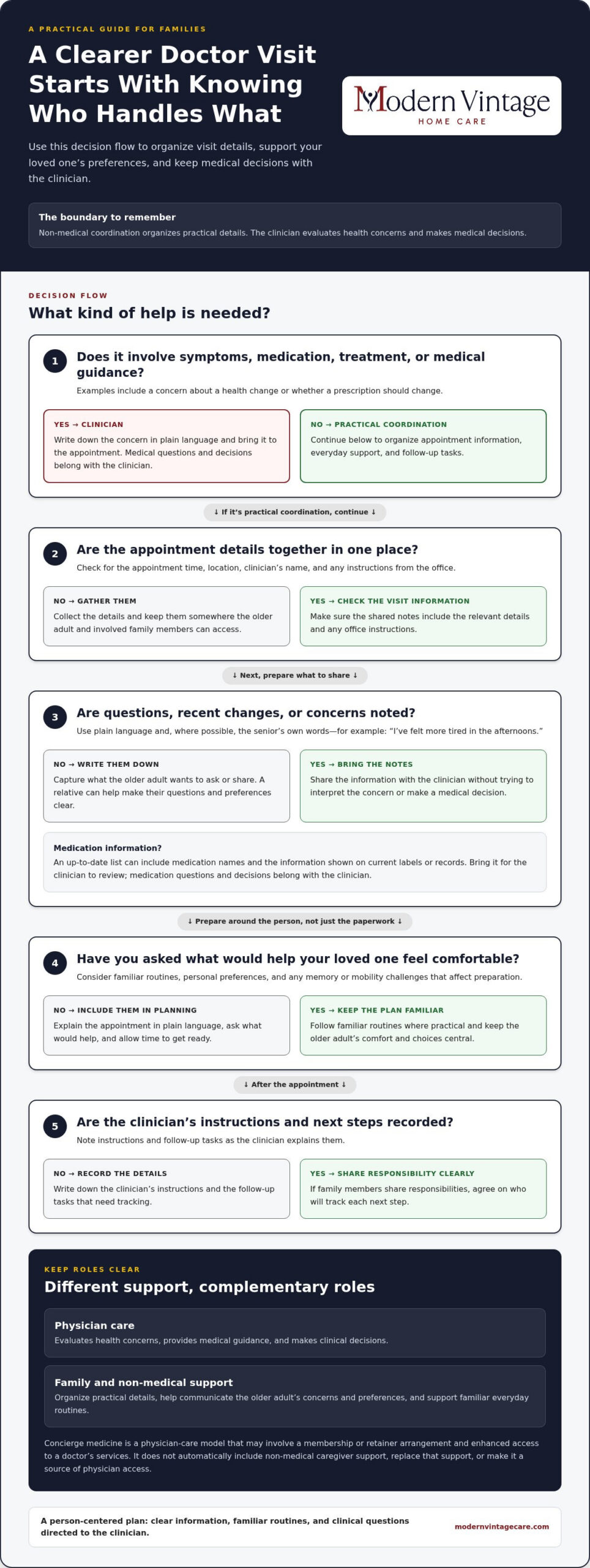
A practical plan for coordinating an older adult’s doctor visit
A written plan can make an appointment easier to manage without adding pressure to the day. Families in Sugar Land can adapt these steps to the clinician’s instructions, the older adult’s preferences, and their own routines. Keep practical details easy to find and leave clinical decisions to the treating clinician.
Before and on the day of the visit
Before the appointment, use the clinician’s communications to confirm the details, then add them to the family’s preferred calendar. Keep the information together so everyone involved can refer to the same plan.
- Confirm the basics: Note the date, time, location, clinician’s name, and any instructions already provided.
- Gather useful information: Put relevant records, a current medication list, and questions in one accessible place. Write concerns in the older adult’s own words where possible.
- Plan around personal preferences: Ask how the senior would like to prepare. Use calm reminders, plain language, and familiar routines where practical.
On the day, review the plan gently rather than rushing through a long list. Allow time for the older adult to get ready in a way that feels comfortable. Families coordinating concierge doctor visit coordination Sugar Land can divide practical tasks among themselves, such as gathering papers or keeping the calendar current, while respecting the senior’s independence.
After the appointment: capture next steps
As the clinician explains the plan, record instructions as accurately as you can and note who in the family will track each next step. This might include noting a follow-up appointment or setting a reminder based on the clinician’s direction. If an instruction is unclear, ask the clinician to explain it rather than trying to interpret it at home.
- Write down the next steps: Keep the clinician’s instructions and any follow-up details together.
- Assign family tasks: Make clear who will track reminders or help the older adult stay organized.
- Keep clinical questions with the clinician: Direct concerns about symptoms, treatment, or medication to the treating clinician. Don’t change or interpret medication instructions on your own.
For families in Sugar Land, a shared calendar or a single folder for visit-related information can help everyone stay aligned, even when relatives have different schedules. If ongoing support at home is part of your family’s plan, read the 24-hour home care guide for more information about in-home care.
Explore personalized in-home support from Modern Vintage Home Care to learn how care can be tailored to an older adult’s routines and needs.
Personalized concierge support for doctor visits in Sugar Land
Every family’s support needs look different. An older adult may value familiar company and routines, while relatives balance caregiving with work and other responsibilities. Modern Vintage Home Care provides personalized in-home support in Sugar Land, including concierge services and flexible Quick Care Services. This support is non-medical and complements a clinician’s care; medical advice, diagnosis, and treatment remain the doctor’s responsibility.
How personalized home-care support fits around a visit
Concierge support is personalized to the individual’s needs and the family’s priorities, rather than being a fixed set of doctor-visit tasks. Families considering concierge doctor visit coordination Sugar Land can think about what in-home support would be helpful and how it fits with the senior’s established routines.
Companionship offers a reassuring presence in daily life. Personal care supports everyday needs, while automated medication reminders can help a person remember their routine. These services do not replace a clinician’s guidance or authorize a caregiver to interpret prescriptions or make medication changes. The older adult’s dignity, preferences, and independence should guide how assistance is provided.
A person-centered approach also helps families plan for needs beyond the appointment. If a loved one appreciates a calm, familiar rhythm, support can take that comfort into account. When family responsibilities change, discussing the senior’s routines and priorities can clarify what kind of in-home assistance will be helpful. The goal is to complement the family’s role with support that respects the person receiving care.
Take the next step with a family-centered plan
Start with what matters most to your loved one: familiar routines, the everyday assistance they welcome, and the family’s current caregiving priorities. Sharing those preferences helps shape support around the individual instead of assuming every older adult needs the same help. Clinical concerns and questions about care should continue to go to the treating clinician.
For families in Sugar Land, Modern Vintage Home Care offers personalized in-home and concierge support as part of a broader approach to care at home. Explore personalized home-care support and consider what would help your loved one feel respected, comfortable, and supported in daily life.
Make the Next Visit Easier to Organize
A smoother doctor visit often starts with clear, practical preparation. Keep appointment details, relevant records, questions, and current medication information organized, then note follow-up instructions as the clinician gives them. These steps help family members share responsibilities while keeping medical questions and decisions with the treating doctor.
Concierge medicine is a physician-care model; non-medical home-care support addresses different needs. For families considering concierge doctor visit coordination Sugar Land, personalized support can complement clinical care while respecting an older adult’s preferences, familiar routines, and independence.
Modern Vintage Home Care serves Sugar Land and Missouri City with personalized in-home support, including concierge and Quick Care Services. If you’re exploring support that fits your loved one’s needs and your family’s priorities, explore personalized home-care support in Sugar Land.
Frequently Asked Questions
Is concierge doctor visit coordination the same as concierge medicine?
No. Concierge medicine is a physician-care model, while doctor visit coordination means organizing practical details around an appointment. A doctor provides clinical advice, diagnosis, and treatment. Family members or non-medical home-care support may help keep visit information and personal preferences organized, but that support does not replace the clinician or provide physician access. Knowing the difference helps Sugar Land families identify the kind of help they need.
Can a home-care caregiver help prepare a senior for a doctor visit?
Home-care support can help maintain everyday routines that make an older adult feel prepared. For example, a family might plan a gentle reminder or set aside items the senior wants to bring. Modern Vintage Home Care provides companionship, personal care, and other in-home support tailored to individual needs. Caregivers do not make medical decisions; direct clinical questions and medication concerns to the treating clinician.
How do families prepare an older adult for a doctor appointment?
Start by reviewing the appointment details and any instructions from the clinician. Gather relevant records, a current medication list, and questions in one place. Ask the older adult what would help them feel comfortable, explain the plan in familiar language, and preserve usual routines where practical. Afterward, record the clinician’s instructions and assign family members to track follow-up tasks, without interpreting medical recommendations yourselves.
Can visit coordination support seniors with dementia?
Thoughtful organization and familiar routines can help families support a senior with dementia around a doctor visit. Keep explanations calm and simple, and involve the person in decisions as much as they’re comfortable with. Modern Vintage Home Care provides Alzheimer’s and dementia care in Sugar Land and Missouri City, with support tailored to individual needs. Caregiver support is non-medical; the clinician handles diagnosis, treatment, and medical questions.
Does Medicare cover concierge doctor visit coordination?
Don’t assume Medicare covers concierge doctor visit coordination. Non-medical home-care support and a physician’s medical services are different, and coverage can depend on the specific service and arrangement. Concierge membership or retainer fees also shouldn’t be assumed to be covered. Before making plans based on reimbursement, review current Medicare information and the details of the service in question. Keep coverage questions separate from clinical questions for the doctor.
What information should a family organize before a senior’s doctor visit?
Keep the appointment time, location, clinician’s name, and any instructions together in an accessible place. Add relevant records, a current medication list, and questions or concerns written in the older adult’s own words. If family members share caregiving, note who will bring or organize each item. This preparation makes information easier to find and discuss, but medication questions and concerns should be addressed with the treating clinician.
What does non-medical concierge support for seniors include?
Non-medical concierge support is personalized help with everyday needs, rather than medical care. Modern Vintage Home Care offers concierge services and Quick Care Services, along with companionship, personal care, and automated medication reminders. The appropriate support depends on the senior’s needs and preferences. Caregivers don’t diagnose, prescribe, or change medication instructions; those decisions remain with the clinician. Families in Sugar Land and Missouri City can consider support that fits familiar routines.