

Imagine the quiet tension of a late afternoon when the sun begins to dip and your loved one starts to pace with a restless energy that is hard to soothe. This “sundowning” effect often leaves families feeling exhausted as they try to manage unpredictable mood swings and agitation. You aren’t alone in feeling like the days have become a series of reactions rather than a shared life, especially when you are trying to maintain a daily routine for dementia patient at home without a clear roadmap. Most caregivers find that without a predictable flow, stress becomes the default setting for the household.
Establishing a thoughtful schedule isn’t about creating a rigid or clinical environment. Instead, it acts as a safety anchor that preserves your loved one’s dignity while providing a predictable framework for their care. We’ll show you how to structure a day that reduces anxiety, manages evening transitions, and brings a sense of peace back to your living room. You’ll learn practical ways to balance engagement with rest, helping you feel more confident and less exhausted in your vital role as a caregiver.
Key Takeaways
- Understand how a consistent schedule acts as a “safety anchor” to reduce the fear and agitation caused by memory loss.
- Discover how to utilize the “Morning Window” of high cognitive energy to complete essential personal care tasks with less friction.
- Learn environmental modifications to manage “sundowning” and create a tranquil evening setting that reduces confusion.
- Identify stage-specific adjustments to keep a daily routine for dementia patient at home effective, whether you are supporting early-stage independence or middle-stage safety.
- Explore how specialized care services can provide your family with the reliability and flexibility needed to maintain a peaceful household.
The Power of Routine: Why a Daily Plan is Critical for Dementia Care
When short-term memory begins to fade, the world can feel like a series of disjointed, confusing fragments. For someone living with cognitive decline, a structured daily routine for dementia patient at home serves as a vital safety anchor. It provides a reliable framework that tethers them to reality when their own internal sense of time or place becomes unreliable. By creating a predictable flow, you reduce the underlying fear that often triggers difficult behaviors like agitation or constant repetitive questioning. When your loved one knows what to expect next, they don’t have to spend their limited cognitive energy trying to solve the puzzle of “what happens now.”
Beyond the practical benefits, a structured day allows for a deeper emotional connection between you and your loved one. Instead of spending your hours managing crises or reacting to sudden outbursts, you can focus on the small, meaningful moments of shared joy. Whether it’s listening to a favorite song together or enjoying a quiet cup of tea, these moments are only possible when the environment feels stable and secure. A consistent plan doesn’t just manage the condition; it honors the individual’s spirit by making their world feel manageable and kind.
Anchoring the Day with Predictability
Establishing consistent wake and sleep times does more than just fill the hours; it helps regulate the body’s internal biological clock. This natural rhythm is often disrupted in those with memory loss, leading to restless nights and drowsy afternoons. Similarly, serving meals and snacks at the same time each day creates a familiar sensory rhythm that signals comfort and safety. A Daily Care Plan is a simple, visual guide that outlines the day’s activities to provide clarity and a sense of purpose for both the patient and the caregiver. By making the plan visible, perhaps on a whiteboard or a large calendar, you offer your loved one a sense of preserved independence and reassurance throughout the day.
Routine as a Tool for Caregiver Peace of Mind
The benefits of a structured day extend far beyond the patient; they are essential for the well-being of the entire family. Dementia caregiving is a demanding role that often leads to decision fatigue, where the constant need to manage small choices results in emotional exhaustion. When a routine is in place, those decisions are already made, which significantly lowers the risk of caregiver burnout. This structure also creates natural windows for respite care for family caregivers, allowing you to step away for a break while knowing the schedule remains intact. If a professional caregiver or another family member steps in to help, they can follow the established plan seamlessly. This consistency ensures that the home remains a calm sanctuary rather than a place of constant improvisation.
Designing Your Day: A Morning and Midday Framework
For many families, the early hours of the day represent a golden opportunity. This is often the time when cognitive energy is at its highest, making it the ideal window for essential tasks that might feel overwhelming later. When you structure a daily routine for dementia patient at home, prioritizing the morning allows you to approach personal care with the gentleness and patience your loved one deserves. If you find that bathing or dressing typically causes friction, try scheduling these activities shortly after a calm breakfast when their frustration levels are likely at their lowest.
Maximizing the Morning Cognitive Window
A successful morning begins with a relaxed pace. Rushing through breakfast or medication management for elderly seniors can trigger anxiety that lingers throughout the rest of the day. Instead, use this time to open the curtains and let in natural morning light. This simple act helps regulate the body’s circadian rhythms and can significantly improve mood. If the weather permits, a short walk or light stretching can stimulate the brain and provide a healthy outlet for physical energy. According to the Alzheimer’s Association, a well-structured Daily Care Plan should include activities that stimulate the senses while they are most receptive.
Midday Engagement and Meaningful Activity
As the day progresses into the midday hours, the focus shifts toward maintaining a sense of purpose and social connection. Isolation is a significant risk for those living with memory loss, so incorporating social engagement into the afternoon is vital. This doesn’t require elaborate outings; it can be as simple as folding towels together or sorting a button box. These “productive” tasks help your loved one feel helpful rather than just a recipient of care. Whether you are planning a simple walk or a daily routine for dementia patient at home that includes family visits, consistency remains the most powerful tool in your caregiving kit.
Involving them in the rhythm of the home preserves their dignity. If you notice signs of fatigue, this is the perfect time to pivot to a quiet activity like listening to familiar music or looking through a photo album. A consistent lunchtime serves as a midday “re-anchor,” providing a familiar sensory cue that the morning has concluded and a restful afternoon is beginning. For families who find themselves needing an extra hand to maintain this balance, professional companionship can provide the engaging interaction your loved one craves while you take a well-deserved break.
Navigating the ‘Sundown’ Hours: Evening Routines and Safety
As the late afternoon sun begins to dip, many families notice a shift in their loved one’s behavior. This phenomenon, often called “sundowning,” involves increased confusion, anxiety, and agitation that peaks as daylight fades. It can be one of the most taxing parts of maintaining a daily routine for dementia patient at home, as the person you’ve supported all day may suddenly become restless or suspicious. Understanding that these reactions are triggered by changes in light and exhaustion, rather than intentional difficult behavior, allows you to respond with the gentle reassurance they need during this vulnerable time.
Managing this transition requires a proactive shift in the home environment. Since shadows and reflections can be misinterpreted as threatening figures or holes in the floor, closing the curtains before sunset is a simple yet effective strategy. By creating a warm, well-lit sanctuary, you help minimize the visual triggers that lead to distress. This is also the time to transition from the active engagement of the morning into sensory-focused, calming activities that signal the day is drawing to a close.
Environmental Cues for Evening Calm
Creating a soothing atmosphere is essential for de-escalating evening tension. Soft, warm lighting is much more comforting than harsh overhead bulbs, which can increase glare and confusion. You should also be mindful of the “soundscape” of your home. Reducing background noise, such as a loud television or clattering dishes, prevents the sensory overload that often fuels sundowning. A successful Daily Care Plan prioritizes these subtle environmental shifts to help your loved one feel safe as their internal world becomes less certain.
Preparing for a Restful Night
A consistent wind-down ritual helps bridge the gap between the busy day and a restful night. This might include listening to soft music, reading a familiar book together, or engaging in a gentle hand massage with soothing lotion. Diet also plays a role; providing a light evening snack while limiting caffeine intake after midday can prevent sleep disruptions. Safety is a paramount concern during these hours, especially since research indicates that up to 70% of individuals with dementia will go missing at least once. Implementing wandering prevention for dementia patients, such as door alarms or subtle locks, provides essential peace of mind.
If your loved one experiences significant sleep disturbances or nighttime restlessness, the physical and emotional toll on family caregivers can be immense. In these situations, seeking 24 hour home care Houston ensures your loved one has professional supervision throughout the night. This support allows you to get the rest you need while knowing that a compassionate professional is there to manage any confusion or safety needs that arise in the early hours of the morning.
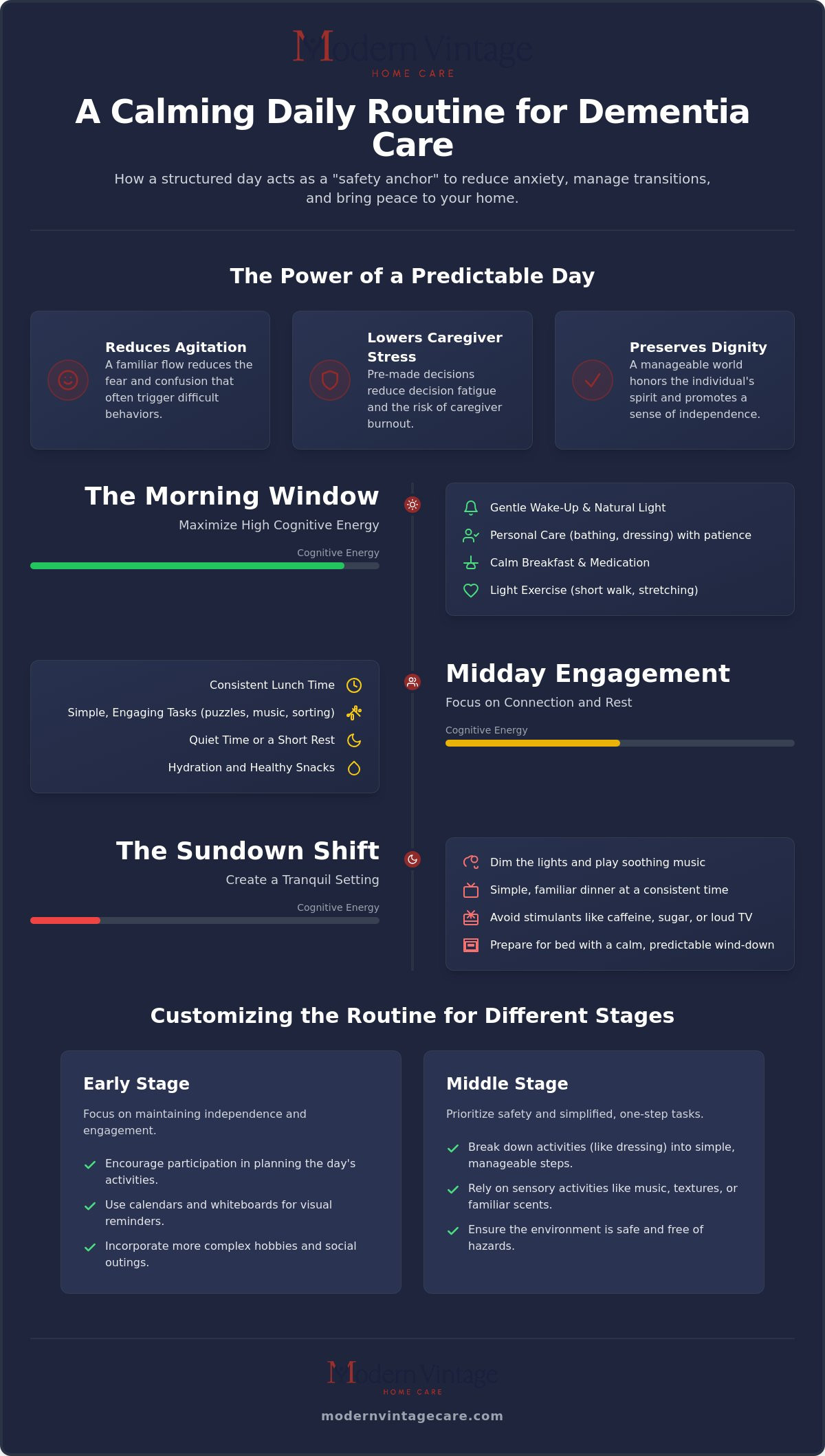
Customizing the Routine for Different Stages of Memory Loss
Dementia is a progressive condition, which means the structure of your day must remain flexible enough to adapt to changing needs. What begins as a helpful guide for independent living eventually transforms into a comprehensive system of support. When you develop a daily routine for dementia patient at home, it’s helpful to view the schedule as a living document that grows with your loved one. By recognizing the subtle shifts in their abilities, you can adjust the level of support to ensure they feel safe without feeling over-managed. This balance is the key to preserving their dignity through every transition.
Early Stage: Preserving Autonomy
In the early stages, the primary goal is to preserve autonomy for as long as possible. Many families find success using large whiteboards or digital calendars to provide self-directed reminders for appointments or social events. This is also the time to encourage continued participation in personal care for seniors Houston, allowing them to lead their own grooming or dressing routines with minimal guidance. If they enjoy being active in the community, plan morning outings to familiar local spots in Sugar Land or Missouri City before the afternoon crowds arrive. These small victories of independence are vital for maintaining their self-esteem and sense of self.
As the condition moves into the middle stage, you might notice that multi-step tasks like making a sandwich or choosing an outfit become frustrating. You can help by simplifying these activities into single, manageable steps. Instead of asking what they want to wear, try presenting two clear options. This reduction in complexity prevents the agitation that often stems from feeling overwhelmed by too many choices. Increasing supervision during these middle years ensures that they can still participate in the rhythm of the home while remaining safe from accidents.
Advanced Stages: Sensory Connection and Comfort
In the advanced stages, the focus of the day shifts from “doing” activities to simply “being” with your loved one. The routine becomes less about completing tasks and more about providing sensory comfort and emotional security. This might include using aromatherapy with lavender to promote calm, offering gentle hand massages, or listening to familiar sounds from their past. Sensory connection becomes the primary language of love when words are no longer easy to find. During this time, safety is maintained through constant supervision and helpful technology like automated check-ins to monitor movement and health patterns. If you find the physical and emotional demands of these later stages are becoming difficult to manage alone, specialized memory care can provide the dedicated support your family needs to ensure your loved one remains comfortable and safe.
Implementing a Professional Routine with Modern Vintage Home Care
Creating a daily routine for dementia patient at home is a profound act of love, but it’s also a role that requires immense stamina and attention to detail. While having a plan on paper provides a helpful roadmap, the actual execution of that plan can be challenging when you are balancing your own life and responsibilities. Modern Vintage Home Care bridges this gap by providing a specialized dementia care team in Sugar Land that understands how to maintain consistency even when the day becomes unpredictable. We don’t just provide a service; we integrate into your family’s rhythm to ensure your loved one feels supported and secure every hour of the day.
Specialized Memory Care in Sugar Land and Houston
Our memory care approach is rooted in deep personalization and respect for the individual’s life story. We develop tailored care plans that respect each person’s unique history, lifelong preferences, and current cognitive abilities. Whether it’s managing the complexities of sundowning or providing gentle redirection during periods of high agitation, our expert caregivers are trained to handle difficult behaviors with quiet confidence and empathy. If your family is feeling the emotional weight of memory loss, we act as a steady advocate, offering the professional guidance needed to keep the home environment calm and nurturing for everyone involved.
Technology-Enhanced Safety and Consistency
Consistency is often the first thing to suffer when a family caregiver is exhausted or stretched too thin. To solve this, we utilize modern safety technology to support the human element of our care. Automated medication reminders ensure that health maintenance remains on track without adding friction to your personal interactions with your loved one. For seniors who may spend portions of the day alone, our automated check-in services provide a vital layer of safety and real-time peace of mind. Modern Vintage acts as a trusted partner in preserving the individual’s spirit by ensuring their daily needs are met with dignity and technological precision.
Professional companionship is a vital component of a successful daily routine for dementia patient at home because it provides the social stimulation that prevents isolation. If a sudden appointment, family emergency, or personal need arises, our “Quick Care Services” are designed to handle last-minute schedule changes so the routine remains unbroken. By combining heartfelt empathy with professional authority, we help you transition from being a full-time manager of care back to being a devoted family member. This balance ensures a higher quality of life for your loved one and a more sustainable, peaceful environment for your entire family.
Restoring Peace and Stability to Your Home
Establishing a daily routine for dementia patient at home is one of the most effective ways to replace fear with familiarity. By anchoring the day with predictable morning rituals and calming evening transitions, you create a sanctuary where your loved one can feel truly safe. This structure doesn’t just manage behaviors; it protects the individual’s dignity and allows your family to focus on shared moments of connection rather than the stress of constant uncertainty. As you’ve learned, small environmental shifts and stage-specific adjustments make a world of difference in reducing agitation and caregiver fatigue.
You don’t have to navigate these transitions alone. Modern Vintage Home Care provides expertly trained memory care specialists who understand the nuances of cognitive decline. From personalized care plans for every stage of dementia to automated safety monitoring and check-ins, we offer the steady support you need to maintain a peaceful home environment. Discover specialized dementia care support in Sugar Land—Contact Modern Vintage Home Care today.
Every small step you take toward a more structured environment is a gift to both your loved one and yourself. With the right tools and a compassionate team by your side, it’s possible to find a sense of balance and reassurance in your caregiving journey.
Frequently Asked Questions
What should I do if my loved one refuses to follow the daily routine?
Stay flexible and try to understand the underlying cause of the resistance rather than forcing compliance. If a task is met with agitation, it’s often best to step back and try again in fifteen or twenty minutes when their mood has shifted. Forcing a daily routine for dementia patient at home can lead to power struggles that increase stress for everyone. Sometimes, simplifying the request or offering a gentle choice between two options can help them feel more in control.
How can I handle sundowning symptoms in the late afternoon?
Reduce environmental triggers by closing curtains before sunset and minimizing background noise like the television or loud appliances. Sundowning often stems from exhaustion or sensory overload, so shifting to quiet, comfort-based activities is essential for de-escalation. If agitation persists, try offering a familiar snack or playing soft, nostalgic music to provide a sense of security. Keeping the home well-lit with warm lamps can also help eliminate the confusing shadows that often cause late-afternoon anxiety.
Are there specific activities that are best for dementia patients at home?
The best activities are those that tap into long-term memories and provide a sense of purpose without being overly complex. Simple chores like folding laundry, sorting a toolbox, or light gardening allow your loved one to feel productive and helpful. Sensory-focused tasks, such as listening to a favorite album or looking through family photos, are also excellent for maintaining emotional connection. Always tailor the activity to their current energy level to ensure it remains a source of joy rather than frustration.
How often should I update or change the daily care plan?
You should review and adjust the care plan whenever you notice a consistent shift in your loved one’s abilities, energy, or mood. Dementia is a progressive condition, so a schedule that worked six months ago may now be too taxing or confusing. If you find that certain times of day are becoming consistently difficult, it’s time to simplify the tasks or increase the periods of rest. Regular small adjustments ensure the routine remains a supportive anchor rather than a source of stress.
Is it better to have a written or a visual schedule for someone with dementia?
Visual schedules are generally more effective because they use pictures or symbols that are easier to process as cognitive abilities decline. While a written list might work in the early stages, adding icons or large, high-contrast photos provides a clear sensory cue that reduces confusion. Placing these visual aids in high-traffic areas like the kitchen or hallway helps remind your loved one what to expect next. This simple modification significantly lowers their daily anxiety levels and promotes a sense of safety.
When is it time to consider professional 24-hour home care for a dementia patient?
It’s time to consider 24-hour support if your loved one’s safety is at risk during the night or if you are experiencing severe caregiver burnout. Signs like frequent wandering, repeated falls, or the inability to manage personal care safely indicate that a higher level of supervision is needed. Professional care ensures your loved one is never alone during high-risk hours, allowing you to rest and maintain your own health. This specialized support provides the reliability needed to keep the home environment stable and secure.
How do I balance the patient’s need for routine with my own family schedule?
Focus on creating “anchor points” in the day that stay consistent, even if other activities must shift around them. Meal times and sleep schedules are the most important pillars to maintain for a daily routine for dementia patient at home. If your family schedule is particularly busy, consider using respite care or professional companionship to fill the gaps. This allows your loved one to keep their familiar rhythm while you attend to other family obligations or personal needs without feeling overwhelmed.
What are the first signs that a home routine is no longer sufficient for safety?
Increased wandering, unexplained bruising from falls, or missed medications are the most common signs that the current home routine needs more support. You might also notice that your loved one is becoming increasingly fearful or paranoid despite a consistent schedule. If the home environment no longer feels like a calm sanctuary and you find yourself constantly in “crisis mode,” it’s a clear signal. These changes suggest that professional intervention or more intensive monitoring is necessary to preserve their well-being.