
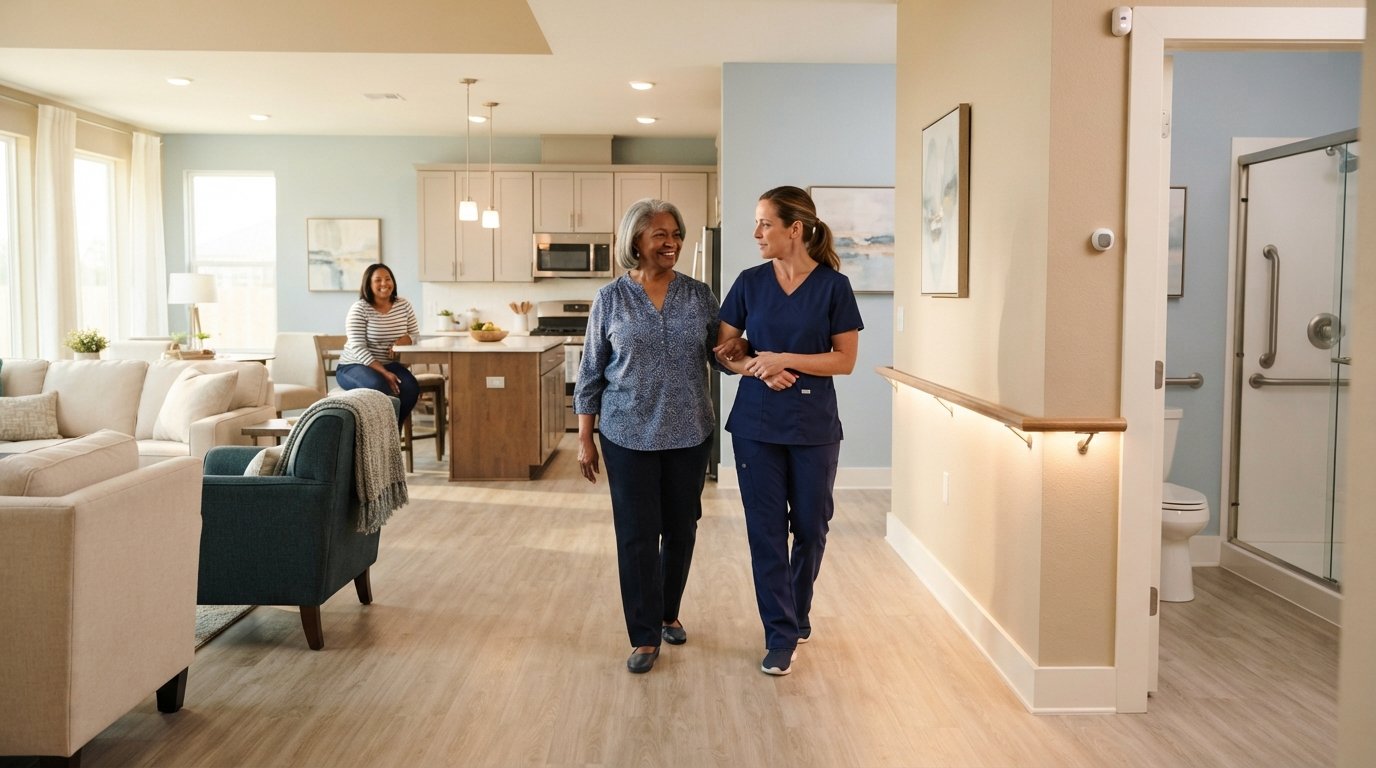
Did you know that six out of ten people living with Alzheimer’s or another form of dementia will wander at least once? This reality often creates a constant state of worry for families, making it difficult to feel at peace even in your own living room. If you find yourself double-checking door locks or feeling anxious about a potential fall, you aren’t alone in these concerns. Creating a safe home environment for dementia patients is one of the most proactive steps you can take to protect your loved one and restore your own sense of calm.
In this guide, you’ll discover how to transform your home into a secure, stress-free sanctuary using our expert-backed safety checklist. Whether you’re worried about kitchen accidents or bathroom slips, we provide a clear path forward that prioritizes both safety and independence. We’ll explore room-by-room modifications that help reduce confusion and prevent injuries, ensuring your space remains a place of comfort rather than a source of risk. By the end of this article, you’ll have a practical plan to maintain your loved one’s dignity while significantly reducing the daily stresses of caregiving.
Key Takeaways
- Understand how sensory changes like depth perception and “sundowning” impact safety, and learn to use lighting and color contrast to reduce daily confusion.
- Follow our detailed room-by-room checklist to master the essentials of creating a safe home environment for dementia patients, focusing on high-risk zones like the kitchen and bathroom.
- Discover how smart technology, such as door sensors and GPS wearables, can help mitigate wandering risks while respecting your loved one’s independence.
- Identify the specific signs that indicate when home modifications should be paired with professional support to ensure 24-hour safety and peace of mind.
The Foundation of Dementia Safety: Why the Home Environment Matters
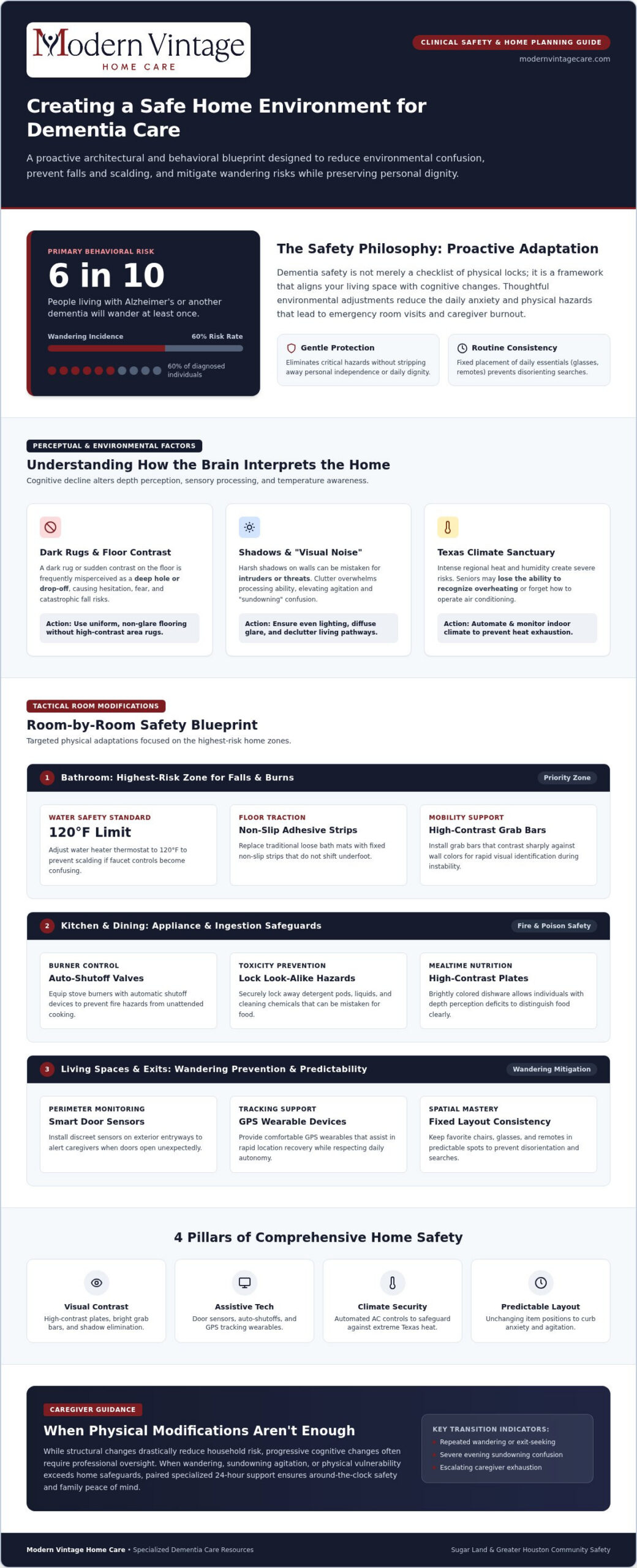
Dementia safety is more than a simple list of locks and grab bars. It is a proactive philosophy focused on reducing confusion and physical hazards before an accident occurs. When we talk about creating a safe home environment for dementia patients, we are really discussing the creation of a space that adapts to their changing reality. The goal is to find a gentle balance where necessary restrictions protect them without stripping away their sense of independence or dignity. By making thoughtful adjustments early, you can prevent the crises that often lead to emergency room visits or caregiver burnout.
Living in Sugar Land brings unique environmental considerations that go beyond basic interior design. Our intense Texas heat and high humidity aren’t just uncomfortable; they are significant safety risks for seniors with cognitive decline. A safe home must function as a climate-controlled sanctuary where temperatures are monitored automatically. This prevents heat exhaustion if a loved one loses the ability to recognize they are overheating or forgets how to adjust the air conditioning during a sweltering summer afternoon. Safety in the home is as much about managing the climate as it is about managing the floor plan.
Understanding the “Dementia Lens” on Home Life
Cognitive decline changes how the brain processes visual information, often leading to frightening misinterpretations of the surroundings. A dark rug might look like a deep hole, while a simple shadow on the wall could be mistaken for an intruder. These misperceptions cause significant anxiety and agitation, which can trigger unsafe behaviors. Environmental safety is the alignment of physical space with a patient’s current cognitive stage. Reducing “visual noise” by clearing clutter helps prevent the overwhelming feeling of having too many choices, which often leads to dangerous levels of stress and confusion.
The Role of Routine in a Safe Environment
Consistency is one of the most powerful tools for safety. When essential items like glasses, remotes, or a favorite chair stay in fixed locations, it prevents the frustrating searches that often trigger wandering and elopement behaviors. By maintaining a predictable layout, you provide your loved one with a sense of mastery over their own environment. If managing these routines and modifications becomes overwhelming, many families find peace of mind through Specialized Dementia Home Care Services in Sugar Land for structured, professional support. This consistency reduces the risk of a loved one feeling lost in their own home, which is the first step in creating a safe home environment for dementia patients.
Room-by-Room Safety Checklist for Houston Homes
Addressing the physical layout of your home is a vital part of creating a safe home environment for dementia patients. Each room presents unique challenges that require a thoughtful, proactive approach to prevent accidents. By walking through your home room by room, you can identify hidden hazards and implement solutions that preserve your loved one’s comfort and dignity. These modifications aren’t just about restriction; they’re about building a space where your relative can move with confidence and less confusion.
Kitchen and Dining Room Safeguards
The kitchen is often the heart of the home, but it can also be a source of significant risk. Start by installing auto-shutoff valves on the stove to prevent fire hazards if a burner is left unattended. It’s also helpful to remove small, dangerous appliances from the counters when they aren’t in use. Lock away “look-alike” hazards like colorful detergent pods or cleaning supplies that could be mistaken for food. During meals, use high-contrast plates; a brightly colored plate helps someone with depth perception issues distinguish their food from the table, making eating a much easier task.
Bathroom Modifications for Fall Prevention
Statistically, the bathroom is the highest-risk zone for falls in any home. To mitigate this risk, replace traditional bath mats with non-slip adhesive strips that stay firmly in place. Install grab bars that contrast sharply with the wall color so they are easy to locate during a moment of instability. Following the National Institute on Aging home safety guidelines, you should also adjust your water heater to 120°F. This simple change prevents accidental scalding if a loved one becomes confused by the faucet handles. If you’re feeling overwhelmed by these physical changes, our team can provide specialized dementia care to help monitor these daily risks.
Living Room and Entryway Clarity
Living areas should be kept open and easy to navigate. Remove rugs with “busy” or intricate patterns, as these can cause dizziness or be misperceived as obstacles. Ensure there are clear walking paths between rooms by securing loose electrical wires and rearranging furniture to avoid tight corners. These steps are essential because fall prevention is a core component of personal care for seniors in Houston. Finally, in the bedroom, use blackout curtains and a simple layout to improve sleep quality and reduce the urge for nighttime wandering. A calm, uncluttered bedroom helps the brain transition to rest, which is a key part of creating a safe home environment for dementia patients.
Advanced Safety: Technology and Wandering Prevention
Wandering is one of the most stressful challenges for families, affecting roughly 60% of individuals with cognitive decline. In our local Sugar Land and Houston area, the stakes are particularly high due to the extreme heat and humidity. If a loved one leaves the home unattended during a Texas summer, they face a high risk of heat stroke or severe dehydration within a very short window. Creating a safe home environment for dementia patients requires a multi-layered approach that combines physical barriers with modern technology to ensure a rapid response if an exit occurs.
Modern sensors and wearables act as a digital safety net, providing a level of “human” awareness even when you are in another room. These tools allow for a more relaxed home atmosphere, as they replace the need for constant, high-pressure visual supervision. Sensory changes often require specific dementia-friendly home modifications to keep common areas safe, ensuring that technology and physical design work together to prevent disorientation.
Implementing a Wandering Prevention Plan
A proactive plan uses visual cues and simple alarms to stop wandering before it starts. You can implement these steps immediately to improve home security:
- Visual Deterrents: Place a large “Stop” sign on exit doors at eye level. Alternatively, place a dark black mat in front of the door; to someone with dementia, this often looks like a deep hole they will naturally avoid crossing.
- Chime Alarms: Install simple, battery-operated chimes on windows and doors. These provide an immediate audible alert the moment a seal is broken, giving you time to intervene.
- Sugar Land Safety Kit: Keep a high-resolution, recent photo and a “scent kit” (a piece of unwashed clothing in a sealed jar) ready. Programs like Project Lifesaver, operated by the Harris County Sheriff’s Office, use these tools to help local authorities locate missing individuals quickly.
Smart Home Tech for Memory Care
Smart technology offers a balance between maintaining dignity and ensuring 24-hour safety. For families who work or have other commitments, automated check-in services provide a steady rhythm of contact throughout the day. These services ensure that your loved one is responsive and safe without the intrusion of constant phone calls. Along with check-ins, using medication management for elderly tools is essential. Automated medication reminders prevent the dangerous dosing errors that often occur when a patient becomes confused about their schedule.
When installing video monitoring in common areas, it’s important to balance the need for safety with your loved one’s privacy. Focus cameras on high-risk zones like the kitchen stove or exit points rather than private spaces like bedrooms. This allows you to check for safety hazards remotely while preserving the individual’s spirit and comfort. Combined with “hidden” locks placed above eye level, these tech solutions make creating a safe home environment for dementia patients a manageable, steady process.
Sensory Safety: Lighting, Contrast, and Noise Control
Sensory perception changes significantly as cognitive decline progresses. The brain often struggles to interpret what the eyes see and what the ears hear, turning ordinary household features into sources of fear or confusion. When creating a safe home environment for dementia patients, you must look beyond physical locks and consider the sensory experience of the space. By managing light, color, and sound, you can reduce the anxiety that often leads to difficult behaviors or physical accidents.
One of the most common challenges families face is “sundowning,” a period of increased agitation that occurs as the sun sets. This is often worsened by poor lighting that creates long, distorted shadows. To a person with dementia, a shadow on the floor can look like a deep pit, while a shadow on the wall might be mistaken for an intruder. Reducing these visual triggers is just as important as removing a trip hazard. Simplifying the visual field by removing mirrors or busy, high-contrast wallpaper also prevents the brain from becoming overwhelmed by moving reflections or patterns that appear to “vibrate.”
Auditory clutter is another hidden danger. Background noise from a loud television, a humming dishwasher, or multiple people talking at once can lead to sensory overload. This overload often causes a loved one to become agitated or miss important verbal cues, such as a warning about a hot surface. Keeping the environment quiet and calm helps your relative focus on their immediate surroundings, which is a fundamental part of creating a safe home environment for dementia patients.
Lighting Strategies for 24-Hour Safety
Consistency in lighting helps prevent the disorientation that occurs during transitions between rooms. Hallways should be as bright as the rooms they connect; if a hallway is dim, the brain may perceive the doorway as a solid barrier. At night, use red-toned nightlights to guide the path to the bathroom. Red light is less likely to disrupt the body’s natural sleep cycle than bright white or blue light, helping your loved one stay oriented without fully waking up. For families managing severe nighttime agitation or frequent wandering, 24-hour home care in Houston provides the constant, gentle supervision needed to ensure safety through the night.
Using Color as a Safety Tool
Color contrast is a powerful way to compensate for failing depth perception. If a white toilet is placed against a white floor, it becomes nearly invisible to someone with dementia, increasing the risk of a fall. Using a dark-colored toilet seat or a contrasting floor mat makes the fixture stand out. Similarly, painting the bathroom door a bright, distinct color makes it much easier to find when urgency strikes. Avoid floor patterns that look like objects or “holes,” such as dark circles on a light carpet. Finally, label drawers with both words and pictures; this simple visual aid bridges the gap when reading becomes difficult, helping your loved one maintain their independence. If you are unsure how to start these modifications, our Alzheimer’s & Dementia Care specialists can provide a personalized assessment to help you create a more peaceful home.
When Home Modifications Aren’t Enough: Professional Support
Even with the most thorough physical changes, cognitive decline is a progressive journey. There may come a time when the physical modifications you’ve made are no longer sufficient on their own. Identifying this transition is a key part of creating a safe home environment for dementia patients. If your loved one continues to experience falls despite grab bars, or if their nighttime wandering has become unmanageable for you, it’s a sign that human supervision is the necessary next step. While sensors and alarms provide alerts, they cannot offer the gentle redirection or physical assistance that a trained professional provides during high-risk moments.
The limit of technology is reached when a situation requires judgment and physical presence. A door sensor can tell you a door has opened, but it cannot walk with your loved one to ensure they don’t trip on the porch. Professional support acts as the ultimate safety net, filling the gaps that hardware and DIY fixes leave behind. This transition isn’t a failure of your caregiving; rather, it’s a proactive choice to prioritize your relative’s well-being and your own health.
The Safety Benefits of In-Home Caregiving
Professional caregivers bring a level of active safety that technology simply cannot match. They provide essential support during the most hazardous parts of the day, such as bathing, navigating stairs, or preparing meals. If a patient becomes agitated or disoriented, a specialist uses proven redirection techniques to de-escalate the situation safely. Integrating respite care for family caregivers is also a vital safety measure. It ensures that you, the primary caregiver, have the rest needed to remain alert and patient, which maintains a calm, secure atmosphere for everyone in the house.
Your Local Support System in Sugar Land
Modern Vintage Home Care acts as a steady partner for Houston and Sugar Land families. We don’t just provide care; we design personalized safety plans that evolve with your loved one’s needs. Whether you need 24-hour support or our Quick Care option for immediate safety checks or short-term needs, we are here to bridge the gap between professional service and familial warmth. Protecting your relative’s dignity while ensuring their physical security is our highest priority. To take the next step in creating a safe home environment for dementia patients, schedule a free safety consultation with us today to protect your loved one and restore your peace of mind.
Taking the Next Step Toward Peace of Mind
Building a secure sanctuary for your loved one is an ongoing process that requires both physical adjustments and sensory awareness. By implementing high-contrast visual cues and smart home technology, you can significantly reduce the risks of falls and wandering. However, the most effective safety plan always includes a human element. Professional support provides the proactive supervision that hardware alone cannot offer, ensuring your relative maintains their dignity while staying secure in the home they love. Creating a safe home environment for dementia patients is a journey that evolves as their needs change.
As specialized Alzheimer’s and dementia care experts serving Sugar Land and Missouri City families, our team is here to act as your steady advocate. We offer everything from automated check-ins to 24/7 support to help you manage every sensitive transition with quiet confidence. You don’t have to navigate these complex modifications alone. Request a Free Home Safety Assessment from Modern Vintage Home Care today to discover how we can help you protect your loved one. Your commitment to their safety is a profound act of love, and we are honored to support you on this journey.
Frequently Asked Questions
How can I prevent my loved one with dementia from wandering out of the house?
Preventing wandering starts with visual cues like “Stop” signs or black floor mats that look like holes. You can also install chime alarms on doors to alert you immediately. In Sugar Land, the heat makes wandering especially dangerous. Consider registering with local programs like Project Lifesaver. These steps are vital for creating a safe home environment for dementia patients while maintaining their comfort and security.
What are the most important home modifications for Alzheimer’s patients?
The most critical modifications focus on fall prevention and sensory clarity. Install high-contrast grab bars in bathrooms and remove all loose rugs that cause trips. Upgrading to bright, consistent lighting throughout the home reduces the shadows that cause confusion. These changes are the foundation of creating a safe home environment for dementia patients in Missouri City. Adding automated medication reminders also prevents health crises related to dosing errors.
Is it safe to leave a person with dementia home alone?
Leaving a senior with cognitive decline alone is rarely safe because emergencies can happen in seconds. Even if they seem capable, a sudden moment of confusion can lead to a fall or a kitchen fire. If you must be away briefly, use automated check-in services for peace of mind. For longer periods, companionship or professional care ensures someone is always there to offer gentle redirection and support.
How do I handle kitchen safety for someone who forgets the stove is on?
Kitchen safety requires proactive barriers. Install an auto-shutoff device on the stove or simply remove the knobs when you aren’t cooking. You should also lock away sharp knives and colorful cleaning pods that might be mistaken for food. If your loved one still attempts to cook unsupervised, our Quick Care Services can provide short visits during meal times to ensure they eat safely without risk of fire.
Why does my loved one get more confused and agitated at night (sundowning)?
Sundowning is often triggered by fading light and growing shadows that the brain misinterprets as intruders or holes. This confusion leads to increased anxiety and restless behaviors. You can manage this by keeping the home brightly lit during the late afternoon. Close the curtains before dusk to block out reflections in the windows. Maintaining a steady evening routine also helps signal to the brain that it’s time to rest.
Are smart home cameras a good idea for dementia safety?
Smart cameras are excellent tools for monitoring common areas like the kitchen or entryways. They allow you to check if the stove was left on or if a door was opened while you’re in another room. However, it’s important to respect their dignity by avoiding cameras in private spaces like bathrooms. Used correctly, these devices provide a helpful layer of security that complements physical home modifications and professional care visits.
How do I make the bathroom safer for a senior with memory loss?
Bathroom safety begins with high-contrast modifications. Replace white toilet seats with a dark color to make them easier to see against light flooring. Use non-slip adhesive strips in the shower instead of bulky mats. Most importantly, set your water heater to 120°F to prevent accidental burns. These simple changes help a senior with memory loss navigate their personal care routine with much less fear and a higher degree of independence.
When should I consider professional 24-hour in-home care for safety?
You should consider 24-hour care if your loved one wanders frequently or if they have fallen multiple times in the home. If you feel overwhelmed or exhausted by the constant need for supervision, it’s time for professional support. Modern Vintage Home Care offers round-the-clock assistance in Sugar Land to ensure your relative is never alone. This level of care provides the ultimate safety net for families who can no longer manage alone.