
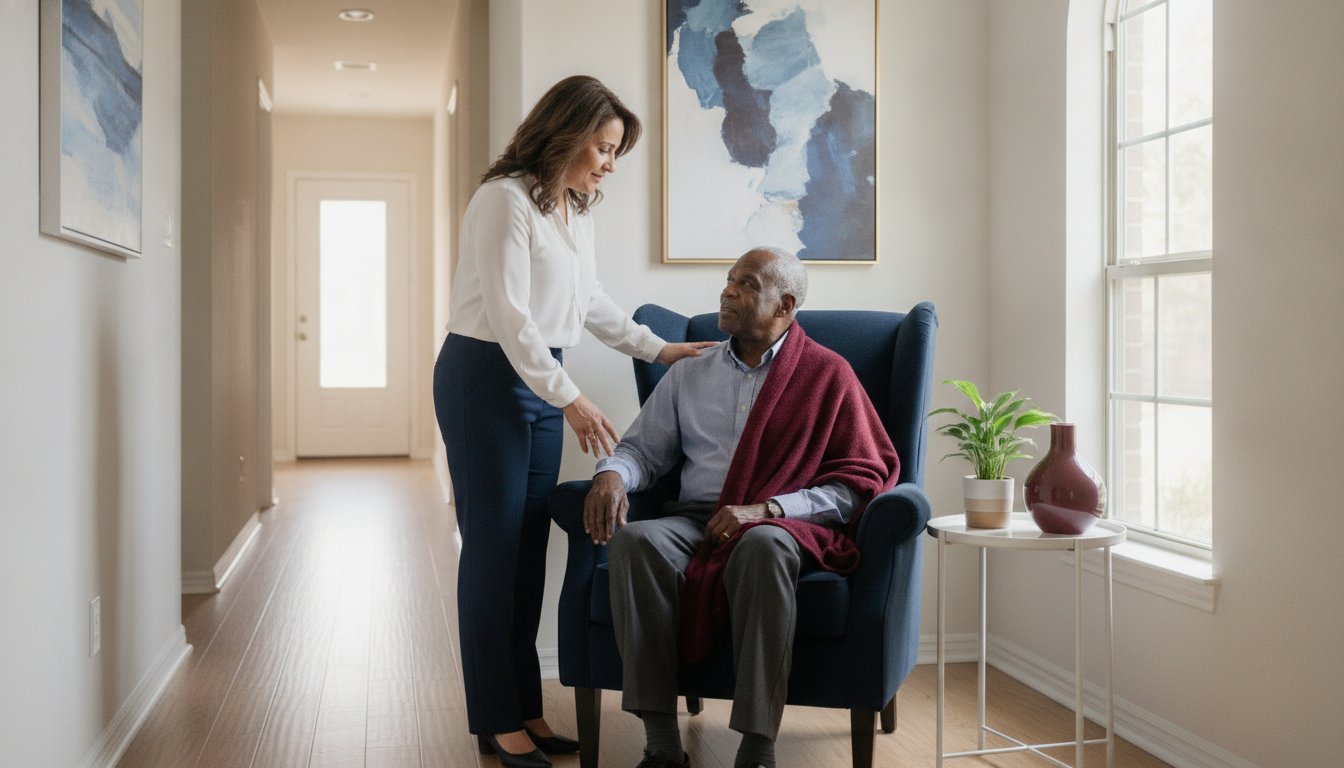
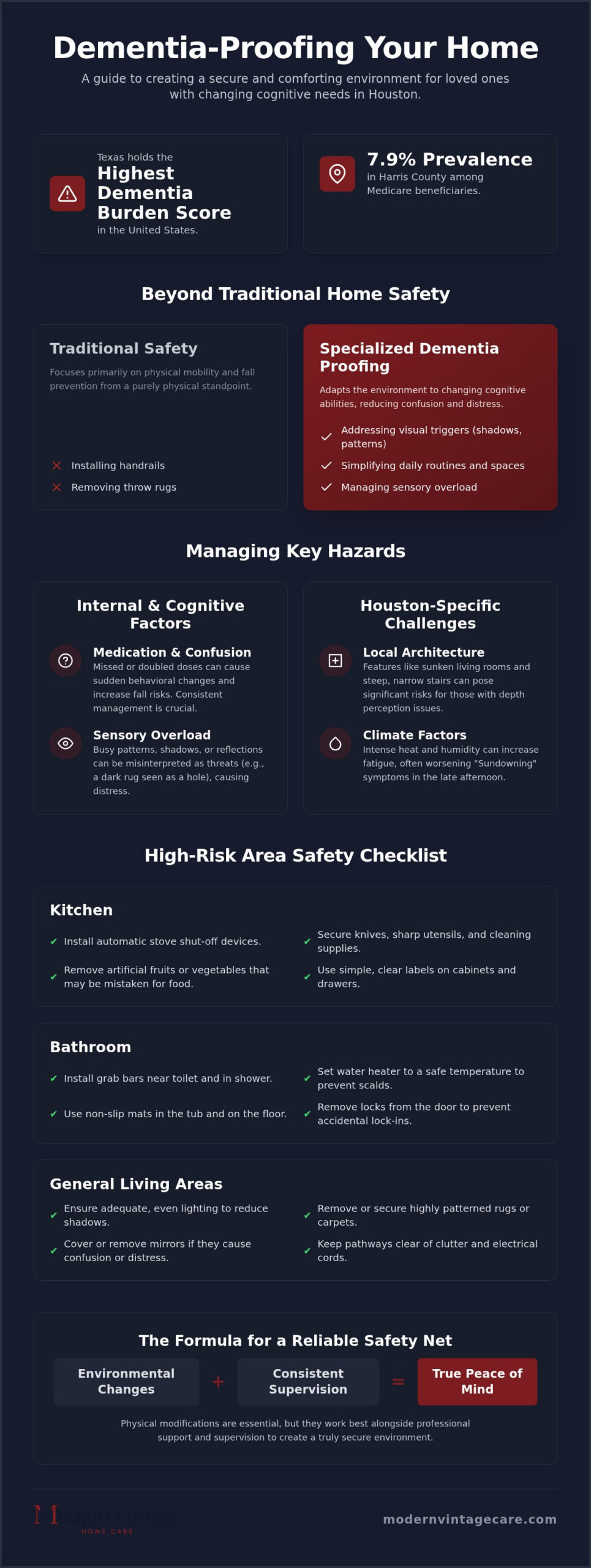
Did you know that Texas currently holds the highest dementia burden score in the United States? With Harris County showing a dementia prevalence of 7.9 percent among Medicare beneficiaries, many local families are facing the same quiet anxieties you feel every evening. Taking proactive steps for dementia proofing your home Houston allows you to create a secure haven that protects your loved one while honoring the memories built within those walls.
It’s natural to feel a sense of worry when the sun begins to set. Whether you’re concerned about the risk of nighttime wandering or the sudden confusion caused by mirrors and busy floor patterns, the stress of balancing safety with a senior’s dignity is a heavy weight to carry. You deserve to feel confident that your living space is a sanctuary rather than a series of hidden obstacles. We understand that you want to provide the best care possible without making your home feel clinical or cold.
This comprehensive guide will help you transform your environment into a secure space that minimizes confusion and prevents common injuries. We’ll walk through practical, immediate steps you can take to simplify your surroundings and improve daily life. You’ll learn how to identify hidden risks and implement supportive solutions that reduce caregiver anxiety and foster a sense of peace for the entire family.
Key Takeaways
- Understand the vital difference between traditional home safety and specialized modifications that account for changing cognitive needs.
- Discover how addressing visual triggers like shadows and floor patterns is a crucial part of dementia proofing your home Houston to prevent distress.
- Access practical checklists for high-risk areas like the kitchen and bathroom to minimize hazards while preserving your loved one’s dignity.
- Learn why environmental changes work best alongside consistent supervision and how professional support provides a reliable safety net.
- Gain the tools to perform your own initial home walkthrough and identify exactly when it’s time to seek expert guidance for a comprehensive safety plan.
What is Dementia Proofing and Why is it Essential in Houston?
Most people think of home safety as simply installing a few handrails or removing throw rugs. While those steps are helpful for physical mobility, dementia proofing your home Houston requires a deeper look at how the brain processes its surroundings. It’s the thoughtful process of adapting a living space to match a senior’s changing cognitive abilities, ensuring the home remains a place of comfort rather than a source of confusion. When we align the environment with their current reality, we reduce the daily friction that often leads to outbursts or accidents.
Traditional senior proofing often falls short because it doesn’t account for cognitive triggers. A person living with Alzheimer’s might have the physical strength to walk but may lack the awareness to recognize that a dark rug looks like a dangerous hole in the floor. Failing to make these distinctions often leads to the “ER cycle,” where Houston seniors with memory loss face recurring hospital visits due to preventable household accidents. By proactively modifying the environment, we help our loved ones maintain their dignity and independence for a much longer period. A safe home reduces the frustration that comes from not being able to navigate one’s own life, which in turn lowers stress for the entire family.
The Link Between Memory and Safety
Short-term memory loss often transforms familiar daily routines into hazardous situations. A simple task like making tea can become dangerous if a stove is left on or a kettle is forgotten. Beyond memory, spatial disorientation makes even familiar hallways feel like a maze, leading to increased fall risks as the person hesitates or loses their balance. Cognitive safety is the alignment of a physical space with a person’s mental map. To bridge this gap, many families explore home automation for the elderly and disabled, which uses technology to monitor stove usage and provide automated reminders that support a safer routine.
Houston-Specific Safety Challenges
Local architecture in areas like Sugar Land and Missouri City often features sunken living rooms or steep, narrow stairs that present significant risks for those with depth perception issues. Southeast Texas weather also plays a specific role in cognitive health. The intense humidity and heat can increase physical fatigue, which often exacerbates “Sundowning” symptoms in the late afternoon. For families in Fort Bend County, utilizing local community resources and professional guidance can provide a necessary safety net. Creating a truly safe environment isn’t just about hardware; it’s about understanding the unique intersection of a person’s cognitive health and the specific layout of their Houston home.
Managing Internal Hazards: Cognitive and Health Factors
Physical modifications like grab bars are essential, but they only tell half the story. True safety begins with understanding how internal health and cognitive changes influence a senior’s interaction with their environment. If a loved one is experiencing increased confusion, the cause often lies in the delicate balance of their medication or the way their brain interprets visual information. Addressing these internal hazards is a proactive way to ensure that dementia proofing your home Houston remains effective as the condition progresses.
Medication Management and Confusion
Stability in mood and physical coordination relies heavily on a consistent medication schedule. When doses are missed or accidentally doubled, it can lead to sudden behavioral outbursts or a significant increase in fall risks. Utilizing medication management for elderly loved ones helps stabilize their daily experience and reduces the likelihood of medical emergencies. Automated medication reminders or professional check-ins serve as a vital safety net, preventing the dangerous “double-dosing” that often occurs when short-term memory begins to fade.
Addressing Sensory Overload
As dementia advances, the brain’s ability to process sensory input changes, often turning a normal room into a source of distress. Shadows in a hallway can be mistaken for intruders; a highly patterned rug might look like a gaping hole or a swarm of insects. To counter these visual hallucinations, we recommend simplifying the environment by removing unnecessary clutter and choosing solid-colored flooring. Lighting plays a critical role here; using high-wattage, non-glare bulbs helps eliminate the dark corners that trigger anxiety.
Many families find that implementing Dementia Friendly Home Modifications, such as covering mirrors with a simple cloth, can prevent the “Mirror Effect.” This phenomenon occurs when a person no longer recognizes their own reflection, leading them to believe a stranger is in the house. By managing these sensory triggers, you create a calmer atmosphere that supports emotional well-being. If you feel overwhelmed by these adjustments, a professional dementia care consultation can help identify the specific triggers unique to your home.
Maintaining a predictable routine is perhaps the most powerful tool for managing “Sundowning,” the period of late-afternoon agitation common in many seniors. When the home environment remains consistent, it reinforces a sense of safety and reduces the cognitive load required to navigate the day. Effective dementia proofing your home Houston is a blend of physical changes and lifestyle adjustments that prioritize the senior’s peace of mind above all else.
The Room-by-Room Dementia Proofing Checklist
Effective dementia proofing your home Houston is about more than just hardware; it’s about anticipating needs before they become emergencies. The kitchen often presents the most immediate risks. Installing auto-shutoff devices on stoves ensures that a forgotten burner doesn’t lead to a catastrophe. It’s also vital to hide toxic cleaning supplies in locked cabinets. As cognitive abilities change, a brightly colored bottle of detergent can easily be mistaken for a drink or a familiar food item. In the bedroom, using motion-sensor nightlights provides a clear, illuminated path to the bathroom, reducing the confusion that often leads to nighttime falls.
The Bathroom: High-Risk Zone
Bathrooms are where many household injuries occur, making them a priority for safety modifications. Removing locks from the doors is a simple but critical step to prevent your loved one from getting trapped during a moment of distress. You can also use color-coded faucets, red for hot and blue for cold, to help them distinguish temperatures and avoid accidental burns. While evaluating walk-in showers versus tubs, consider that a low-threshold entry is usually the safer option for long-term accessibility. If hygiene tasks become a source of stress, professional personal care for seniors Houston provides the gentle, expert support needed to maintain a healthy routine safely.
The ‘Houston Factor’ in Flooring
Local weather plays a surprising role in home safety. Houston’s high humidity can make common tile floors incredibly slick, even if they aren’t visibly wet to the eye. Applying non-slip coatings or using contrast-colored tape on floor transitions helps define the space and prevents trips. Many Houston homes feature open-concept designs, which can be disorienting for those with spatial awareness issues. You can create defined pathways by strategically placing furniture, giving your loved one a clear visual guide through the house. Be sure to remove throw rugs in these areas; if they blend into the floor color, they become invisible hazards, and if they contrast too sharply, they can look like holes that trigger fear.
Wandering Prevention at Exits
Safety also means securing the perimeter to prevent unsupervised wandering. Disguising exit doors with murals or curtains can discourage a senior from trying to leave by making the door “disappear” into the wall. Installing simple chimes or electronic alarms alerts you the moment a door is opened, providing an immediate opportunity to intervene. Additionally, moving deadbolts above or below eye level is an effective part of dementia proofing your home Houston. Most people with memory loss won’t think to look for a lock outside of their direct line of sight, keeping them safely inside where they are protected.
The Role of Supervision: Beyond Physical Modifications
Physical modifications provide the framework for safety, but they can’t account for the unpredictable nature of cognitive decline. Human supervision is the vital companion to dementia proofing your home Houston. Even the best-lit hallway or most secure lock doesn’t prevent a senior from feeling a sudden, urgent need to “go home” or “go to work.” Professional caregivers act as a proactive safety net. They identify “near-misses” that family members might overlook, like a slight hesitation at a doorway or a subtle change in balance. This watchful presence allows for immediate intervention before a minor stumble becomes a serious injury.
When nighttime wandering becomes a frequent worry, the transition to 24 hour home care Houston offers the ultimate reassurance. It allows family members to sleep through the night, knowing their loved one is never alone during a moment of confusion. Beyond just safety, companionship plays a major role in reducing the anxiety that often drives a senior to wander. When a person feels heard and supported, they are less likely to experience the restlessness that leads to dangerous situations.
Technology as a Safety Partner
Smart home tools act as excellent safety partners when integrated thoughtfully. Cameras offer peace of mind for distant family members, though we must always balance safety with a senior’s dignity and privacy. GPS wearables are helpful for those in the earlier stages of memory loss, but they aren’t always reliable if the senior forgets to put them on. For families living in different parts of the city, such as Katy or Pearland, automated check-in services provide a steady, reliable connection to their loved one’s daily status without being intrusive.
Professional Memory Care at Home
Utilizing specialized dementia home care services in Sugar Land brings a structured routine into the living environment. This structure is a form of safety itself; it reduces the cognitive load required to navigate the day, which lowers frustration levels. Professional caregivers serve as “Safety Advocates,” acting as the first line of defense against household accidents. This level of support also provides essential respite for family members, reducing the burnout that can lead to oversight and safety lapses in the home.
If you’re feeling the weight of constant vigilance, explore our personalized dementia care options to find the right level of support and safety for your family.
Getting Started with a Home Safety Assessment in Sugar Land
Taking the first step toward a safer home often begins with a personal walkthrough. To begin your own assessment, try to view each room through the eyes of someone experiencing cognitive changes. If a hallway looks dark or a floor transition feels uneven, then it’s time to mark that area for modification. Using a structured approach for dementia proofing your home Houston ensures that you don’t overlook the small details that can lead to big risks. While a DIY audit is a great starting point, there comes a time when professional eyes are necessary. If your loved one’s condition is progressing or if you’re dealing with complex architectural features, a comprehensive home safety assessment provides the expert insight needed to create a truly secure environment.
Introducing changes to a family home can sometimes meet with resistance. It’s helpful to frame these modifications as ways to help the senior stay independent and comfortable rather than as restrictions on their freedom. For those high-risk times, such as the evening transition when agitation often peaks, our Quick Care Services offer a supportive middle ground. These short-term visits provide professional eyes during the most challenging hours, ensuring that the safety measures you’ve put in place are working effectively while giving you a much-needed break.
Local Resources for Houston Families
Living in the Houston area means you have access to a wealth of community support. Connecting with Fort Bend County senior support groups allows you to share experiences with others who understand the unique challenges of Southeast Texas caregiving. Many families are also surprised to learn that financial assistance is available for these transitions. For example, veterans home care benefits Sugar Land can often help cover the costs of the professional support that makes a home safer. At Modern Vintage Home Care, our approach to personalized safety planning centers on the individual’s history and current needs, ensuring that every modification respects their dignity.
Take the First Step Today
You don’t have to change everything at once. Prioritize the most urgent risks this weekend, such as clearing pathways or improving lighting in the bathroom. Larger projects, like installing walk-in showers or complex monitoring systems, can be part of a longer-term plan. The peace of mind that comes with a proactive safety strategy is invaluable; it allows you to focus on making memories rather than managing crises. Effective dementia proofing your home Houston is an ongoing journey that evolves alongside your loved one. If you’re ready for expert guidance, contact Modern Vintage Home Care for a professional safety consultation to begin building your secure haven today.
Creating Your Safe Haven Today
Transforming your home into a secure environment is a meaningful act of love that provides lasting peace of mind for the entire family. By focusing on environmental modifications and recognizing the vital role of consistent supervision, you’re building a foundation that respects your loved one’s dignity while prioritizing their physical safety. Whether you’re addressing the unique challenges of Southeast Texas humidity on flooring or managing the sensory triggers that lead to late-afternoon agitation, each small change makes a significant difference in daily life.
Successful dementia proofing your home Houston is a continuous process that adapts as needs change. As specialized Alzheimer’s and dementia care experts, we’re here to walk this path with you as a trusted partner. We’re a licensed Texas home care provider serving families in Sugar Land, Missouri City, and Greater Houston with quiet confidence and compassionate advocacy. Schedule a Free In-Home Safety Assessment for Your Loved One to ensure your home remains the sanctuary your family deserves. You don’t have to manage these transitions alone; we’re ready to support you in providing a safer, more comfortable life at home.
Frequently Asked Questions
What is the most dangerous room in the house for someone with dementia?
The bathroom is widely considered the most dangerous room due to slippery surfaces and hard fixtures, while the kitchen follows closely because of fire risks. When you begin dementia proofing your home Houston, focus on these areas first. You can mitigate bathroom risks by installing non-slip mats and removing door locks. In the kitchen, securing knives and installing stove safety devices prevents accidents that often occur during moments of cognitive confusion or disorientation.
Should I lock my loved one’s bedroom door at night to prevent wandering?
You should never lock a bedroom door from the outside, as this creates a significant fire safety hazard and can cause extreme distress or panic. Instead of physical restraint, consider using door chimes or motion sensors that alert you when your loved one moves at night. For families in Sugar Land who need extra security, 24-hour care provides a professional safety net that monitors wandering without compromising the senior’s dignity or safety during emergencies.
How can I stop my parent from using the stove when I’m not there?
Installing an automatic stove shutoff device is the most effective way to prevent unsupervised cooking accidents. You can also try removing the stove knobs when you aren’t present or installing a hidden master power switch for electric ranges. These simple physical changes are a core part of dementia proofing your home Houston. If your parent is determined to cook, our Quick Care Services can provide a companion to assist them safely during mealtime transitions.
Are there specific colors I should avoid when dementia proofing?
Avoid dark floor mats and highly patterned rugs, as these often trigger visual hallucinations or depth perception issues. A dark rug can look like a gaping hole to someone with Alzheimer’s, causing them to trip or freeze in fear. Use solid, light colors that provide high contrast between the floor and the furniture. This clarity helps seniors navigate their Sugar Land home more confidently and reduces the cognitive load required to move between rooms.
How do I handle a senior who refuses to let me install grab bars?
Introduce grab bars as a home upgrade for everyone’s stability rather than a specialized medical device. Choosing modern, stylish fixtures that match the existing bathroom decor can make the change feel less clinical. If resistance continues, having a neutral third party, like a professional memory care expert, explain the benefits can help. We often find that seniors are more receptive to safety suggestions when they are framed as a way to maintain their independent lifestyle.
What are the best types of flooring for a home with a dementia patient?
The best flooring options are non-slip, matte-finish materials like vinyl or low-pile commercial carpeting. In Houston’s humid climate, slick tile becomes particularly dangerous when moisture levels rise. Avoid high-gloss finishes that create glare, as reflected light can be disorienting for those with memory loss. Ensuring a consistent floor color throughout the house also helps prevent the step-over reflex that occurs when a senior perceives a color change as a physical obstacle or ledge.
Can smart home technology really replace a live caregiver for safety?
While technology offers excellent monitoring tools, it cannot replace the physical intervention and emotional connection of a live caregiver. Sensors can tell you if a door opens, but they can’t gently guide a confused senior back to bed or assist them after a fall. For families in Missouri City, combining smart home tools with professional companionship ensures that your loved one has both high-tech protection and the heartfelt empathy needed for a high quality of life.
Does insurance or Medicare pay for dementia-proofing modifications?
Traditional Medicare typically doesn’t cover the cost of home modifications like grab bars or ramps. However, if you are in the Houston area, you may find support through the Texas Medicaid STAR+PLUS waiver if the individual meets specific income and asset requirements. Additionally, eligible veterans in Sugar Land may use their Aid and Attendance benefits to help offset the costs of professional home care, which includes ongoing safety monitoring and environmental management of the living space.