
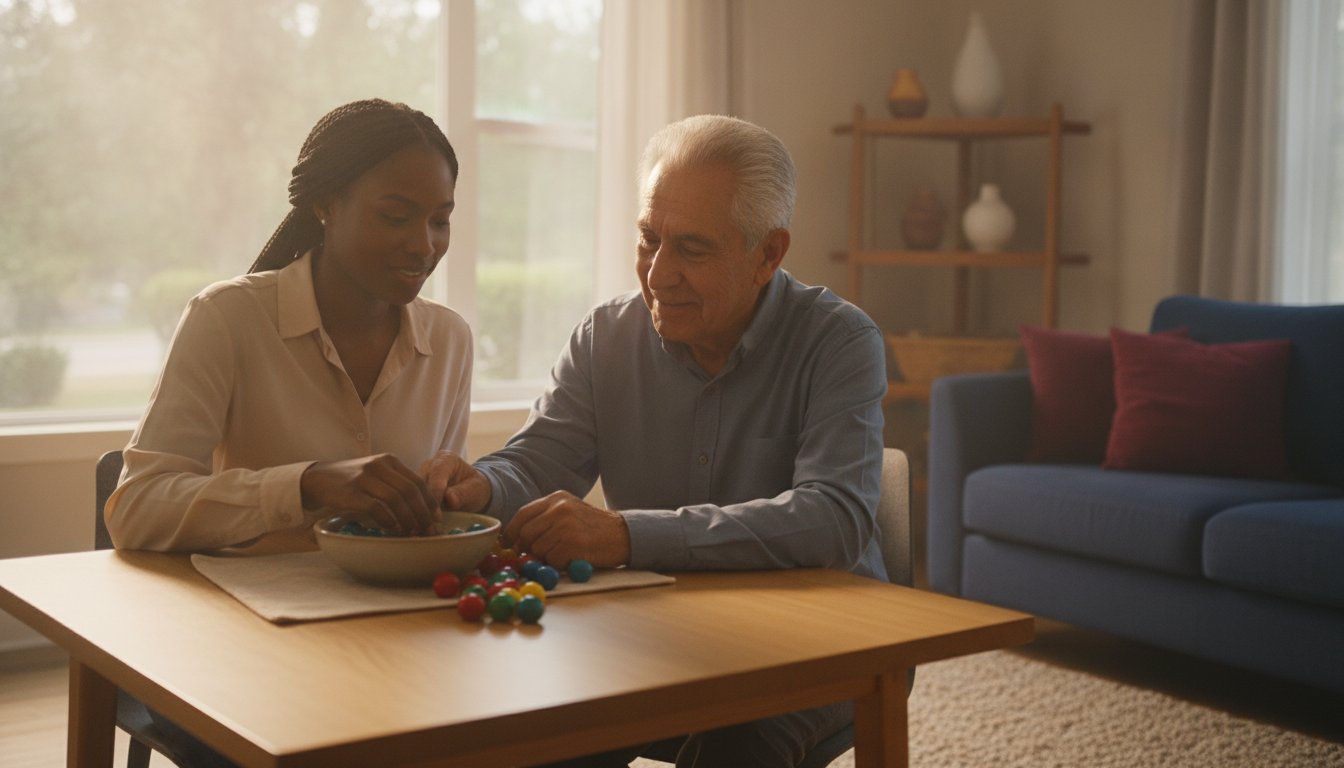
You set out a deck of cards or a favorite photo album, hoping for a spark of recognition, only to be met with a blank stare or a sudden flash of frustration. It’s a heavy, isolating moment that many of the 13 million Americans providing unpaid care face daily while searching for effective activities for dementia patients at home. You aren’t alone if you feel the weight of caregiver burnout or the nagging guilt that you aren’t doing enough to keep them engaged. It’s natural to worry that a lack of stimulation will lead to further withdrawal, yet the fear of triggering a behavioral outburst often makes it feel safer to do nothing at all.
Finding the right engagement isn’t about simply filling the hours; it’s about using therapeutic tools to foster connection and preserve your loved one’s dignity. Whether you are navigating the early signs of forgetfulness or supporting a relative in the later stages, matching an activity to their specific cognitive stage can significantly reduce agitation. This stage-by-stage guide provides over 30 purposeful ideas designed to improve quality of life. We’ll explore how to build a structured daily routine that feels manageable, allowing you to move past the stress of guessing and back into moments of genuine joy together.
Key Takeaways
- Learn how to move away from “one-size-fits-all” tasks by tailoring engagement to your loved one’s specific cognitive stage to prevent frustration and agitation.
- Discover therapeutic activities for dementia patients at home, such as era-specific music playlists and reminiscence therapy, that foster deep emotional connection.
- Identify sensory-rich experiences like indoor gardening and safe outdoor ventures that preserve dignity and maintain physical well-being throughout the year.
- Master the use of “anchor points” to build a structured daily routine that aligns with peak energy levels and reduces anxiety for both the senior and the caregiver.
- Explore how professional companionship or “Quick Care” visits can introduce fresh stimulation for your loved one while offering you a vital opportunity to recharge.
Matching Activities to the Stages of Dementia
Trying to use a one-size-fits-all approach to engagement often leads to unnecessary stress for both you and your loved one. If a task is too complex, it can trigger frustration and agitation; if it’s too simple, it may feel patronizing and cause them to withdraw. Successful activities for dementia patients at home require a thoughtful evolution that honors their current abilities while supporting their remaining strengths.
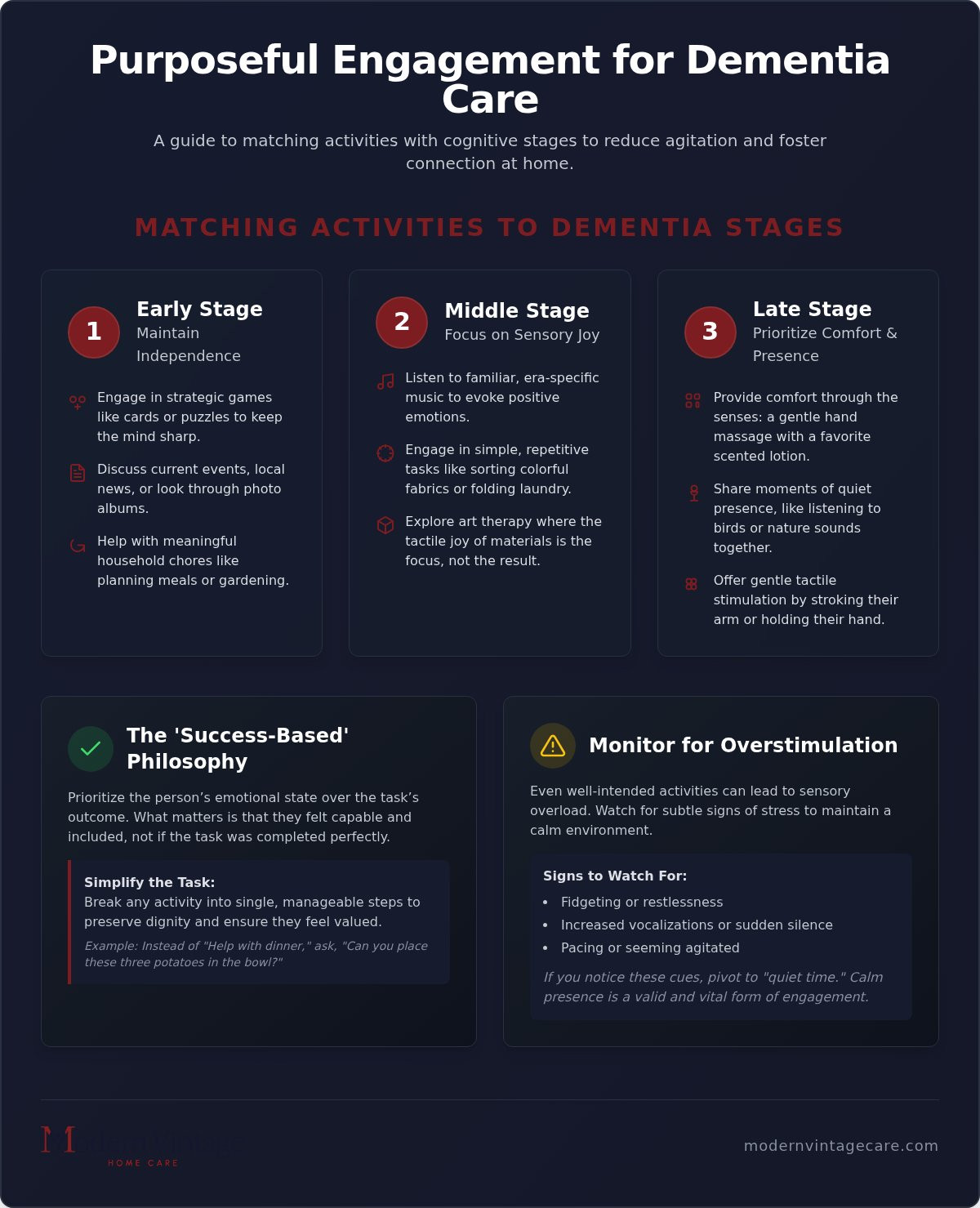
In the early stage, the focus should remain on complex tasks that maintain independence and social connection. Your loved one might still enjoy playing strategic card games, discussing local Houston news, or helping with meaningful household chores. The goal here is to keep the mind sharp and the spirit engaged with the world around them. As the disease progresses into the middle stage, you’ll need to shift toward sensory stimulation and repetitive, soothing rhythms. Activities like sorting colorful fabrics or listening to familiar music provide a sense of accomplishment without the pressure of logic or sequencing. This is a wonderful time to explore art therapy for dementia patients, where the tactile joy of the materials matters far more than the final creative result.
When cognitive changes reach the late stage, engagement becomes less about the task and more about your emotional presence. You can prioritize comfort through the basic senses of touch, smell, and sound. A gentle hand massage with a favorite scent or simply sitting together while listening to the birds can offer a profound sense of security and love.
The ‘Success-Based’ Activity Philosophy
Adopting a success-based mindset changes the way you view daily interactions. We define success-based care as prioritizing the person’s emotional state over the task’s outcome. It doesn’t matter if a puzzle is never finished or if the towels are folded unevenly; what matters is that your loved one felt capable and included. You can simplify almost any task by breaking it into single, manageable steps. Instead of asking them to “help with dinner,” you might ask them to “place these three potatoes in the bowl.” This approach preserves their dignity while ensuring they feel like a valued member of the household.
Monitoring for Overstimulation
Even the most well-intended activities for dementia patients at home can sometimes lead to sensory overload. It’s vital to watch for subtle signs of stress, such as fidgeting, increased vocalizing, or sudden silence. If you notice these cues, it’s perfectly okay to pivot to “quiet time” as a valid form of engagement. Maintaining a calm environment is much easier when your loved one feels physically balanced. Consistent medication management for elderly family members is a foundational part of this stability, as it helps regulate moods and reduces the likelihood of sudden anxiety spikes during your shared time.
Cognitive and Creative Activities for Mental Stimulation
Cognitive engagement isn’t about “fixing” a memory. It’s about finding the specific threads that still connect your loved one to their sense of self. When you are looking for activities for dementia patients at home, it helps to focus on what feels familiar and safe. For a lifelong Texan, browsing through old photos of Houston landmarks or family albums can spark a narrative that feels grounded. Music also serves as a powerful, universal language. Creating era-specific playlists with hits from the 1950s or 60s can often reach parts of the brain that spoken words cannot. As noted by the Alzheimer’s Association, these personalized engagements are vital for emotional health.
The Power of Reminiscence
Reminiscence therapy is a sensory journey that goes beyond simple conversation. You can lead a “memory walk” by introducing tactile triggers like a vintage silk scarf, an old coin, or even the scent of a specific spice. These items act as anchors for stories, helping your loved one feel successful in their communication. If you find it challenging to balance these sessions with your other responsibilities, specialized dementia home care services Sugar Land families rely on can provide caregivers who act as activity facilitators. They bring the patience and fresh energy needed to make these moments truly meaningful.
Artistic Expression Without Frustration
Creativity should be about the joy of the process rather than the perfection of the final piece. Watercolor painting is often more successful than drawing because the fluid nature of the paint reduces the pressure to be precise. For a more tactile experience, using clay or dough helps maintain motor skills while providing a soothing sensory outlet. In the later stages of dementia, rhythmic engagement like singing or rhythmic clapping can be incredibly grounding. These simple, repetitive motions provide a sense of security and connection when words are no longer easy to find.
Confidence is a critical component of mental stimulation. Using oversized playing cards or simplified trivia allows seniors to participate without feeling hindered by small print or complex rules. Tactile crafts, such as sorting a jar of vintage buttons or creating a “fidget blanket” with different textures, offer a quiet sense of purpose. If you are feeling the weight of caregiver burnout, our companionship experts at Modern Vintage Home Care can provide the respite you need while ensuring your loved one stays active and engaged.
Physical and Sensory Engagement for Sugar Land Seniors
Physical activity is a powerful tool for managing mood and maintaining muscle strength, but it requires a gentle, safety-first approach in our local climate. In the Greater Houston area, planning activities for dementia patients at home means being mindful of the intense humidity and heat that can quickly lead to exhaustion. Gentle movement doesn’t have to be strenuous to be effective; it simply needs to be consistent and adapted to your loved one’s current physical state.
Chair yoga and light stretching are excellent ways to maintain mobility without the common fall risks associated with more intense exercise. These movements help keep joints limber and can be done right in the living room while listening to calming music. For those who enjoy the outdoors, a screened-in porch provides a wonderful way to experience the fresh air and the sound of birds without the stress of pests or direct sun exposure. If your loved one has a green thumb, indoor gardening with easy-to-care-for succulents or herb kits offers year-round sensory joy, allowing them to touch the soil and smell the fresh growth regardless of the forecast outside.
Climate-Aware Outdoor Planning
Timing is everything when it comes to outdoor engagement in Sugar Land. We recommend scheduling morning walks in local parks before 10:00 AM, when the temperatures are still manageable and the air is freshest. Always prioritize hydration by offering water before, during, and after your stroll. If the heat is too intense for a walk, even a five-minute sit on a shaded bench can provide enough sensory change to brighten their day. Sun safety, including wide-brimmed hats and lightweight clothing, remains essential even for these short ventures.
Sensory ‘Stations’ at Home
When the weather keeps you indoors, you can bring the world to your loved one through dedicated sensory stations. A “scent station” featuring jars of cinnamon, fresh lavender, or citrus peels can trigger pleasant memories and provide instant mental stimulation. Placing a bird feeder near a favorite window offers hours of quiet observation and a sense of connection to nature. As you encourage movement between these stations, it is the perfect time to review fall prevention for seniors to ensure the home environment remains as safe as possible. These small, intentional changes to the home environment help turn a routine afternoon into an engaging experience that supports both physical health and emotional well-being.
Building a Daily Routine to Reduce Anxiety
A predictable schedule acts as a compass for someone living with memory loss. When the world feels confusing, the steady rhythm of “anchor points” like meals, medications, and rest periods provides a necessary sense of security. Successfully integrating activities for dementia patients at home depends largely on timing. Most individuals experience their highest energy and clarity during the morning hours, making this the ideal window for cognitive stimulation or physical movement. As the day progresses, shifting toward quieter, more familiar tasks helps maintain a sense of calm and stability.
Managing the late afternoon transition is particularly important for those who experience “sundowning,” which is a period of increased confusion and agitation that often occurs as the sun sets. You can mitigate this stress by introducing low-stimulation evening activities, such as listening to soft music or folding warm laundry together. If your loved one becomes resistant to a planned task, don’t force the issue. We suggest using the “15-minute rule”: if they say no, simply drop the subject and try again in 15 minutes with a different approach. This prevents a temporary refusal from turning into a power struggle that ruins the emotional tone of the day.
A Sample Daily Engagement Schedule
Structuring a 24-hour cycle doesn’t have to be rigid, but it should follow a logical flow of energy that matches your loved one’s natural patterns. A typical dementia-friendly day might look like this:
- Morning: Focus on cognitive stimulation like simplified trivia and physical movement such as a short walk before the Houston heat rises.
- Afternoon: Use this time for creative crafts, sorting familiar objects, or social interaction with a companion to prevent isolation.
- Evening: Transition into sensory relaxation, utilizing calming scents or soft lighting to signal that it’s time to wind down for sleep.
Overcoming Resistance and Refusal
Resistance is often a form of communication rather than simple stubbornness. You can use the “Validation Method” by acknowledging their feelings first. If they refuse to go for a walk, you might say, “I see you’re feeling comfortable in your chair right now and don’t want to move.” Once they feel heard, use a “forced choice” to empower them. By asking, “Would you prefer to paint with watercolors or listen to your favorite record?” you offer them a sense of control without the stress of an open-ended question. If you find yourself in a constant cycle of tension, it may be time to look into respite care for family caregivers. A professional caregiver can step in to provide fresh engagement, allowing you the space to return with renewed patience. To learn more about how our compassionate team can support your family’s routine, visit Modern Vintage Home Care today.
How Professional Caregivers Enhance Home Engagement
While family members offer an irreplaceable foundation of love, professional support can introduce a fresh dynamic that revitalizes your loved one’s daily life. It’s common for seniors to fall into a predictable pattern of refusal with family, yet they may show renewed interest when a new person introduces the same activities for dementia patients at home. A professional caregiver doesn’t just “watch” a senior; they act as proactive facilitators who bring specialized training and a calm, objective energy to every interaction.
Modern Vintage caregivers are equipped with proven memory care techniques that allow them to navigate the nuances of cognitive decline with patience and skill. Whether it’s managing a sudden flash of agitation or simplifying a complex craft, their expertise ensures that engagement remains a positive experience. For families who only need a brief window of support, our Quick Care services provide 1 to 2 hour engagement blocks. These visits are perfect for keeping your loved one active while you handle personal errands or simply take a moment to breathe. If the challenges extend into the night, our 24-hour support offers peace of mind by ensuring safety during periods of nighttime wandering or increased confusion.
Respite Care as an Activity Tool
Respite care should be viewed as a strategic tool for maintaining a healthy home environment rather than a last resort. When you allow yourself time to rest, you return to your caregiving role with the emotional reserves needed to be truly present. Professional companionship also plays a vital role in preventing senior isolation in Sugar Land by providing consistent social stimulation that family members might not always have the capacity to offer. For those requiring more intensive assistance, our 24-hour home care Houston services ensure that therapeutic engagement continues around the clock, tailored to the specific needs of each individual.
The Modern Vintage Approach to Personalized Joy
We believe that every care plan should be as unique as the person it serves. By customizing our approach to include lifelong hobbies, such as a love for classic Texas country music or a passion for gardening, we help preserve the “spirit” of the individual. Our Sugar Land caregivers act as advocates for your loved one’s dignity and happiness. Through consistent companionship and meaningful activities for dementia patients at home, we bridge the gap between professional service and familial warmth. This personalized attention ensures that your relative doesn’t just receive care, but also finds genuine joy and purpose in their daily routine.
Empowering Your Loved One’s Daily Life
Choosing the right activities for dementia patients at home is a journey of quiet observation and heartfelt patience. By shifting your focus from the completion of a task to the quality of the emotional connection, you create a home environment where your relative feels safe and truly seen. Whether you are using tactile triggers to spark a memory or following a steady routine to reduce sundowning anxiety, these small, intentional moments help preserve the spirit of the individual.
You don’t have to carry the complexities of this transition by yourself. Modern Vintage Home Care is a locally owned provider in Sugar Land that specializes in expert Alzheimer’s and dementia support. We offer flexible Quick Care and respite options designed to give you the rest you need while ensuring your loved one remains engaged through professional companionship. If you are ready to create a structured, joyful routine that honors your family’s unique needs, Request a Personalized Memory Care Consultation in Sugar Land today. You are doing a wonderful job, and we are here to offer the steady, compassionate guidance you deserve.
Frequently Asked Questions
What are the best activities for middle-stage dementia patients?
Middle-stage patients benefit most from sensory-rich, repetitive activities that provide a sense of accomplishment without the stress of complex logic. Consider tasks like sorting colorful fabrics, folding warm towels, or listening to era-specific music. These activities for dementia patients at home help maintain motor skills while reducing the frustration often caused by multi-step instructions. The goal is to provide a soothing rhythm that keeps them engaged and calm throughout the afternoon hours.
How do I deal with a dementia patient who refuses to do anything?
Refusal is often a form of communication rather than simple stubbornness. First, validate their feelings by acknowledging they don’t want to participate. Instead of a power struggle, try the 15-minute rule: drop the subject and reintroduce a different activity later. You can also use a “forced choice” by asking if they’d prefer to listen to music or paint. This gives them a sense of control and reduces the stress of open-ended decisions.
Can activities help reduce sundowning in Alzheimer’s patients?
Yes, structured activities can significantly mitigate the agitation associated with sundowning. As the sun sets, transition into low-stimulation tasks like looking through a soft photo album or using a “scent station” with calming lavender. Keeping the environment quiet and following a predictable evening routine helps signal to the brain that it’s time to wind down. This stability reduces confusion and helps your loved one feel safer during the transition to nighttime.
Are there specific activities that help with dementia-related wandering?
Wandering often stems from a need for movement or a search for something familiar. You can redirect this energy into purposeful activities for dementia patients at home, such as “helping” with light household chores or walking together in a safe area. Providing sensory stations throughout the house can also give them “destinations” to reach. At Modern Vintage Home Care, we use specialized memory care routines to ensure safety during these active periods.
How often should a dementia patient engage in physical activity?
Aim for at least 20 to 30 minutes of gentle physical activity every day, broken into smaller blocks if needed. This could include a morning walk in a Sugar Land park or chair yoga in the living room. Regular movement helps maintain muscle strength and improves sleep quality. It’s important to match the intensity to their current energy levels and use hydration reminders, especially during the humid Houston summers, to ensure they stay comfortable.
What should I do if my loved one gets frustrated during a craft?
If frustration arises, immediately simplify the task or pivot to a different engagement. Remember that the person’s emotional state is more important than the finished product. You might break the craft into a single step, like just holding the paintbrush, or simply sit together and talk about the colors. If the tension continues, it’s best to stop entirely and offer a calming sensory experience, such as listening to a favorite song or a hand massage.
Is music therapy effective for late-stage dementia?
Music is one of the most effective tools for late-stage patients because it reaches parts of the brain that remain intact even when speech fades. Familiar melodies can trigger deep emotional responses and provide a sense of peace. Try playing era-specific hits from their youth or singing along to hymns. Even if they can’t speak, you may notice them humming or tapping a finger, which indicates a profound and meaningful connection to the moment.
How can a professional caregiver help with home activities in Sugar Land?
Professional caregivers in Sugar Land act as activity facilitators who bring fresh energy and specialized training into your home. They can lead therapeutic engagements while you take a necessary break through our respite care options. Whether it’s a short Quick Care visit for creative crafts or 24-hour support for safety, our team ensures your loved one stays active. We customize care plans to include lifelong hobbies, preserving their dignity while providing you with peace of mind.