
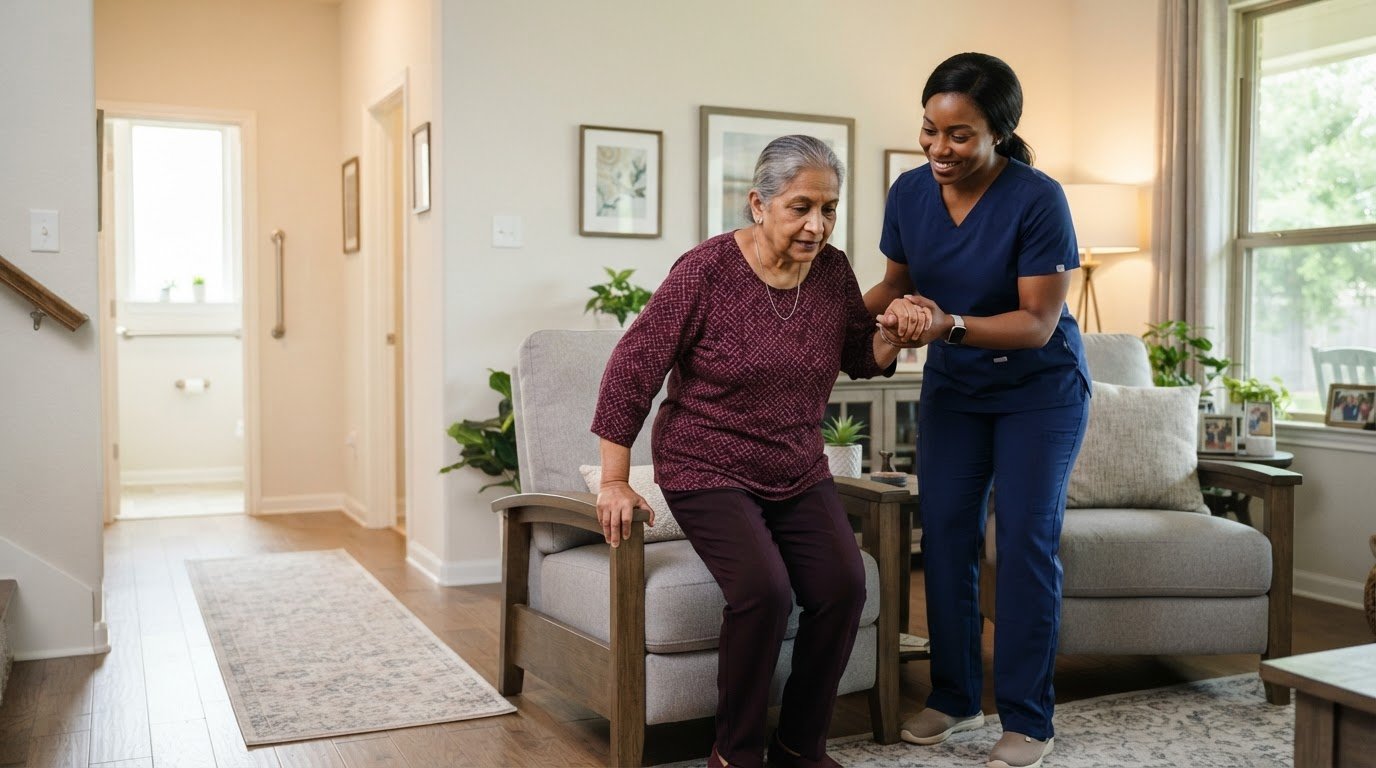
One in four Americans aged 65 and older experiences a fall each year, according to the Centers for Disease Control and Prevention. A fall risk assessment for seniors at home in Missouri City can look at gait, balance, strength, and the home layout to identify practical ways to lower everyday risks. Day-to-day support can also help with safe movement around the home, clear walkways, and transitions such as getting up from a chair.
It’s understandable to want your loved one to stay safe while preserving the comfort and independence of home. This guide explains what a clinical in-home assessment may consider, which home changes can help, and how caregivers can support safer daily routines. You’ll also learn when a professional assessment or ongoing assistance may be useful, so your family can take thoughtful steps suited to your loved one’s needs.
Key Takeaways
- Keep bathroom and hallway routes clear, and make transitions such as standing from a chair or stepping into the shower safer with attentive support.
- Review the home for hazards and consider any recent falls as part of understanding where extra precautions may help.
- Changes in vision, muscle strength, balance, or reaction time can affect daily mobility, so notice how they influence familiar routines.
- Use a home safety assessment to identify where changes such as improved lighting, secured rugs, or grab bars may reduce risks.
- Clinical assessment can consider both a senior’s abilities and their home environment; Alzheimer’s and dementia care may support safer routines when memory changes add challenges.
Bathroom and hallway safety modifications
A fall risk assessment for seniors at home in Missouri City should consider how someone moves through familiar rooms, not just obvious obstacles. A home safety checklist can link hazards to daily routines, including bathing, dressing, and walking between the bedroom and bathroom.
Check for loose rugs, poor lighting, cluttered walkways, and objects blocking access to the bathroom or bedroom. Look, too, for slippery bathroom floors, hard-to-reach essentials, and places where a senior has trouble standing or turning.
Reduce risks by clearing paths, securing or removing tripping hazards, improving visibility, and assisting with transfers. Caregivers can support safe movement around the home, bathroom, and yard, and carry items so the senior’s hands stay free for a cane or handrail.
Home Safety Checklist
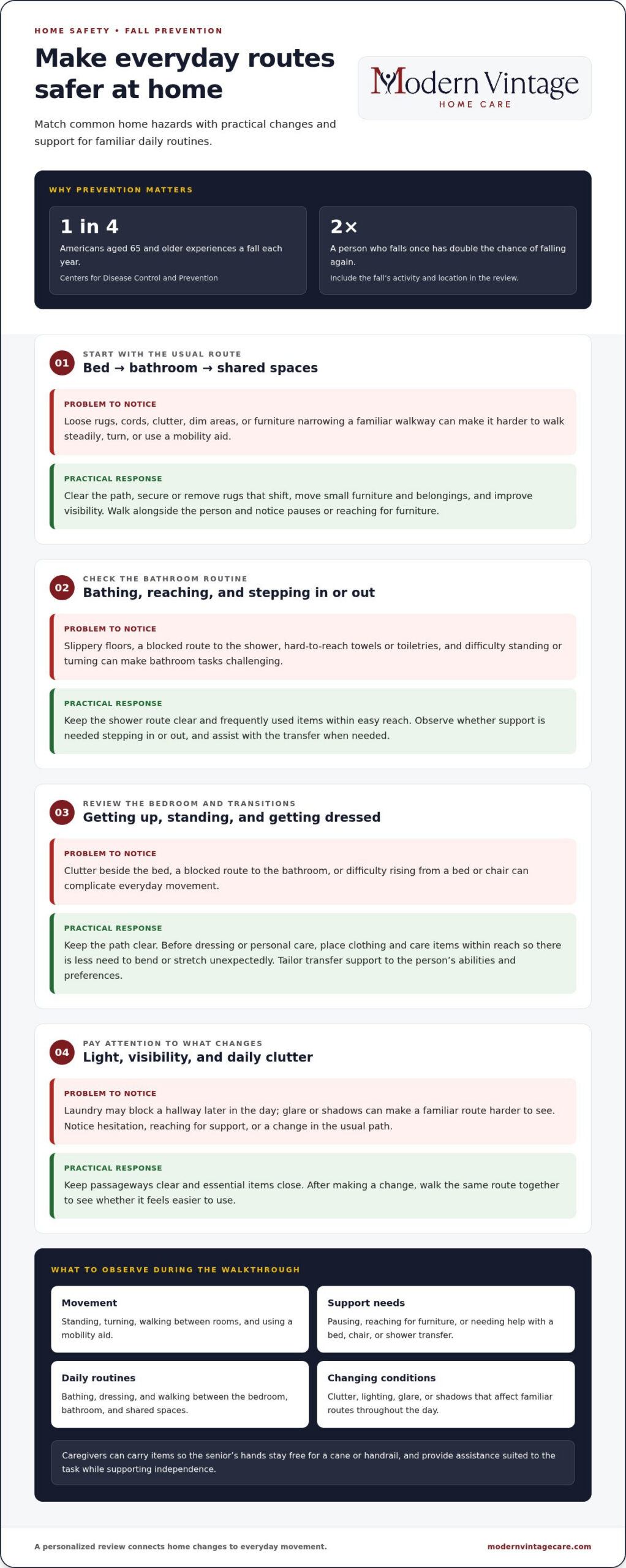
Walk the home along the senior’s usual routes, from bed to bathroom and from the bedroom to shared spaces. Note loose rugs, cords, clutter, dim areas, and furniture that narrows a walkway. In the bathroom, check the floor, access to towels and toiletries, and the route to the shower. Record which daily tasks feel difficult, such as turning or standing.
Bathroom hazards may pose greater concerns during bathing, when wet surfaces and difficult transitions can affect balance. Keep the route to the shower clear, place frequently used items within easy reach, and observe whether the person needs support stepping in or out. In the bedroom, check for clutter beside the bed and a clear path to the bathroom. These details connect home changes to everyday routines.
Hallways need enough clear space for a senior to walk steadily, turn, and use a mobility aid. Move shoes, baskets, and small furniture out of the way, and secure or remove rugs that shift underfoot. Caregivers can help with safe transitions from a bed or chair, then walk alongside the person through the home. Notice where pauses or reaching for furniture occur.
Personal care should preserve dignity while meeting practical safety needs. Before bathing or dressing, put clothing and care items within reach so the senior doesn’t need to bend or stretch unexpectedly. If getting up from a chair or moving into the shower is difficult, caregivers can assist with the transfer. Tailor support to the person’s abilities and familiar preferences.
Home Environment Awareness
Safety awareness means noticing how the home changes throughout the day. A hallway that seems clear may become blocked by laundry, while glare or shadows can make a familiar route harder to see. Pay attention to where the senior hesitates, reaches for support, or changes their usual path. These observations help families prioritize practical changes while supporting independence.
After making a change, walk the same route together to see whether it feels easier to use. Keep essential items close, maintain clear passageways, and adapt assistance to the task. A personalized review of everyday movement can help caregivers notice hazards early and support safer routines without unnecessarily limiting the senior’s independence.
Why is fall prevention so important for seniors at home?
Prevention matters because a fall can affect mobility, confidence, and the ability to manage everyday routines at home. Assessing fall risks means considering both personal factors and the places where daily movement feels challenging.
Medicare may cover a home fall risk assessment when it is part of a physician-ordered home health plan and the patient meets Medicare’s homebound criteria. This condition applies to the assessment within the plan, not automatically to every fall prevention service.
Arrange a medical review after a fall or if balance problems are new, worsening, or recurring. A clinician can consider possible contributors such as medication side effects, vision changes, and muscle weakness.
Common Fall Risk Factors
Notice changes that make familiar activities harder. Reduced vision can affect how clearly someone sees obstacles, while weaker muscles, changes in balance, and slower reactions can make standing, turning, or walking less steady. Medication side effects, including dizziness or fatigue, may also contribute, especially when someone takes multiple prescriptions. Record when these challenges occur, such as after standing or while walking between rooms.
A past fall is another important warning sign: a person who falls once has double the chance of falling again. Include the circumstances in the assessment, such as the activity and location, then consider what might change in that routine or environment.
Fall Prevalence Among Older Adults
One in four Americans aged 65 and older experiences a fall each year, according to the Centers for Disease Control and Prevention. That prevalence makes prevention a practical part of supporting older adults at home, rather than a response reserved for someone who has already been injured.
Fear of falling can create its own challenge. A senior may avoid walking to another room or taking part in valued activities, disrupting independence and social connection. Discuss specific worries, such as getting up from a chair, and use them to identify where support or a change in routine could help.
Home Health Risk Assessment
Assess the home alongside the person’s abilities. Walk through everyday routes and note where lighting, clutter, loose rugs, or furniture may affect movement. Then observe tasks such as getting out of bed, reaching for an item, or moving between rooms. These examples link hazards to real routines and help families prioritize practical prevention steps.
Review medication concerns with the appropriate clinician, especially if dizziness or fatigue occurs. Combine that discussion with observations about balance, vision, and strength. A useful assessment turns these details into clear actions, such as changing a risky route, arranging support for a difficult task, or addressing a health concern.
Vision changes, muscle weakness, and balance decline
Reduced vision, weaker muscles, balance changes, and slower reactions can make familiar movements harder. A fall risk assessment can consider gait, balance, strength, and the home layout to identify challenges during daily activities.
Balance and Mobility Support
Families can note how a senior moves through daily routines, rather than focusing on a single stumble. Watch for reaching for furniture, difficulty turning, short or uneven steps, or extra effort to stand. A checklist can record where these changes occur, such as walking to the bathroom or stepping around furniture.
Support should match the activity and the person’s abilities. For example, allow time to rise from a chair, keep the walking route clear, and stay close if the senior appears unsteady. If a doctor has prescribed light exercises, follow those instructions rather than adding new movements independently.
Fear of falling, anxiety, or confusion can also affect balance and mobility. Occupational therapists can consider these psychosocial factors alongside physical abilities. Families can describe activities the senior avoids, such as walking through the home, to help identify where confidence and routine may need attention.
Fall Risk Testing
An assessment may include observing how someone walks, stands, turns, and maintains balance. A clinician can consider gait, strength, coordination, and the home environment together. These observations link movement challenges to specific tasks, such as rising from bed or navigating a familiar route.
Vision and reaction time matter, too. Notice whether the senior misjudges a step, pauses in dim areas, or reacts slowly when changing direction. Share examples of these changes during the assessment. Medication-related dizziness or fatigue can also affect steadiness, so record when symptoms appear and discuss them with a clinician.
An in-home clinical assessment can evaluate gait, balance, strength, and home layout. Rather than treating one observation as the whole picture, it considers how several factors combine during daily movement. Occupational therapists may also assess coordination, fear of falling, depression, anxiety, or confusion when these affect activities.
Families can prepare by noting changes in walking, standing, and confidence during familiar routines. Include which activities feel harder and any recent changes in vision or strength. This practical record gives the assessment useful context and helps connect observations to safer, personalized support at home.
Home modifications such as grab bars and improved lighting
A home safety assessment can identify hazards and suggest practical changes, including grab bars, clearer routes, and better lighting. Prioritize modifications around the activities and spaces the senior uses every day.
Grab Bars and Home Modifications
Consider grab bars where a senior needs steady support, such as near the toilet or shower. A home safety assessment can identify where support may help with standing, sitting, or changing position. Choose locations based on the person’s movement and routine, rather than placing bars where they look convenient but are hard to reach.
Review frequently used items, too. Keep toiletries and daily medication in accessible places so the person doesn’t need to stretch, bend, or climb to reach them. Home modifications may include assistive devices as well as layout changes. Match each change to a specific task, such as reaching a towel after bathing.
Clear Walkways
Walk the senior’s most-used routes, such as the path from bedroom to bathroom and the way to the kitchen. Move cords, baskets, and furniture out of the walking line. Keep necessary items close to their usual places so the person doesn’t have to cross a busy room or reach around obstacles for everyday belongings.
Check the route again after moving items. A clear path should let someone walk, turn, and use a cane or handrail without weaving around clutter. Caregivers can carry laundry or other objects, leaving the senior’s hands free for support. Keep this routine consistent as household items shift.
Lighting Improvements
Check whether the route from bed to bathroom is easy to see after dark. Add lighting where shadows or dim corners obscure the walking surface, and make switches accessible near room entrances. Vision changes can make familiar spaces harder to navigate, especially when someone moves from a bright room into a darker hallway.
Assess lighting from the senior’s viewpoint. Glare can make edges harder to distinguish, while a dark landing can hide a step. Walk the route at different times of day and notice where visibility changes. Adjust lamps or fixtures to make the floor, doorway, and walking path easier to see.
Rugs and Stairs
Inspect rugs for curled edges, loose corners, or movement underfoot. Remove rugs that shift, or secure them so they lie flat. Check the floor around them, too. Even a rug that appears secure can create a difficult transition if its edge catches a foot or mobility aid.
On stairs, keep each step and landing free of shoes, bags, and other stored items. Look for poor lighting and anything that makes the route difficult to see. If the senior avoids a staircase or struggles while using it, note that during the home safety review. A changed route or added support may address the specific difficulty.
After making changes, have the senior use each route as part of a familiar routine. Observe standing, turning, and reaching, then adjust the setup if an item remains difficult to access. Revisit the checklist when furniture or daily routines change. A personalized review helps families focus on practical modifications while preserving independence.
In-home clinical fall risk assessments
A clinical assessment connects a person’s abilities with the home and routines where falls may occur. Its value lies in turning observations into practical fall prevention steps, not simply identifying hazards.
Clinical In-Home Assessment
An in-home assessment can evaluate gait, balance, strength, and home layout. The clinician observes how the senior moves during familiar activities, such as standing from a chair or walking through a doorway. This connects physical abilities with specific challenges in the home.
Occupational therapists can assess physical abilities and psychosocial factors, including coordination, depression, anxiety, confusion, and fear of falling. Families can share examples of avoided activities or unsteady movement. The assessment can then inform recommendations for modifications and assistance suited to the person’s routines.
Before the visit, write down recent falls, dizziness, fatigue, and tasks that feel difficult. Include medications that may contribute to dizziness or fatigue, especially when multiple prescriptions are involved. This record helps focus the assessment on relevant daily situations.
Assessment Cost
The assessment price depends on the case and is provided after a quote request; scope and clinician are among the cost factors. Medicare may cover a home fall risk assessment when it is part of a physician-ordered home health plan and the patient meets Medicare’s homebound criteria.
That coverage condition applies to the assessment within the qualifying plan. It does not establish coverage for every fall prevention service or home modification. To understand the likely pathway, identify whether a physician has ordered the plan and whether the patient meets the homebound criteria.
A clinical assessment differs from nonclinical help with everyday routines. It evaluates physical, behavioral, and environmental factors, while practical support can help someone follow safer routines. Keeping those roles distinct helps families plan the right kind of assistance.
Local Assessment Agencies
Occupational therapists are one relevant professional group: they can assess physical abilities and psychosocial factors related to falls. A physician-ordered home health plan may also provide the context for a Medicare-covered assessment when eligibility criteria are met. The appropriate pathway depends on the assessment’s purpose and the person’s circumstances.
To pursue an assessment through Fort Bend County or local health services, start by discussing the need with the senior’s physician. Describe recent falls, balance problems, and daily activities that have become difficult. The physician can determine whether a home health plan is appropriate and coordinate the clinical assessment pathway.
For ongoing day-to-day support alongside clinical recommendations, explore in-home assistance options. A clear plan can connect professional findings with safer routines, practical help, and home modifications that address specific risks.
Modern Vintage Home Care: Alzheimer’s & Dementia Care
Modern Vintage Home Care supports families putting day-to-day fall prevention into practice when memory changes affect familiar routines. Alzheimer’s and dementia care, companionship, and personal care can support consistent assistance with daily activities. Caregivers can help with walking around the home, safe transfers, and keeping hands free for a cane or handrail. This support complements clinical assessment and home modifications; it doesn’t replace them. Families may find it helpful when a loved one needs reminders, attentive company, or help with personal routines. Contact Modern Vintage Home Care to discuss support for your family’s needs.
Make the Next Step Work for Your Family
A fall prevention plan is easier to follow when it fits the senior’s routines and the family’s capacity to help. After a fall risk assessment for seniors at home in Missouri City, choose one practical next step: discuss the findings with the appropriate clinician, agree on who will help with daily routines, or make a home change easier to maintain. A clear plan helps everyone understand their role while keeping the senior’s preferences at the center.
If ongoing help would support that plan, Modern Vintage Home Care offers Alzheimer’s & Dementia Care, 24-Hour Care, and Companionship. These services may be relevant when memory changes or the need for regular company affects how confidently a loved one manages daily life at home. Share what your family is experiencing and explore a support plan that respects your loved one’s routines and independence.
Contact Modern Vintage Home Care to discuss a thoughtful next step for your family. Small, practical decisions can help make home feel more manageable.
Frequently Asked Questions
How does in-home care help my loved one avoid falls day-to-day?
In-home care helps put agreed safety steps into everyday routines. A caregiver can stay nearby during a transfer, bring needed items before movement begins, and notice whether fatigue or dizziness affects the person’s steadiness. Sharing these observations with family and clinicians can prompt a timely review. This is practical assistance, not a clinical assessment or a replacement for medical care.
What is a fall risk assessment for seniors at home?
A fall risk assessment for seniors at home in Missouri City is a structured review of personal and household factors that may contribute to falls. It can include health history, medications, vision, movement, and everyday tasks, then identify which concerns need attention first. Families can bring a list of recent changes and questions, helping the assessor connect observations to the senior’s actual routine.
Who can perform an in-home fall risk assessment for older adults?
An occupational therapist can assess an older adult’s movement and home factors connected with falling. A physician can help determine whether a clinical evaluation is appropriate, particularly after a fall or new balance concern. Caregivers and family members can share observations about daily routines, but these support rather than replace professional evaluation. Bring notes about recent changes and difficult activities.
