

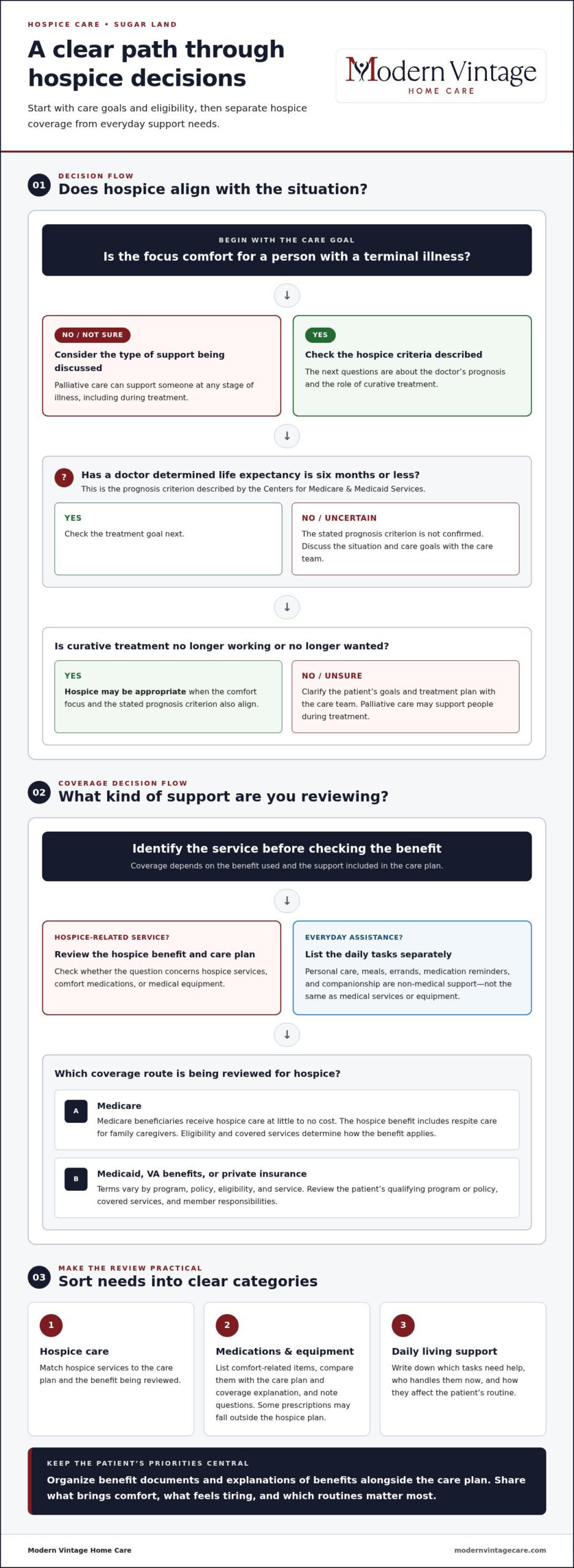
Hospice centers on comfort and family support when a person has a terminal illness. For in-home hospice support in Sugar Land, eligibility may apply when a doctor determines that life expectancy is six months or less and curative treatment is no longer working or wanted, according to the Centers for Medicare & Medicaid Services.
Choosing care at home brings practical questions alongside deeply personal ones. Hospice focuses on comfort near the end of life, while palliative care can support someone at any stage of illness, including during treatment.
This guide explains what hospice support may include, how Medicare, Medicaid, VA benefits, and private insurance may relate to coverage, and what eligibility means. It also clarifies how non-medical caregiving can complement hospice care with daily routines, personal care, meals, medication reminders, and companionship. Understanding how these roles fit together can help families plan in a way that respects their loved one’s wishes and eases caregiving demands.
Key Takeaways
- Understand how hospice focuses on comfort and family support, while non-medical caregiving can help with everyday routines.
- Learn what to consider when reviewing Medicare, Medicaid, VA benefits, or private insurance for hospice-related support.
- See how the six-month prognosis criterion relates to hospice eligibility and what a shift from curative treatment to comfort can mean.
- Explore how care planning addresses equipment and comfort medications as part of a person’s individual needs.
- Find out how to think about care in Sugar Land and when personal care, companionship, or dementia support may help alongside hospice.
What Are Hospice Support Services?
Hospice support focuses on comfort for a person with a terminal illness and support for family caregivers. The care plan can address physical comfort, emotional needs, social connection, and spiritual concerns. For example, a patient may prefer quiet visits, familiar music, or time with a faith community. These preferences help shape support around everyday life.
Companionship can make ordinary moments feel less isolating. A companion might sit with the patient during a meal, listen to stories, or help maintain a familiar routine. Non-medical in-home care may also include personal care, meal preparation, light housekeeping, errands, and medication reminders. These practical tasks can ease relatives’ workload while helping preserve the patient’s dignity and independence.
Emotional and social support can be simple and personal. A caregiver might help a patient call a friend, look through family photographs, or enjoy a conversation in a favorite room. If fatigue limits visits, a short interaction may feel more manageable than a busy gathering. Families can share what brings comfort, what feels tiring, and which routines matter most.
Spiritual support respects the patient’s beliefs and choices. It might mean arranging a visit from a faith leader, making space for prayer, or listening when someone wants to talk about meaning and concerns. The patient’s preferences should guide these moments. A family member can note meaningful traditions and share them with the care team.
Caregivers also need time to rest and ask for support. Hospice services may include guidance for family members, while respite care can provide temporary relief from caregiving duties. Since a hospice team member may not be present every day, relatives may still handle personal care and everyday tasks. A written household plan can clarify who prepares meals, runs errands, or stays nearby.
Hospice and palliative care differ in focus: hospice supports comfort near the end of life, while palliative care can accompany treatment at any stage of illness. Families can describe the patient’s daily needs and goals to understand which kind of support fits. Companionship offers non-medical support for social connection alongside hospice and medical services.
Care goals can change, and families may wish to discuss changing treatment plans with the care team. If care goals change, the patient or family can discuss those wishes and next steps with the care team.
Medicare, Medicaid, VA, and private insurance coverage
Coverage depends on the benefit being used and the support included in the care plan. Separate hospice services from non-medical assistance, then review the terms of each payer.
Insurance Coverage for Hospice
Medicare beneficiaries receive hospice care at little to no cost, and Medicare’s hospice benefit includes respite care for family caregivers. These details can help families understand the benefit, while the patient’s eligibility and covered services determine how it applies.
Medicaid, VA benefits, and private insurance are other possible coverage routes. Terms vary by program, policy, eligibility, and service. To organize the review, list the patient’s coverage, the hospice services in the care plan, and any separate personal care needs. This can help clarify which benefits address hospice and which relate to everyday assistance.
For private insurance, review the policy’s hospice benefit, covered services, and member responsibilities. For Medicaid or VA coverage, the patient’s qualifying program and benefit terms guide the review. Keep explanations of benefits and care-plan documents together. This record helps caregivers understand how a coverage decision relates to a specific service and supports conversations about quality of life.
Medications and Equipment Coverage
Hospice coverage may include medications and medical equipment used for comfort, depending on the hospice benefit and the patient’s care plan. Families should distinguish hospice-related medications from prescriptions that may fall outside the hospice plan.
For equipment, make a written list of items connected to the patient’s comfort needs. Compare each item with the care plan and coverage explanation. This can clarify what the hospice benefit addresses and what may involve another coverage arrangement. Keep the list current as needs change, and record questions alongside the relevant document.
Non-medical support is a separate planning consideration. Help with personal care, meals, errands, or companionship can complement hospice care, but it is not the same as medical services or equipment. Families can note which daily tasks need support, who currently handles them, and how those needs affect the patient’s routine. This practical inventory helps separate coverage questions from caregiving decisions while keeping comfort at home in view.
In Sugar Land, Missouri City, and southwest Houston, a coverage review works best when families connect each service to its purpose. Note whether a need concerns hospice care, a prescription, equipment, or daily living assistance. Then organize the relevant benefit documents by category. This can give caregivers a clearer picture of the support involved and keep the patient’s priorities central.
Hospice eligibility and prognosis
Hospice eligibility depends on a terminal illness, a qualifying prognosis, and a focus on comfort. In Sugar Land, the key question is how the patient’s condition and care goals align with those criteria.
Eligibility for Hospice Care
According to the Centers for Medicare & Medicaid Services, hospice may be appropriate when a doctor determines a patient has a life expectancy of six months or less and curative treatments are not working or are no longer desired. The decision reflects both prognosis and the patient’s goals. A palliative approach, focused on comfort, differs from treatment intended to cure an illness.
Families can prepare for a conversation with the care team by noting the diagnosis, recent changes, current treatments, and the patient’s priorities. For example, a person may want to focus on comfort rather than continue a treatment that is not helping. These details can clarify the goals of care. The patient’s preferences, including emotional or spiritual priorities, belong in that conversation.
Prognosis and Hospice Duration
A six-month prognosis is an estimate used to consider eligibility, not a scheduled date or promise about how long someone will live. Each person’s illness follows its own course. Hospice support is guided by the patient’s condition and comfort goals, whether care takes place at home or in a facility.
If the patient’s condition or wishes change, the family can discuss them with the care team. For instance, someone who wants to pursue curative treatment again can raise that preference. Care plans can change as a patient’s goals evolve, so families can discuss appropriate options with the care team. The decision should reflect the patient’s current goals, not pressure from relatives or assumptions about what comes next.
Eligibility and duration are related, but they answer different questions. Eligibility asks whether the patient meets the prognosis and care-focus criteria. Duration describes how long hospice remains appropriate as the person’s needs and wishes evolve. Families can keep a brief record of questions, changing symptoms, and care priorities to make discussions clearer.
Coverage is another consideration, but insurance does not define a person’s prognosis. Medicare, Medicaid, VA benefits, and private insurance each have their own terms. Keep coverage questions separate from the medical conversation: first discuss the patient’s condition and goals, then review how the relevant benefit applies to the planned support.
When comparing hospice with palliative care, focus on the purpose of care. Hospice supports comfort near the end of life, while palliative care can accompany treatment at different stages. Families can ask the care team to explain how the patient’s current goals fit each approach. That discussion helps relatives plan support around the person, not just the diagnosis.
Medical equipment and comfort medications
At home, hospice care focuses on comfort, with medications, equipment, and caregiver support considered in relation to the patient’s needs. Families can note comfort concerns, current prescriptions, and daily assistance needs to guide care-plan conversations.
Medical equipment needs vary with the patient’s condition and home routine. A family might note whether getting in and out of bed is difficult or moving safely through a room is a concern. These observations help explain the practical need behind an equipment question. Keep the list focused on comfort and daily function.
Medication questions also benefit from a clear record. Gather the current medication list, note what each prescription is intended to address, and write down questions about comfort medicines. Do not change a dose or stop a medicine based on a general article. This is a coverage detail, not a medication recommendation.
Coverage can depend on whether an item or medication relates to the hospice care plan. Keep related paperwork together, including the plan, medication list, and coverage explanations. If a new need arises, record what changed and how it affects the patient’s comfort. For example, note whether moving from bed to chair has become harder, rather than relying on a general equipment label.
Caregiver support is another part of planning at home. Hospice providers do not have a team member present every day, so family caregivers may handle personal care and everyday tasks. A written household plan can identify who prepares meals, helps with routines, and keeps track of questions. This can make responsibilities clearer during a demanding period.
Respite care can give family caregivers temporary relief. It is available under the Medicare hospice benefit. Families can include caregiver fatigue and needed breaks in discussions about support, especially when a relative is balancing bedside presence with meals, errands, or household responsibilities.
Comfort measures at the bedside can also be practical and personal. Families might keep a favorite blanket nearby, reduce distracting noise, or place familiar photographs where the patient can see them. These are household examples, not medical equipment or treatment. Note which surroundings help the patient feel settled, then share those preferences as part of care planning.
A useful next step is to sort concerns into three groups: equipment, medications, and caregiver tasks. Add a specific example under each, such as difficulty reaching the bedside table or uncertainty about a prescription’s purpose. This organized record helps keep conversations focused on the patient’s comfort, the care plan, and the family’s capacity to provide support.
Sugar Land hospice service area
For families in Sugar Land, Missouri City, and southwest Houston, service-area planning means matching the patient’s address, care needs, and preferred setting. Hospice care and non-medical help at home are related, but distinct services.
Service Availability in Sugar Land
Start with the patient’s home address in Sugar Land and the support needed there. A service area describes where care can be delivered; it does not determine which tasks belong to hospice or separate caregiving. For example, a family may need hospice services for comfort-focused medical care and additional help with daily routines.
Families seeking in-home hospice support in Sugar Land can ask how the care plan addresses the patient’s home routine, including personal care, meals, and companionship. Clarify how hospice support differs from palliative care, which can accompany treatment at different stages of illness. Separating these needs helps show which service supports comfort and which addresses practical daily assistance.
When choosing a hospice provider in Sugar Land, ask how the team coordinates care at home, what support the plan includes, and how Medicare, Medicaid, VA benefits, or private insurance apply. Families should also understand who handles everyday tasks between hospice visits, since a hospice team member may not be present daily.
In-Home Provider Options
Hospice agencies serving a patient’s location provide in-home hospice care in Sugar Land. The right fit depends on the person’s eligibility, care goals, home setting, and coverage. Non-medical caregiving can complement hospice with everyday help, but it is not a substitute for hospice medical care.
To plan in-home hospice support in Sugar Land, write down the patient’s address, current needs, and preferred routines. Include examples such as needing help with personal care or wanting companionship during meals. Then clarify how hospice and separate caregiving support work together, especially when family members handle daily tasks.
There is no single start time for every Sugar Land household. Timing depends on eligibility, the patient’s needs, referral and intake steps, care planning, and service coordination. Families can gather diagnosis information, current care concerns, and coverage details to support a clear discussion about next steps.
Care in Sugar Land, Missouri City, and southwest Houston may involve hospice services alongside non-medical assistance. Hospice addresses comfort-focused medical care, while caregiving can help with daily living and social connection. Matching needs to each category can help families plan support around the patient’s routine.
For daily help that complements a hospice plan, explore in-home caregiving support for Sugar Land families.
Modern Vintage Home Care: Alzheimer’s & Dementia Care
Modern Vintage Home Care provides Alzheimer’s & Dementia Care for families who need non-medical support with everyday life. If a loved one living with dementia needs help maintaining familiar routines, personal care can support daily needs, while companionship offers conversation and social connection. This care can complement a hospice plan, but it does not replace hospice medical services.
Families may find this support helpful when caregiving tasks become difficult to manage alongside work, household responsibilities, or time with their loved one. Sharing the person’s routines, preferences, and daily challenges helps shape thoughtful care that respects their dignity and independence.
Contact Modern Vintage Home Care to discuss Alzheimer’s & Dementia Care, companionship, or personal care for your family.
Choose the Support That Fits Your Family
The next step can be a thoughtful conversation about what would make home life more manageable for your loved one. Consider the routines they value, the tasks that feel hardest, and the kind of companionship that helps them feel connected. These details can guide family decisions while keeping the person’s preferences at the center.
For families considering in-home hospice support in Sugar Land, non-medical caregiving may complement hospice by supporting daily life. Modern Vintage Home Care offers Alzheimer’s & Dementia Care, Companionship, and 24-Hour Care. These services can be relevant when a loved one needs support with familiar routines, social connection, or ongoing assistance at home. They don’t replace hospice medical care.
When you’re ready to discuss care needs and possible next steps, contact Modern Vintage Home Care. A clear conversation can help your family consider support that honors your loved one’s dignity and brings greater steadiness to everyday moments.
Frequently Asked Questions
What is hospice care?
Hospice care supports comfort and quality of life for a person with a terminal illness. It also helps families understand care needs and support the person at home. If symptoms or daily routines change, for example, the family can share those observations with the hospice care team. Hospice focuses on comfort, while palliative care may accompany treatment at other stages of illness.
How long does bereavement support last?
Families can ask the hospice team what bereavement support is available after a death. Families can ask the hospice team what support may be available and how to access it. Families can ask about those details while discussing care, then note the planned follow-up and who will reach out. This gives relatives a clearer sense of available support during grieving, rather than leaving them to guess when it ends.
Who Pays for Hospice?
Payment depends on the patient’s benefits and coverage. Medicare, Medicaid, VA benefits, and private insurance may each be relevant, depending on eligibility and plan terms. To organize the discussion, gather the patient’s insurance cards and benefit documents, then list the hospice services being considered. Keep non-medical daily assistance separate so families can distinguish hospice coverage questions from household caregiving needs.
What services does in-home hospice include in Sugar Land?
In-home hospice focuses on comfort for the patient and support for family caregivers. The care plan may address comfort medications, medical equipment, and support needs at home. Hospice staff are not present every day, so relatives may still manage personal care and household routines. A written list of daily tasks, such as meal preparation or errands, can help identify where separate non-medical assistance may fit.
Who qualifies for hospice care in Texas, and what is the referral process?
According to the Centers for Medicare & Medicaid Services, hospice may be appropriate when a doctor determines the patient’s life expectancy is six months or less and curative treatment is not working or is no longer desired. Families can begin by discussing the diagnosis, treatment goals, and recent changes with the doctor. Bring current medication and care information to make the conversation specific.
How much does in-home hospice cost in Sugar Land, and what does Medicare cover?
Hospice costs depend on coverage and the services included in the care plan. Medicare beneficiaries receive hospice care at little to no cost. That copayment relates to eligible prescriptions, not the cost of separate non-medical caregiving. Keep benefit documents together to understand which services and prescriptions the coverage addresses.
Does Medicaid or private insurance cover hospice care in Texas?
Medicaid and private insurance coverage depend on the patient’s eligibility and the terms of the applicable benefit or policy. Review the hospice services in the care plan alongside the insurance documents, and note questions about prescriptions, equipment, or respite care. Separating each service by type helps families understand what coverage addresses and what daily caregiving needs may require separate planning.
What are typical hospice visiting hours and after-hours support options?
Hospice team members aren’t present at home every day, so scheduled visits don’t mean continuous bedside coverage. Families should understand the visit schedule and how to reach on-call support outside planned visits. The research recommends looking for 24/7 on-call support. Keep the contact instructions in an easy-to-find place, and share them with relatives who may be present with the patient.
