
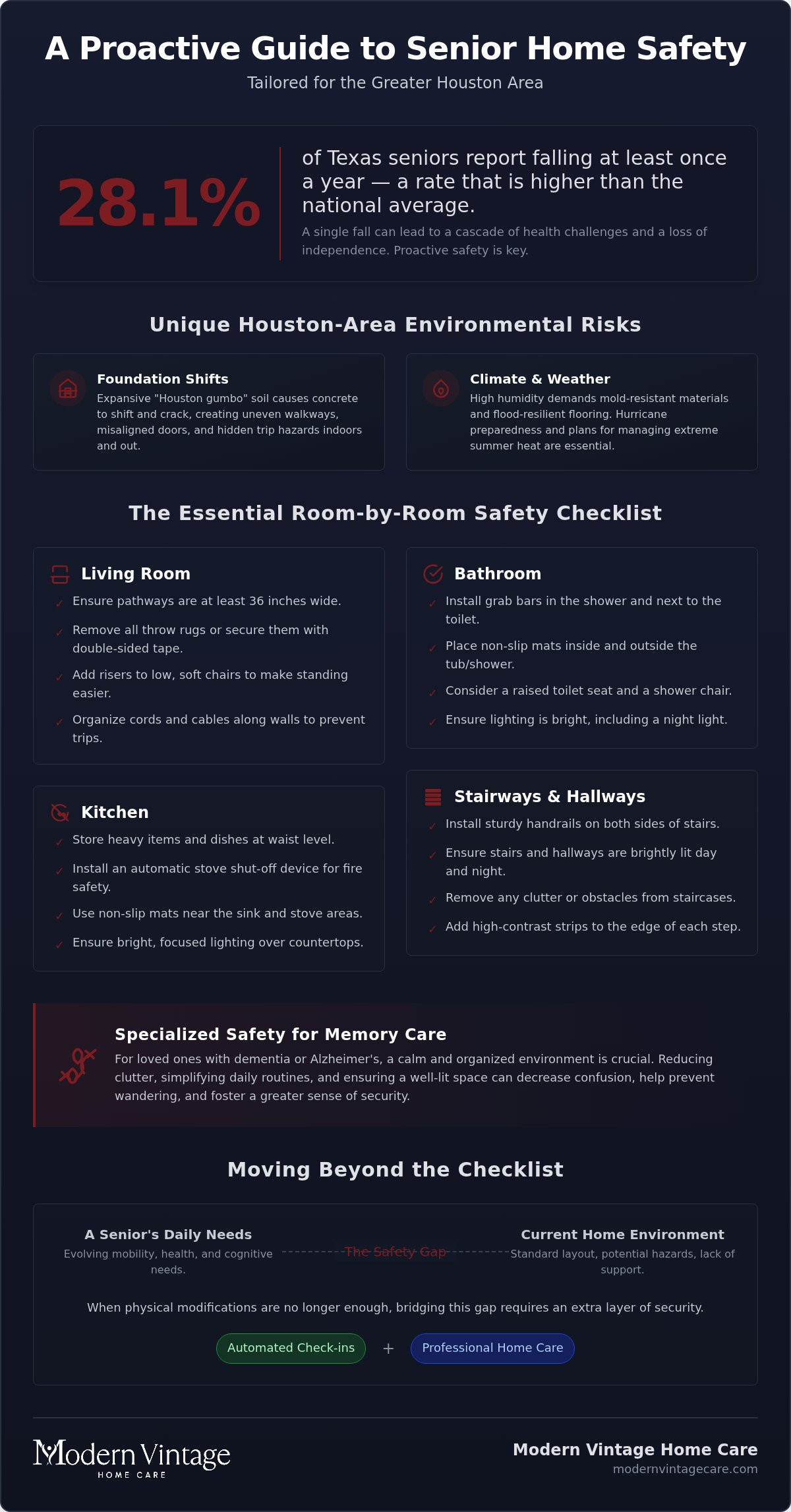
Nearly 28.1% of Texas seniors report falling at least once a year, a rate that sits higher than the national average. When following a senior home safety checklist Houston families must account for more than just trip hazards; they must also consider regional factors like foundation shifts and flood-resilient flooring. If you feel a constant knot of worry when your parent is home alone, or if you’re struggling to decide which modifications are truly necessary, your concerns are valid. It’s difficult to balance the desire for their independence with the reality of progressing health needs or the confusion of dementia.
This article provides the clarity you need through a detailed room-by-room guide tailored for 2026. We will walk you through essential modifications, from bathroom rails that meet the newest Texas state safety laws to smart precautions for our unique Gulf Coast climate. You’ll gain a prioritized plan to secure your loved one’s environment and the peace of mind that comes with a proactive safety strategy. Whether you’re looking for simple DIY fixes or considering professional care support, this guide ensures your family member can age in place with the dignity they deserve.
Key Takeaways
- Learn how to address unique local risks, such as foundation shifts and high humidity, that can impact the structural safety of your loved one’s Houston home.
- Follow our detailed senior home safety checklist Houston to identify and fix hidden trip hazards in every room, from the kitchen to the bedroom.
- Explore specialized cognitive safety strategies that help prevent wandering and reduce confusion for family members living with dementia or Alzheimer’s.
- Build a senior-specific emergency plan for the Texas climate, including hurricane preparedness and strategies to manage extreme summer heat safely.
- Understand the signs that physical modifications are no longer enough and how services like automated check-ins or 24-hour care provide an extra layer of security.
Understanding Senior Home Safety Risks in the Greater Houston Area
Fall prevention is the primary concern for families across Harris and Fort Bend counties as we move into 2026. A single slip can change a family’s life overnight, often leading to a cascade of health challenges that are difficult to reverse. As our loved ones age, natural changes in balance, vision, and reaction times transform once-familiar living spaces into potential hazards. A dim hallway or a slightly raised threshold becomes a significant obstacle when depth perception fades or steps become less certain. While medical bills are a tangible concern, the true cost of a home accident is the loss of independence. When a senior loses the ability to move freely in their own space, their quality of life often declines rapidly.
Taking a proactive approach to home safety is far more effective than reacting to an emergency. By conducting a thorough audit before an accident occurs, you create a foundation for long-term Aging in Place. This strategy allows your parent to maintain their dignity and routine while giving you the peace of mind that they are protected even when you cannot be there 24/7. Prevention is not just about physical hardware; it is about preserving the spirit and confidence of the individual.
The Statistics of Aging in Fort Bend County
In communities like Sugar Land and Missouri City, there is a growing trend toward personalized home-based support. Many families are moving away from traditional assisted living facilities, preferring instead to modify existing homes to meet evolving needs. This shift is driven by a desire for comfort and the availability of sophisticated non-medical care options. The Safety Gap represents the precarious period when a senior’s daily needs outpace the safety of their current home, but they still wish to avoid the transition to a formal facility. Bridging this gap requires a combination of physical updates and consistent, reliable support.
Identifying Common Household Hazards
When you begin your senior home safety checklist Houston homes often present unique challenges. Many established neighborhoods feature “vintage” layouts with narrow doorways, sunken living rooms, or high-pile carpeting that increases trip risks. The “Big Three” hazards; poor lighting, cluttered pathways, and slippery bathroom surfaces; account for the vast majority of preventable injuries. In our region, foundation shifts caused by local soil can also create uneven flooring or sticking doors that catch seniors off guard. Beyond the physical dangers, a cluttered or poorly lit environment can increase feelings of confusion for those managing dementia. A clean, well-organized home reduces cognitive load and fosters a sense of calm and security for the entire family.
The Essential Room-by-Room Senior Home Safety Checklist
Creating a secure environment requires a methodical approach that addresses the specific layout of your family’s residence. When you begin working through your senior home safety checklist Houston residents should start with the shared living spaces where most daily activity occurs. These areas often harbor hidden risks that are easily overlooked during a casual walkthrough. By evaluating each room through the lens of mobility and vision changes, you can implement changes that prevent accidents before they happen.
- Living Room: Clear pathways should be at least 36 inches wide to accommodate walkers or steady gait. Remove all throw rugs or secure them with heavy-duty double-sided tape. If furniture is too low or soft, it becomes difficult for seniors to stand up; consider adding risers to favorite chairs to optimize height.
- Kitchen: Store heavy pots and frequently used dishes at waist level to eliminate the need for reaching or bending. Install automatic stove shut-off devices to provide an extra layer of fire safety, especially for those with early-stage memory loss.
- Stairways and Hallways: Dual handrails that extend slightly beyond the top and bottom steps are essential for stability. Replace standard bulbs with high-lumen LED lighting to ensure every corner of the hallway is clearly visible during the day and night.
- Exterior Safety: Houston’s expansive clay soil, often called “Houston gumbo,” frequently causes concrete walkways to shift and crack. Ensure all paths are level and that porch lighting is bright enough to illuminate the entryway for evening arrivals or emergency services.
Bathroom Safety: The High-Risk Zone
The bathroom is statistically the most dangerous room in the house due to hard surfaces and moisture. It is a common mistake to assume towel bars can provide support; however, these fixtures are not designed to hold body weight and can easily pull away from the wall. For reliable stability, professional installation of permanent grab bars into wall studs is a non-negotiable step. You can find more detailed recommendations in Mayo Clinic’s safety checklist. In our humid Gulf Coast climate, floors can stay damp longer, making non-slip mats or specialized floor treatments vital. Raised toilet seats and walk-in shower conversions further reduce the physical strain of daily hygiene routines.
Bedroom Safety for Restful Nights
A safe bedroom promotes better rest and reduces the risk of nighttime falls. The bed should be at a height where your loved one’s feet rest flat on the floor while they are seated on the edge. It’s also helpful to install touch-lamps or motion-activated floor lights to create a clear path to the bathroom. If your parent struggles with the transition from sleep to daily activity, integrating personal care for seniors Houston can provide the steady hand they need during morning and evening routines. If you’re unsure where to start with these modifications, our Quick Care services can help you assess the most urgent needs to keep your loved one safe.
Specialized Safety Considerations for Memory Care and Chronic Illness
While physical hardware is essential, a senior home safety checklist Houston families use must also account for the cognitive shifts associated with dementia. Safety in this context moves beyond grab bars to include how a person perceives their environment. If a loved one experiences confusion, a mirror might look like a stranger in the room, or a dark rug might appear as a hole in the floor. Reducing these visual triggers is vital to preventing the agitation often seen during “sundowning” periods in the late afternoon. By creating a predictable and calm environment, you help your parent feel more secure in their daily routine.
Wandering is one of the most stressful challenges for caregivers in the local area. To manage this risk, you can install door alarms that notify you if an exit occurs, or use simple visual cues like a “stop” sign placed at eye level on exterior doors. It’s also helpful to minimize background noise and ensure lighting remains consistent throughout the transition from day to evening. If these behavioral changes become difficult to manage alone, specialized dementia home care services Sugar Land can provide a structured environment that prioritizes your parent’s comfort and security. This approach ensures your senior home safety checklist Houston covers both physical and cognitive needs.
Medication Safety and Adherence
Managing multiple prescriptions is a complex task that carries high stakes for those with chronic illnesses. Missing a dose or accidentally double-dosing can lead to immediate health crises and avoidable hospital stays. Utilizing medication management for elderly individuals ensures that every pill is taken at the correct time and in the right amount. Automated medication reminders are particularly effective for those who want to remain independent but need a gentle nudge to stay on track. These tools provide a reliable safety net that reduces the daily burden on family caregivers.
Kitchen and Fire Safety for Memory Care
The kitchen requires specific interventions when memory loss is a factor. You might consider removing stove knobs or installing a master shut-off switch to prevent the range from being left on accidentally. Small appliances like toasters or electric kettles should be stored away when they aren’t in use to avoid confusion. Beyond the hardware, simplified meal preparation helps prevent burns and ensures food is handled safely. Our companionship services offer a helpful solution by providing supervision during meals, turning a potentially risky task into a safe and social experience for your loved one.
Weather and Environmental Safety: The Houston Homeowner’s Perspective
Houston’s climate presents specific safety challenges that generic guides often overlook. High humidity levels don’t just affect comfort; they can cause condensation on tile and hardwood floors, creating invisible slip hazards. When you update your senior home safety checklist Houston, it’s vital to evaluate the reliability of the HVAC system. Extreme Texas heat can lead to rapid dehydration or heat stroke in seniors, particularly those who may not realize they are overheated. Ensuring the home remains a cool sanctuary is a medical necessity rather than a luxury.
Power grid instability is another reality in our region. If your loved one uses medical devices like oxygen concentrators or CPAP machines, evaluate whether a backup battery or generator is necessary. These systems provide a critical safety net when the lights go out. If you are concerned about your parent’s safety during the next period of extreme weather, our 24-hour home care Houston team can provide the constant supervision needed to navigate power outages and emergency evacuations safely.
Hurricane Season Readiness for Seniors
Storm season requires a specific strategy that prioritizes medical continuity. Keep a waterproof folder with updated medical records, insurance policies, and identification in a location that is easy to grab. It is essential to maintain at least a 14-day supply of all medications throughout the season to avoid disruptions caused by pharmacy closures. For families in Sugar Land or Missouri City, registering your loved one with local emergency services for “at-risk” registries ensures that first responders are aware of their specific mobility or medical needs during a disaster.
Lighting and Visibility During Power Outages
A dark house is a dangerous house for anyone with limited mobility. Strategic placement of battery-operated motion-sensor lights in hallways and bathrooms prevents falls during sudden outages. These lights are safer than flashlights, which can be difficult for arthritic hands to operate or find in a crisis. Avoid using candles at all costs; they pose a significant fire risk for seniors who may have limited mobility or memory challenges. Professional caregivers play a vital role here, as they can immediately secure the environment and provide the calm reassurance necessary to prevent a senior from panicking in the dark.
Moving Beyond the Checklist: Implementing Professional Home Care in Sugar Land
Even with a perfect senior home safety checklist Houston families often realize that physical modifications have limits. If your parent is experiencing frequent confusion or if their mobility has declined to the point where they struggle with basic tasks, human support becomes the necessary next step. A grab bar provides a steady hand, but a caregiver provides the judgment and quick reaction that hardware cannot offer. This transition is what we call the “Safety Bridge.” Using 24-hour home care Houston ensures that high-risk transitions, such as moving from the bed to the bathroom in the middle of the night, are managed with professional oversight.
Implementing these changes can be overwhelming for family members who are already stretched thin. Utilizing respite care for family caregivers allows you to step back and focus on managing home safety upgrades without the immediate pressure of daily caregiving duties. A professional home safety assessment also validates your concerns; it provides an objective perspective on which modifications are essential and which can be deferred. This expert guidance helps you prioritize your budget and your time effectively.
Modern Vintage Quick Care and Automated Check-ins
We understand that not every family is ready for full-time support. Our Quick Care services offer a unique middle ground, providing short-term visits that act as a safety “eyes-on” without the commitment of a full day of care. Whether you are just beginning to “test the waters” of home assistance or you need more comprehensive support, our automated check-ins and medication reminders offer significant peace of mind. These non-intrusive wellness checks ensure your loved one is safe and following their routine. Additionally, our concierge services can help manage the logistics of home repairs and safety installations, ensuring that your senior home safety checklist Houston is fully completed by reliable local professionals.
Creating a Sustainable Care Plan
The goal of any safety plan is to balance individual independence with family peace of mind. When discussing these changes with your parent, it’s often helpful to frame home care as a “safety partnership” rather than a loss of freedom. This approach emphasizes that the support is there to help them stay in the home they love for as long as possible. By focusing on the preservation of their spirit and dignity, you can create a plan that everyone feels confident in. Contact Modern Vintage Home Care for a professional safety consultation today to begin building a secure future for your loved one.
Securing Your Loved One’s Future at Home
Ensuring a parent’s safety is a continuous journey of adjustment and compassion. By following a detailed senior home safety checklist Houston families can systematically remove trip hazards while preparing for the unique environmental challenges of the Gulf Coast. We’ve discussed how room-by-room modifications and specialized dementia strategies work together to protect both physical health and emotional well-being. Whether you’re installing new lighting or considering the “Safety Bridge” of professional support, your proactive steps today help prevent the emergencies of tomorrow.
Modern Vintage Home Care is a licensed Texas home care provider with specialized expertise in Alzheimer’s and dementia care. We’ve dedicated ourselves to serving Sugar Land and the Greater Houston area with the heart of a caregiver and the confidence of a seasoned professional. If you’re ready to move from worry to a clear, actionable plan, Download Our Comprehensive Houston Senior Safety Guide to help your loved one age in place with dignity. You don’t have to navigate these sensitive transitions alone; we’re here to walk beside you every step of the way.
Frequently Asked Questions
How much does a professional home safety assessment cost in Houston?
Costs for professional assessments vary depending on the depth of the inspection and the specialist’s qualifications. While some local non-profits offer basic walkthroughs, comprehensive evaluations by certified aging-in-place specialists often fall within a standard range. These assessments identify structural risks like foundation shifts or outdated electrical systems. This investment provides a roadmap for your senior home safety checklist Houston, ensuring you spend your budget on the most critical modifications first.
What are the most common home hazards for seniors with dementia?
Cognitive hazards often involve visual and sensory confusion. Mirrors can be mistaken for strangers, and dark floor mats may look like holes, causing hesitation or falls. Unsecured stove knobs and accessible cleaning chemicals also pose significant risks as memory declines. By simplifying the environment and removing busy patterns, you reduce the overstimulation that leads to “sundowning” agitation. Strategic use of alarms and visual cues helps manage wandering safely within the home.
Does Medicare cover home safety modifications like grab bars?
Traditional Medicare generally doesn’t cover the cost of home modifications like grab bars or ramps, as they’re considered “convenience items” rather than medical equipment. However, some Medicare Advantage plans or long-term care insurance policies might offer limited reimbursement for specific safety upgrades. It’s best to check with your specific provider to see if a doctor’s recommendation can help. If coverage isn’t available, focus on high-impact, low-cost changes like improved lighting and rug removal.
How can I prevent my elderly parent from falling while I am at work?
Prevention starts with a secure environment and a reliable check-in system. You can install motion-activated lighting and remove all trip hazards identified in your senior home safety checklist Houston. For added security, automated wellness checks or Quick Care services provide a professional “eyes-on” presence during your work hours. These visits ensure your parent is hydrated and following their routine, offering a safety net that physical modifications alone cannot provide.
What should be in a senior’s hurricane emergency kit?
A senior-specific kit must prioritize medical continuity and mobility. Include a 14-day supply of medications, copies of medical records, and extra batteries for hearing aids or medical devices. Ensure the kit has shelf-stable food that meets dietary needs and plenty of bottled water. Don’t forget to include a written list of emergency contacts and local Sugar Land registry information. Having these essentials in a waterproof, easy-to-carry bag ensures a smooth transition if evacuation becomes necessary.
Are there local Houston programs that help with home safety repairs?
Several organizations in the Greater Houston area assist seniors with essential home repairs and safety updates. Programs like Rebuilding Together Houston or local Area Agencies on Aging often provide help with ramps and grab bars for those who meet specific income requirements. Additionally, the City of Houston and Fort Bend County may offer grants for weatherization or emergency repairs. Researching these local resources can help offset the costs of making a home safer for your loved one.
How do I talk to my parent about installing safety equipment they don’t want?
Start the conversation by focusing on independence rather than limitations. Frame safety equipment as a “partnership” that allows them to stay in the home they love for as long as possible. If you emphasize that these changes are for your peace of mind as much as their safety, they may be more open to the idea. Sometimes, having a trusted third party, like a professional caregiver, make the suggestion can reduce the friction of family dynamics.
When is it time to move from home safety checklists to 24-hour home care?
It’s time to consider 24-hour care when physical modifications can no longer manage the risks of daily life. Signs include frequent unexplained falls, wandering at night, or the inability to manage medications safely despite reminders. If you find yourself constantly worried about their safety while you’re away, human oversight provides the necessary “Safety Bridge.” This level of support ensures that a compassionate professional is always present to handle high-risk transitions and unexpected emergencies.