

As the clock strikes five and the shadows lengthen across the living room, you might notice a distressing shift in your loved one’s demeanor. The person who was calm during breakfast may suddenly become restless, pacing the hallways or asking to “go home” even while sitting in their own armchair. This transition is often the start of a difficult evening, but mastering sundowning behavior management can transform these high-stress hours into a time of quiet connection.
If you feel physically exhausted from constant “shadowing” or emotionally drained by late-night wandering, you aren’t alone. Caring for one of the 7.4 million Americans living with Alzheimer’s in 2026 often means facing a “perfect storm” of fatigue and sensory overload. We promise to provide you with proven strategies and professional techniques to manage late-day confusion and restore calm to your home.
Whether you are dealing with mild restlessness or intense agitation, we will walk through how to establish a predictable evening routine and modify your environment to reduce triggers. This guide previews practical steps for better sleep and provides the steady advocacy you need to navigate this sensitive life transition with confidence.
Key Takeaways
- Identify the specific physical and environmental triggers, such as end-of-day exhaustion or sensory over-stimulation, that often spark evening agitation.
- Learn professional sundowning behavior management techniques like validation therapy to de-escalate confusion without causing additional distress.
- Discover how simple environmental adjustments, including strategic light therapy and noise reduction, can help restore a sense of calm to your home.
- Understand the importance of a predictable routine and when to consider professional support to prevent caregiver burnout during the most difficult hours.
What is Sundowning? Understanding Late-Day Confusion in Dementia
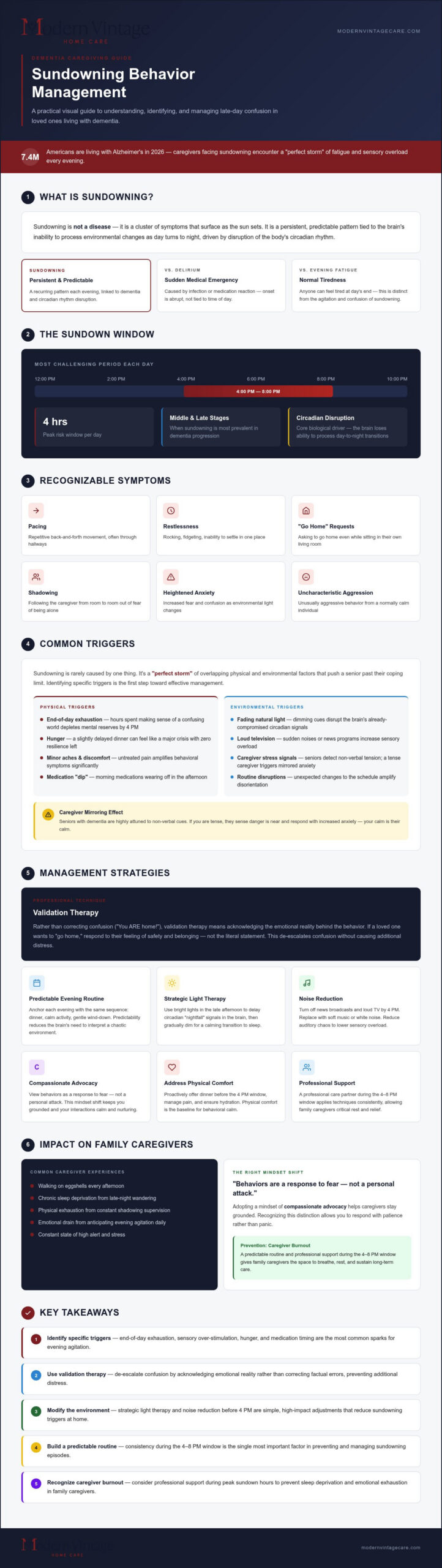
Sundowning isn’t a specific disease; rather, it’s a group of symptoms that surface as the sun begins to set. For many families, this period marks a transition from a manageable day to an evening filled with heightened anxiety and confusion. If you’ve wondered What is Sundowning?, it’s essentially a state of increased agitation that typically begins in the late afternoon. This phenomenon can be physically and emotionally taxing, making sundowning behavior management a vital skill for anyone providing care at home for a loved one with memory loss.
You might notice your loved one pacing the floor, rocking back and forth, or even becoming uncharacteristically aggressive as the light fades. Some seniors experience “shadowing,” where they follow their caregiver from room to room, terrified of being left alone for even a moment. This behavior often stems from a disruption in the body’s circadian rhythm, or internal clock, which regulates sleep and wakefulness. In 2026, with an estimated 7.4 million Americans living with Alzheimer’s, understanding these biological shifts is more important than ever for maintaining a peaceful household.
This behavior is distinct from delirium, which is usually a sudden medical emergency caused by infection or medication reactions. It’s also different from typical evening fatigue that anyone might feel after a long day. Sundowning is a persistent, predictable pattern tied to the brain’s inability to process environmental changes as day turns to night. Recognizing this distinction allows you to respond with patience rather than panic.
The Emotional Toll on Families
Living with these daily shifts often feels like walking on eggshells every afternoon. You might find yourself bracing for the evening hours, wondering which version of your loved one will emerge. This constant state of high alert takes a significant toll on your own health, often leading to sleep deprivation and physical exhaustion. Adopting a mindset of “compassionate advocacy” can help you stay grounded. By viewing these behaviors as a response to fear rather than a personal attack, you can maintain the steady, nurturing presence your relative needs.
When Sundowning Occurs: Stages of Cognitive Decline
While it can appear early on, sundowning is most prevalent during the middle and late stages of dementia as the brain loses its ability to process environmental cues. The most challenging period, frequently called the “sundown window,” typically occurs between 4:00 PM and 8:00 PM. During these hours, dementia home care services Sugar Land can provide a structured transition that bridges the gap between a busy afternoon and a restful night. Having a professional partner during this specific timeframe ensures that sundowning behavior management techniques are applied consistently, giving you the space to breathe and rest while your loved one stays safe.
Identifying Triggers: Why Sundowning Behavior Management Fails
Even the most dedicated caregivers can find themselves overwhelmed when evening agitation strikes. Often, efforts at sundowning behavior management fall short because we overlook the subtle, underlying triggers that push a senior past their coping limit. It isn’t just the time of day that causes distress; it’s often a “perfect storm” of physical discomfort and environmental chaos. When a loved one is already struggling with Understanding Late-Day Confusion in Dementia, a loud television or a slightly late dinner can feel like a major crisis.
Physical exhaustion is a primary culprit. By 4:00 PM, a person with cognitive decline has spent hours trying to make sense of a world that feels increasingly foreign. This mental fatigue leaves them with zero resilience against hunger or minor aches. You might also notice the “shadowing” effect, where your loved one follows you into every room. This happens because their internal sense of safety is tethered entirely to your presence. If you feel your own stress levels rising, be aware of “caregiver mirroring.” Seniors with dementia are highly attuned to non-verbal cues. If you’re tense, they’ll likely sense that danger is near and react with increased anxiety.
Medical and Physical Factors
Agitation often has a biological root that needs addressing before behavioral techniques can work. Many seniors experience a “dip” as their morning medications begin to wear off, leading to a resurgence of physical discomfort or confusion. Utilizing professional medication management for elderly ensures that therapeutic levels remain steady throughout the day, preventing pain-led outbursts. It’s also vital to look for “silent” triggers. In non-verbal patients, sudden aggression or pacing can be the only way they know how to communicate the pain of a urinary tract infection (UTI) or the discomfort of constipation. If these issues are managed proactively, the foundation for successful sundowning behavior management becomes much stronger.
The Texas Heat and Light Factor
For families in Houston and Sugar Land, the environment plays a unique role in evening confusion. The intense Texas sun creates long, harsh shadows in the late afternoon. To a brain struggling with depth perception, a dark shadow on the carpet can look like a hole in the floor or an intruder in the corner. Heat fatigue also plays a part; even if they stay indoors, the high summer temperatures can drain a senior’s limited cognitive energy. Managing the “Golden Hour” glare is essential. Closing the blinds before the sun gets too low can prevent the visual distortions that lead to fear. If you find that the evening hours are becoming too difficult to manage alone, our Quick Care services can provide a professional set of hands to help navigate these specific triggers.
Practical Strategies for Managing Sundowning Agitation
When evening confusion sets in, your response can either escalate the tension or pave the way for a peaceful transition. Successful sundowning behavior management relies on creating a sense of absolute predictability. For a brain struggling with memory loss, “Same Time, Same Place” acts as a vital safety signal. If you keep meals, baths, and bedtime consistent, your loved one’s internal clock has a better chance of remaining steady. You can find more Practical Strategies for Managing Sundowning that focus on these environmental and behavioral anchors.
Validation therapy is another essential tool. Instead of correcting a loved one who insists they need to “go to work,” try agreeing with the emotion behind their statement. Say something like, “You’ve always been such a hard worker; let’s have some tea before you head out.” This reduces defensive aggression by making them feel heard. Once they are calm, use redirection. Handing them a basket of warm towels to fold or a deck of cards to sort provides a “meaningful task” that channels restless energy into something productive and familiar.
Your meal timing also influences evening behavior. The “Early Dinner” strategy involves moving the largest meal of the day to mid-day. Large, heavy meals late in the evening can cause indigestion or acid reflux, which a person with dementia might not be able to articulate. Instead, they react with increased agitation or pacing. Switching to a lighter snack in the evening keeps their stomach settled and reduces the physical discomfort that often fuels sundowning symptoms.
Communication Techniques that Work
The way you speak during the sundown window matters just as much as what you say. Use short, simple sentences and maintain a calm, low-pitched voice to avoid sounding confrontational. Whether you are helping with pajamas or moving to the living room, try an “Ask, Don’t Tell” approach. Asking “Would you like to sit here?” preserves their dignity and gives them a sense of control. Give your loved one at least twenty seconds to process a question and formulate a response before you repeat yourself or ask something else.
Structured Evening Activities
Low-stimulation hobbies can help bridge the gap between daytime activity and nighttime rest. Listening to music from the 1940s through the 1960s or looking through old photo albums can be incredibly soothing. It’s best to avoid confrontational activities like complex puzzles, which may become frustrating as cognitive energy wanes. If you find it difficult to provide this level of engagement while managing household tasks, senior companionship services Sugar Land can offer the dedicated, one-on-one attention your loved one needs to stay calm and occupied during these challenging hours.
Environmental Modifications for a Sundown-Proof Home
Your physical surroundings play a significant role in how your loved one processes the transition from day to night. Effective sundowning behavior management often begins with a “sweep” of the home to remove sensory triggers that lead to confusion. While you can’t stop the sun from setting, you can control how your home responds to that change. Creating a “Comfort Zone”—a dedicated corner with familiar blankets, soft pillows, and warm lighting—provides a physical anchor when the world starts to feel unpredictable.
Noise control is just as vital as visual cues. Many families leave the evening news on as background noise, but the fast-paced imagery and stressful reporting can be deeply unsettling for someone with dementia. Try replacing the TV with soft, ambient sounds or nature recordings. If you’re using light therapy, aim for high-intensity, full-spectrum lights during the morning hours to help reset the brain’s internal clock. As evening approaches, dimming these lights gradually mimics a natural sunset, signaling to the body that it’s time to wind down rather than ramp up.
Lighting Adjustments for Circadian Health
In the Houston and Sugar Land area, the afternoon sun is particularly piercing. It’s helpful to close the blinds or curtains by 4:00 PM, well before the sun begins its descent. This proactive step prevents “shadow confusion,” where long, distorted shadows on the walls are mistaken for people or objects. Using warm-toned LED nightlights in hallways and bathrooms is a simple way to prevent falls if your loved one becomes restless at night. You might also consider the benefit of automated check-ins to ensure that lights are triggered at the correct times, maintaining a consistent environment even if you’re busy in another room.
Wandering Prevention and Home Security
Evening agitation often manifests as a desperate need to “go home,” which can lead to dangerous wandering. Securing doors and windows with simple locks or alarms is a primary safety step. A clever trick for indoor safety involves floor mats; ensure they match the color of your flooring. Dark mats on a light floor can look like a “black hole” or a void to someone with failing depth perception, causing them to trip or panic. For more comprehensive safety strategies, you can explore our guide on wandering prevention for dementia patients.
When evening activity becomes too frequent or intense to manage safely on your own, our 24-hour care services provide the constant, professional supervision needed to keep your loved one secure throughout the night. This level of support ensures that sundowning behavior management continues even while you get the rest you need to be an effective caregiver the next day.
Professional Support: When Family Care Needs a Partner
There comes a moment for many families when the emotional and physical demands of sundowning behavior management exceed what one person can provide alone. It’s vital to recognize the signs of caregiver burnout before they lead to a health crisis of your own. If you find yourself feeling persistent irritability, experiencing changes in your own sleep patterns, or dreading the sunset every afternoon, these are clear indicators that your current care model needs a partner. When a caregiver is exhausted, it becomes much harder to maintain the calm, reassuring presence that a person with dementia requires during their most confused hours.
Many families in Houston and Sugar Land benefit from what we call the “Sundown Shift.” Instead of trying to manage the entire day and night, a professional caregiver can take over during that difficult four-hour window when agitation typically peaks. This allows you to focus on being a spouse or a child while a professional handles the redirection and safety protocols. If your loved one is prone to severe evening wandering or remains active throughout the night, 24-hour care provides a continuous safety net. This ensures a trained professional is awake and alert to manage behaviors while you get the restorative sleep you need to stay healthy.
Respite Care as a Necessity, Not a Luxury
Seeking respite care for family caregivers is a critical strategy for preventing long-term physical and emotional strain. It isn’t a luxury; it’s a necessary component of a sustainable care plan. Our “Quick Care” model is specifically designed for these moments, offering support for last-minute appointments or much-needed mental health breaks. Transitioning from a family-only approach to a collaborative care team ensures that your loved one receives consistent engagement while you maintain the energy required for the long journey of memory care.
The Modern Vintage Advantage in Memory Care
At Modern Vintage Home Care, we prioritize preserving the individual’s spirit by building personalized routines around their unique history and preferences. Our staff is specifically trained in de-escalation and validation techniques that are essential for effective sundowning behavior management. We don’t just provide supervision; we offer a steady, nurturing presence that understands the nuances of late-day confusion. By choosing a local expert that understands the specific needs of our community, you gain a trusted partner dedicated to restoring peace to your evenings. To discover how we can support your family, contact Modern Vintage Home Care for a personalized dementia care plan in Sugar Land.
Restoring Peace to Your Family’s Evenings
Managing the late-day transition requires a delicate blend of environmental adjustments and compassionate communication. By identifying personal triggers and maintaining a consistent “Same Time, Same Place” routine, you can significantly reduce the distress your loved one feels as the sun sets. These small, intentional changes create a foundation of safety that helps quiet the confusion of dementia. It’s also vital to remember that you don’t have to carry the weight of sundowning behavior management entirely on your own. Recognizing when you need a partner is a sign of strength that ensures both you and your relative receive the care and rest you deserve.
At Modern Vintage Home Care, we provide specialized Alzheimer’s and dementia care with 24-hour professional supervision to families in Sugar Land, Missouri City, and Greater Houston. We act as a bridge between professional expertise and familial warmth, ensuring every detail of daily life is handled with gentleness. Request a Free In-Home Assessment for Dementia Care in Sugar Land to start building a supportive path forward. You’ve already taken the first step by seeking knowledge; now, let us provide the steady advocacy you need for a more peaceful home.
Frequently Asked Questions
What is the very first thing I should do when my loved one starts sundowning?
The first thing you should do is remain calm and gently increase the lighting in the room to eliminate confusing shadows. Your composure sets the tone for the environment, so speaking in a low, soothing voice can prevent the situation from escalating. If you stay relaxed, your loved one is less likely to mirror your stress and may settle more quickly.
Can certain foods or drinks make sundowning worse in the evening?
Yes, caffeine and high-sugar snacks consumed in the late afternoon can significantly increase evening restlessness and agitation. It’s best to limit these items to the morning hours. Large, heavy meals late in the day can also cause physical discomfort or indigestion, which often manifests as increased confusion or pacing once the sun goes down.
Is sundowning a sign that my loved one needs to move to a memory care facility?
Sundowning alone isn’t a definitive sign that a facility move is required, as many families successfully manage these behaviors with professional in-home support. Whether you choose to stay at home often depends on your own exhaustion levels. If you have access to respite care or 24-hour supervision, you can often maintain a safe, familiar environment for your relative indefinitely.
How can I tell the difference between sundowning and a urinary tract infection (UTI)?
The primary difference lies in the speed of onset; sundowning follows a predictable evening pattern, while a UTI causes a sudden, 24-hour shift in confusion. If your loved one is suddenly much more confused during the morning or develops a fever and physical discomfort, it’s time to contact a doctor. Sundowning symptoms will almost always improve once the sun comes up the next day.
Are there specific medications that help with sundowning behavior management?
While no single drug is designed specifically for sundowning behavior management, doctors may prescribe low-dose antidepressants or sleep regulators to help stabilize the internal clock. You should always prioritize behavioral changes and environmental modifications first. If these strategies don’t provide enough relief, a medical professional can help determine if a pharmacological approach is a safe addition to your care plan.
How do I deal with the ‘shadowing’ behavior where they follow me everywhere?
Manage shadowing by providing a “meaningful task” that allows your loved one to feel helpful while remaining near you. If you’re in the kitchen, ask them to dry plastic dishes or sort napkins. This engagement satisfies their need for proximity and purpose without making you feel trapped. Providing a companion can also give them another “anchor” to follow, giving you a much-needed break.
Is it safe to use melatonin or other sleep aids for a senior with dementia?
Melatonin is often considered a gentler option than traditional sedatives, but you must consult a physician before introducing any sleep aid. Some over-the-counter aids can actually increase confusion or the risk of falls during the night. A doctor can help you find the right balance that encourages rest without compromising your loved one’s physical safety or morning alertness.
How can I explain sundowning to other family members who only visit during the day?
Explain to family members that sundowning behavior management is necessary because of biological brain changes, much like a fever is a symptom of an infection. Since they only see the “good” hours, it helps to describe the evening shift as a biological “internal clock” failure. Sharing specific examples of evening restlessness can help them understand why your care approach changes as the day progresses.