
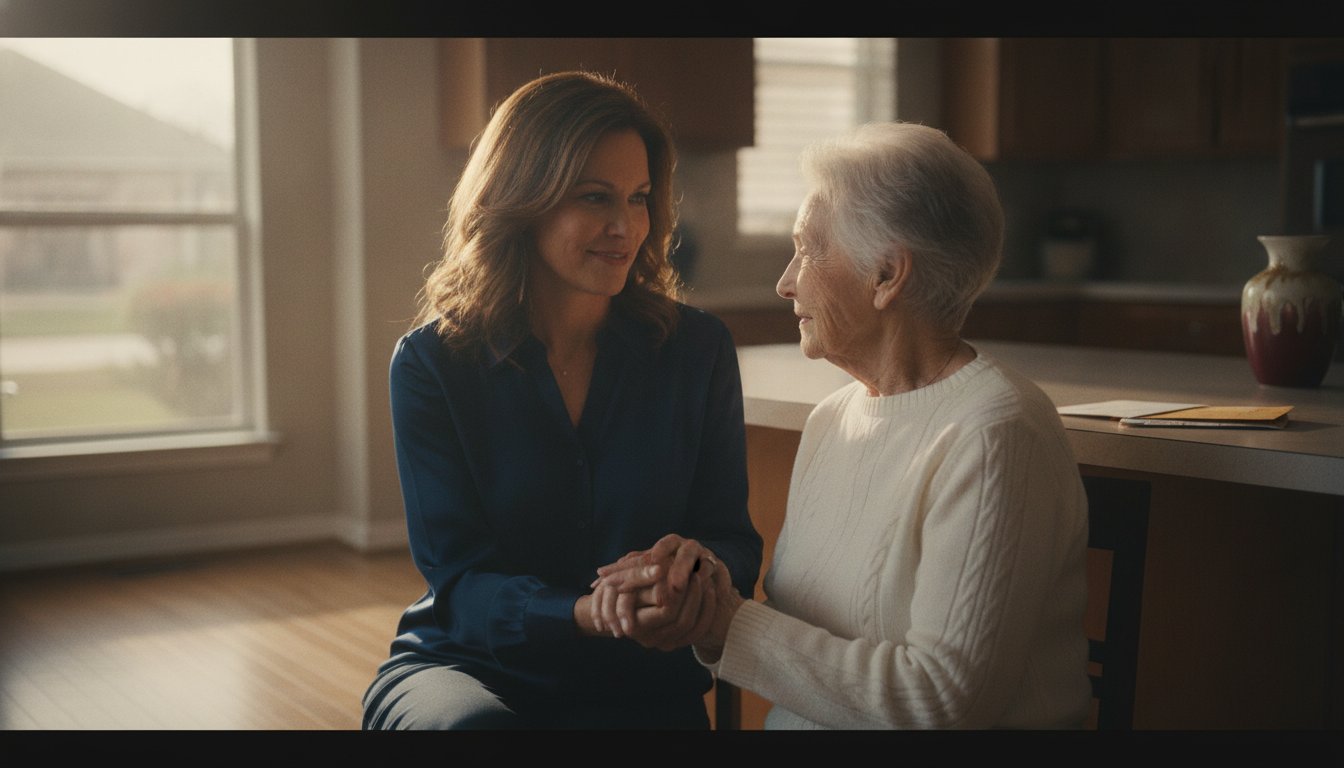
You walked into your mother’s Sugar Land home last weekend and noticed something felt slightly off. Perhaps it was the stack of unopened mail on the counter, or maybe she seemed a bit more unsteady while navigating the hallway. It is a quiet realization that many families face, yet it often brings a heavy weight of guilt and uncertainty. You want your parents to remain independent, but the fear of a fall or a missed medication dose keeps you up at night. Identifying the specific signs your parents need in-home care Houston is the first step toward restoring safety and balance to your family’s life.
We understand that this transition feels overwhelming, especially when you are trying to balance your own schedule with their growing needs. It is often difficult to distinguish between normal aging and the moments when professional support becomes necessary. This article will help you identify ten subtle red flags of senior decline and clarify how non-medical assistance can fill the gaps. We will also explore local options like automated check-ins and Quick Care services tailored for the Greater Houston area. By the end of this guide, you will have a clear checklist to ensure your loved ones stay safe, healthy, and happy right where they belong.
Key Takeaways
- Identify physical warning signs such as unexplained bruising or a decline in grooming habits that signal a need for daily support.
- Perform a home environment audit to look for red flags like expired food or unmanaged mail that indicate cognitive or physical struggles.
- Evaluate how Houston’s extreme heat and hurricane risks impact your parent’s safety when they live without a reliable daily check-in.
- Learn the subtle signs your parents need in-home care Houston and how to transition them into support using a gentle approach focused on companionship.
- Discover proactive tools like automated medication reminders and professional safety assessments to preserve your loved one’s independence.
Recognizing the Subtle Shift: When ‘Getting By’ Isn’t Enough
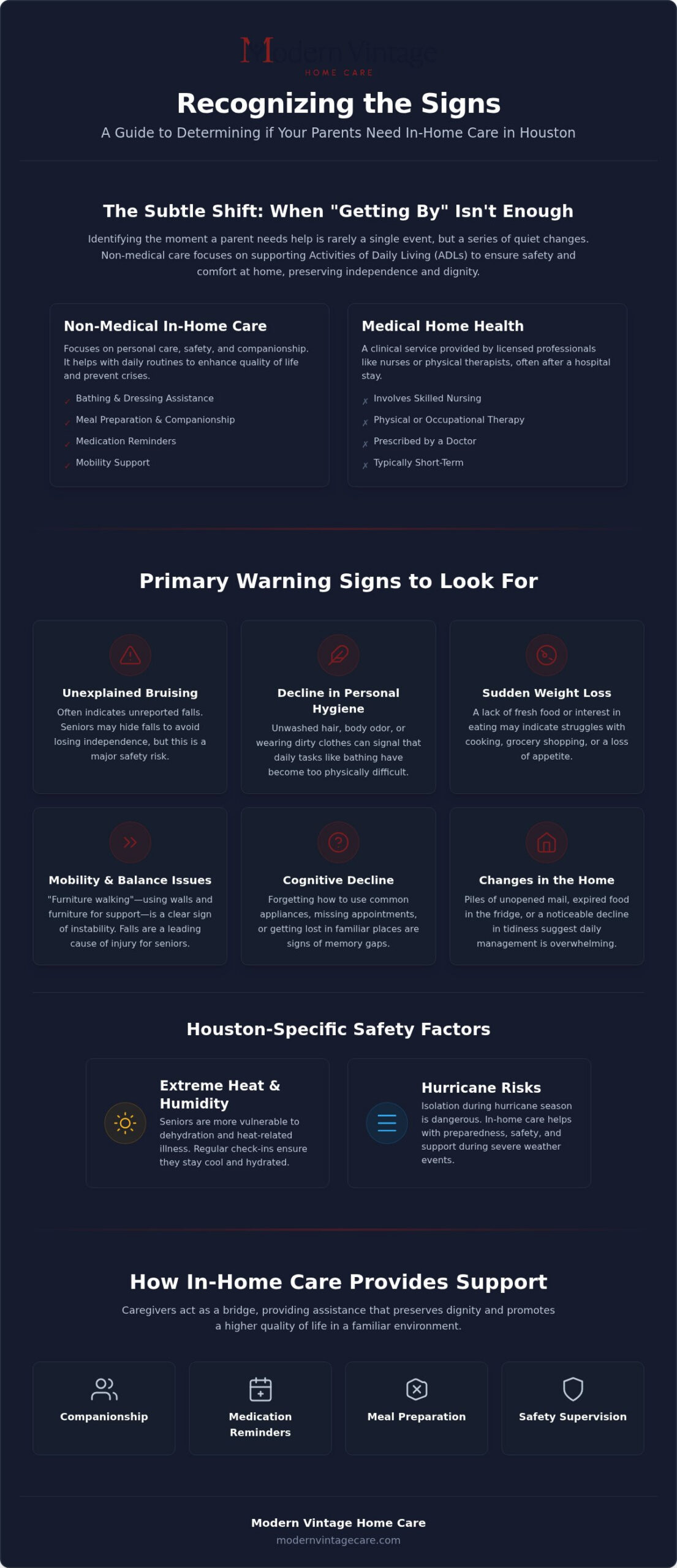
Identifying the moment when a parent transitions from “getting by” to needing help is rarely a single, dramatic event. These are often quiet changes that accumulate over months. You might notice they are a bit more tired after a short walk, or perhaps the kitchen isn’t as tidy as it used to be. Professional in-home care provides the necessary support for what experts call Activities of Daily Living (ADLs). This is distinct from “home health,” which is a medical service involving skilled nurses or physical therapists. Non-medical care focuses on the human element, ensuring your loved one remains safe and comfortable in their familiar surroundings.
If you have started searching for the signs your parents need in-home care Houston, you are likely already seeing these shifts. Trusting that instinct is vital. While normal aging involves moving a little slower, it shouldn’t involve a decline in safety or basic self-care. When the daily routine becomes a source of stress rather than a source of comfort, it is the right time to consider a supportive partner to help manage the load.
The ‘Gut Feeling’ vs. Clinical Need
Your intuition is a powerful tool. You understand your parent’s personality, habits, and baseline better than anyone else. If you feel a “knot in your stomach” after a weekend visit, don’t dismiss it. Many seniors rely on the “I’m fine” reflex to protect their children from worry or to maintain a sense of control. They might hide a minor fall or downplay a missed meal to avoid sounding vulnerable. In a city as large and busy as Houston, isolation can worsen these issues quickly. If a parent isn’t engaging with their community or neighbors, their cognitive health can suffer from the lack of regular social stimulation.
Defining the Scope of Personal Care
Non-medical caregivers act as a bridge between total independence and a facility. They provide the personal care for seniors Houston residents use for help with bathing, dressing, and mobility. These services are designed to preserve a senior’s dignity while mitigating physical risks. For example, medication management ensures that prescriptions are taken correctly and on time. If a senior mismanages their heart or blood pressure medication, the result is often an avoidable trip to the emergency room. Whether it is companionship during a meal or help with a morning routine, this level of care is about enhancing quality of life and preventing a crisis before it starts.
Physical and Cognitive Red Flags: 5 Primary Warning Signs
Identifying signs your parents need in-home care Houston often starts with observing their physical state during a routine visit. Unexplained bruising is a major red flag; it often points to a fall they didn’t report out of fear of losing their independence. You might also notice a decline in personal hygiene, such as unwashed hair, body odor, or wearing the same outfit for several days in a row. These aren’t just quirks of aging. They’re indicators that daily routines like laundry and bathing have become physically taxing or confusing. Similarly, sudden weight loss or a lack of fresh food in the kitchen suggests they’re struggling with meal preparation or have lost interest in eating altogether.
Mobility and Fall Risks at Home
Watch how your parent moves through the house. Do they rely on “furniture walking,” where they touch tables and walls for balance as they move? A single fall in the bathroom is frequently a turning point that leads to a permanent loss of independence. Statistics show that falls are the leading cause of injury among seniors, making home safety a top priority. Proper emergency preparedness for older adults begins with ensuring they have the physical stability to navigate their home safely. If you’re concerned about their safety during the day, our quick care services can provide a few hours of support to ensure they’re moving safely and staying hydrated.
Cognitive Decline and Memory Gaps
It’s normal to forget a name occasionally, but forgetting how to use a microwave or getting lost in a familiar Houston neighborhood is different. These disorientation signs often require specialized dementia home care services Sugar Land families trust to maintain a safe environment. Mismanaged medications are another critical warning sign. Forgetting a morning dose or accidentally taking a double dose can lead to severe health complications and hospitalizations. When cognitive gaps start to impact their health, a structured routine becomes the most effective way to preserve their spirit and dignity while keeping them safe from medication errors.
- Physical Bruising: Look for marks on the arms or hips that suggest balance issues.
- Hygiene Changes: Notice if the “standard” of cleanliness in their home or person has dropped.
- Nutritional Gaps: Check for expired food or a significant drop in their weight.
- Task Confusion: Watch for frustration when they try to complete once-simple chores.
- Medication Errors: Look for full pill bottles or disorganized medication cabinets.
Environmental Indicators: What Their House is Telling You
The home environment often reveals the truth before a parent ever admits they are struggling. While they might dress up for your visit, the state of their living space offers objective signs your parents need in-home care Houston. Pay attention to subtle details that seem out of place. Are there unusual dents or scrapes on the car bumper? These marks often indicate failing spatial awareness or slower reaction times behind the wheel, which are critical safety concerns. In the humid Houston climate, neglected cleaning can quickly lead to more serious issues like mold or pest infestations. If you notice lingering odors of trash or laundry that hasn’t been washed in weeks, it is a clear indicator that the physical energy required to maintain a home is becoming too much for them to manage alone.
Kitchen and Nutrition Red Flags
A quick “refrigerator audit” is one of the most revealing checks you can perform during a visit. Finding expired milk, moldy produce, or multiple containers of the same item suggests they are no longer tracking dates or lack the strength for frequent grocery trips. Many seniors fall into what experts call a “tea and toast” diet. This occurs when cooking becomes intimidating because they fear leaving the stove on or find complex recipes too difficult to follow. This lack of proper nutrition can lead to the weight loss and fatigue mentioned in earlier sections. Professional meal preparation services can reverse this trend, providing fresh, balanced meals that keep them nourished without the stress of navigating the kitchen.
Financial and Administrative Neglect
The mailbox is another area where decline hides in plain sight. Piles of unopened mail, stacks of clutter on the dining table, or past-due utility notices are major red flags for executive dysfunction. When a senior’s cognitive load increases, managing finances often becomes the first task they abandon. This neglect leaves them particularly vulnerable to senior scams, which are increasingly sophisticated and targeted. Companionship services can help manage these administrative burdens by assisting with basic errand management and keeping the household organized. This steady, nurturing presence ensures that a parent isn’t just surviving in their home; they are thriving in a safe, orderly environment.
- Expired Food: Signifies a loss of routine or difficulty with grocery shopping.
- Household Clutter: Indicates that cleaning has become physically or mentally exhausting.
- Unpaid Bills: A warning sign of cognitive vulnerability and potential financial mismanagement.
- Car Dents: Points to unsafe driving habits that require immediate attention.
- Unpleasant Odors: Often linked to neglected housekeeping or unmanaged incontinence issues.
Houston-Specific Safety Factors: Heat, Humidity, and Hurricanes
Living in Southeast Texas requires a level of vigilance that many other regions don’t demand. For families in the Greater Houston area, the local environment often acts as a catalyst for senior decline. The sprawling nature of suburbs like Sugar Land and Missouri City means that once a parent stops driving, they are effectively stranded. This isolation is more than just lonely; it’s a safety risk. When a senior can’t easily reach a grocery store or a doctor’s office, their health can deteriorate rapidly. Identifying the signs your parents need in-home care Houston often involves looking at how they interact with our unique climate and geography.
Managing the Texas Climate
Houston’s heatwaves are notoriously dangerous for older adults who often have poor thermoregulation. You might notice your parent is keeping the thermostat at 80 degrees to save money, unaware that they are showing signs of heat exhaustion or dehydration. Look for symptoms like persistent dizziness, confusion, or unusually dry skin. A professional caregiver does more than just provide companionship; they monitor the indoor climate and ensure your loved one is drinking enough water throughout the day. If your parent is struggling to manage their home environment during the peak of summer, 24 hour home care Houston families rely on can provide the constant monitoring needed to prevent heat-related hospitalizations.
Emergency Preparedness and Mobility
Hurricane preparedness is a non-negotiable part of life in the Gulf Coast. The 2026 Atlantic hurricane season is predicted to be active, with 13 named storms and 6 hurricanes forecasted. Ask yourself honestly: Can your parent evacuate or shelter in place alone? Do they have a “Go-Bag” ready, or are they registered with the State of Texas Emergency Assistance Registry (STEAR)? For adult children living out of state, the anxiety during storm season is overwhelming. Having a local caregiver ensures that someone is physically there to help with emergency kits and transportation. Additionally, many families don’t realize that veterans home care benefits Sugar Land offers can help cover the costs of this essential support. If you are worried about how your parents will manage the next major storm or heatwave, contact us today for a home safety assessment to ensure they are prepared for whatever the Texas weather brings.
- Heat Sensitivity: Watch for lethargy or confusion during high-temperature days.
- AC Neglect: Ensure they aren’t avoiding using the air conditioning due to cost or technical confusion.
- Storm Anxiety: Notice if they become fixated or paralyzed by weather reports.
- Suburban Isolation: Evaluate if their lack of transportation is leading to missed appointments or empty cupboards.
- Evacuation Readiness: Confirm they have a clear, documented plan for power outages or flooding.
The Transition: How to Start the Conversation and Get Help
Starting the conversation about professional support is often the hardest part of this journey. While you have identified the signs your parents need in-home care Houston, bringing it up to them requires a gentle, respectful touch. Many seniors fear that admitting they need help is the first step toward losing their home. It is often helpful to frame care as a supportive concierge service rather than a medical necessity. You might suggest a trial period through respite care for family caregivers, which allows them to experience the benefits of companionship without feeling like they are committing to a permanent change.
Overcoming Resistance to Care
If resistance is high, involving a trusted third party can shift the focus from a familial power struggle to a professional health recommendation. A family doctor or a geriatric care manager can often explain the benefits of support in a way that feels less like a loss of control. You can also utilize Quick Care Services to ease them into a new routine. These short, focused visits provide assistance with specific tasks like meal prep or light housekeeping, building trust through small, positive interactions. For parents who value their privacy above all else, automated check-ins offer a modern way to ensure safety without an immediate physical presence in the home. Recognizing these signs your parents need in-home care Houston is simply the first step in a collaborative process to keep them safe.
Choosing the Right Houston Agency
When you are ready to choose a provider, look for a licensed Texas Home and Community Support Services Agency (HCSSA) that understands the specific needs of the Greater Houston area. Local ownership in Sugar Land or Missouri City often translates to a more personalized, neighborly approach where the staff is deeply invested in the community. Modern tools also play a significant role in safety. For example, automated medication management for elderly residents can provide families with real-time peace of mind that doses aren’t being missed. A professional home safety assessment is a logical next step to identify specific hazards and create a customized plan that honors your parent’s independence while ensuring their well-being.
- Start with Companionship: Focus on the social benefits rather than the physical needs.
- Use a Trial Period: Frame the first few weeks as a temporary “help around the house” phase.
- Involve Professionals: Let a doctor or care manager lead the difficult health conversations.
- Verify Local Expertise: Choose an agency with deep roots in Sugar Land and Greater Houston.
- Leverage Technology: Incorporate automated check-ins and medication reminders for non-intrusive safety.
Empowering Your Loved One’s Independence at Home
Identifying the signs your parents need in-home care Houston is a profound act of love and proactive advocacy. Whether you have noticed subtle environmental cues like neglected mail or more urgent physical red flags like unsteadiness, taking the first step ensures your parents age with the dignity they deserve. It is about shifting from a state of constant worry to a place of steady, reliable support. By addressing these needs early, you help prevent the crises that often lead to a loss of independence.
As specialized memory care experts serving Sugar Land and Greater Houston, we understand that every family’s situation is unique. If you need immediate peace of mind, our flexible Quick Care services and automated check-ins provide a gentle way to start the transition without overwhelming your loved ones. You don’t have to navigate these local challenges and weather risks alone. We are here to act as your compassionate guide and steady partner in care.
Schedule a Free Compassionate Care Consultation today to discuss your family’s specific needs. Together, we can create a nurturing environment where your parents feel safe, seen, and supported every single day.
Frequently Asked Questions
What is the difference between home health and home care in Houston?
Home health is a clinical service ordered by a doctor for medical needs like wound care or physical therapy. In contrast, home care is non-medical support for daily living. If your parent needs help with bathing, dressing, or meal prep, home care is the appropriate choice. This distinction is vital because home care focuses on preserving independence and safety in the home without the need for a medical prescription.
How do I know if my parent is safe to drive in Houston traffic?
Houston’s complex highway system and heavy traffic can be overwhelming for seniors with declining reaction times. You should check their vehicle for unexplained dents or scrapes, especially on the bumpers. If they express anxiety about driving at night or frequently get lost on familiar routes to the grocery store, it is time to consider alternative transportation or companionship services to ensure their safety on the road.
Will Medicare pay for non-medical in-home care in Texas?
Medicare typically does not cover ongoing, non-medical custodial care at home. However, it may cover short-term skilled nursing if ordered by a physician. In Texas, low-income seniors may qualify for the STAR+PLUS HCBS Waiver program, which can help pay for personal care services. Most families find that private pay or long-term care insurance is the primary way to fund non-medical support in the Greater Houston area.
What should I do if my parent refuses to allow a caregiver in the house?
Resistance is common, but it can be managed by framing the caregiver as a helper or concierge rather than a nurse. Start with a soft approach by scheduling a companion for just a few hours a week to help with light chores or errands. This allows your parent to build a relationship with the caregiver. Once they feel comfortable with the extra help, you can gradually increase the level of personal care provided.
How can I monitor my parent’s safety if I live outside of Houston?
Living outside of Texas makes it difficult to spot the signs your parents need in-home care Houston families often notice during weekly visits. You can utilize automated check-in services that verify your parent’s well-being daily. Additionally, hiring a local agency in Sugar Land provides you with a professional set of eyes on the ground. These caregivers can provide regular updates and alert you immediately if they notice any changes in health or safety.
Are there specific home care benefits available for veterans in Sugar Land?
Yes, veterans and their surviving spouses in Sugar Land may qualify for the VA’s Aid and Attendance benefit. This program provides monthly payments on top of a standard VA pension to help cover the costs of in-home personal care. It is an excellent resource for those who served and now require assistance with daily activities. We recommend speaking with a local veterans service officer to begin the application process for these earned benefits.
How quickly can home care services be started in an emergency?
While every situation is unique, many agencies in the Houston area can begin services within 24 to 48 hours after a safety assessment is completed. In an emergency, such as a sudden hospital discharge, we work quickly to coordinate care. It is always better to have an initial consultation early so that a plan is already in place before a crisis occurs, ensuring a smoother transition for your loved one.
What are automated check-in services for seniors?
Automated check-in services are a modern, non-intrusive way to ensure your parent is safe throughout the day. These systems use scheduled phone calls or digital prompts that require a simple response from the senior. If your parent doesn’t respond, an alert is immediately sent to you or a designated caregiver. It is a perfect peace of mind tool for seniors who are still relatively independent but live alone in sprawling Houston suburbs.