

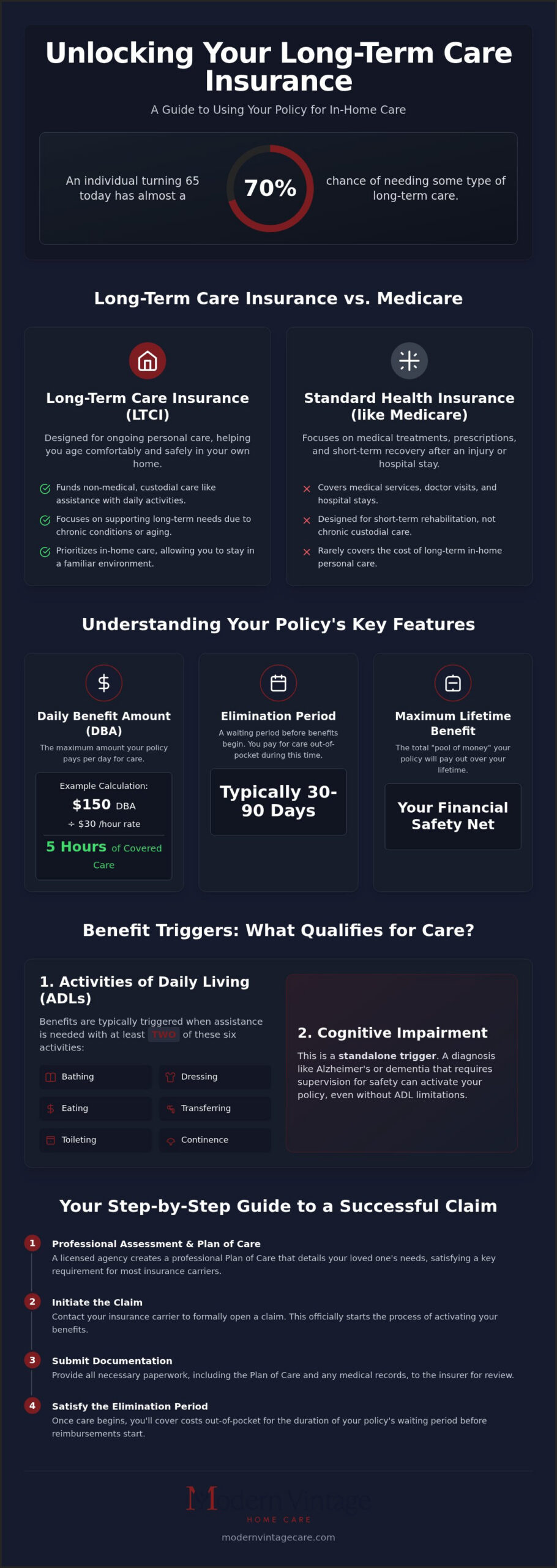
Did you know that an individual turning 65 today has almost a 70% chance of needing some type of long-term care services? For many families in our community, this reality leads to a search for how to effectively use long-term care insurance for in-home care Sugar Land to protect a loved one’s dignity and independence. It’s common to feel a sense of anxiety when you’re staring at a policy filled with complex terms like “elimination periods” or “ADL requirements.” You want the best for your relative, yet the fear that insurance might not cover the full cost of 24-hour care can feel like a heavy burden during an already sensitive time.
We understand that you’re looking for more than just a financial payout; you’re seeking a reliable partner who can provide high-quality care that meets strict insurance standards. Whether you’re just starting to look at options or you’re ready to file a claim, we’re here to act as a compassionate guide. This guide will help you manage the complexities of your policy so you can secure professional in-home support with quiet confidence. We’ll walk through the specific steps required to unlock your benefits, explain how to handle the paperwork without the stress, and show you how to ensure your claim process leads to a successful reimbursement.
Key Takeaways
- Learn how long-term care insurance differs from Medicare by providing the essential daily living support needed for aging in place safely.
- Discover how a licensed agency helps you navigate long-term care insurance for in-home care Sugar Land by creating a professional Plan of Care that satisfies carrier requirements.
- Understand the six Activities of Daily Living and how cognitive impairments, such as dementia, serve as standalone triggers for your policy benefits.
- Master the nuances of daily benefit amounts and elimination periods to ensure your family’s out-of-pocket costs remain manageable.
- See how a concierge approach to claim documentation can transform a stressful paperwork process into a seamless path to reimbursement.
How Long-Term Care Insurance Works in Sugar Land
For many residents in Fort Bend County, the desire to age in place isn’t just a preference; it’s a priority. Long-term care insurance is a specialized type of coverage designed to support this goal by funding the assistance needed when a person can no longer perform basic daily tasks. Unlike health insurance, which focuses on medical treatments, these policies provide the financial resources necessary to bring professional support directly into your home. This distinction is vital for those exploring long-term care insurance for in-home care Sugar Land, as it allows families to prioritize comfort without exhausting their life savings.
A common misconception is that Medicare will cover these costs. While Medicare is excellent for short-term rehabilitation or hospital stays, it rarely covers the non-medical, custodial care that seniors often require for the long term. LTCI fills this gap, covering services like personal care and companionship. The transition from paying premiums to receiving benefits begins with a “trigger.” This usually occurs when a licensed professional determines that an individual needs help with at least two activities of daily living, such as bathing or dressing, or has a cognitive impairment that requires supervision.
Why LTCI is Essential for Sugar Land Seniors
Living in Sugar Land offers a high quality of life, but the cost of maintaining that lifestyle alongside professional care can be significant. Seniors in our community have often spent decades building their assets. LTCI acts as a protective shield, ensuring that the cost of care doesn’t erode an inheritance or a spouse’s financial security. Beyond the numbers, there’s an immeasurable emotional benefit. Staying in a familiar neighborhood, surrounded by lifelong memories and friends, provides a sense of continuity that a facility simply cannot replicate.
Home Care vs. Facility Care: What Your Policy Prefers
Modern insurance policies are increasingly structured with a “home-first” mentality. Carriers recognize that most individuals are happier and healthier when they remain in their own environment. Because home care is often more cost-effective than a private room in a nursing facility, many policies include robust home care provisions. This is especially relevant for families considering 24-hour home care Houston. If your policy allows for it, you can utilize your daily benefit amount to fund round-the-clock support, ensuring your loved one is never alone while maximizing the value of your long-term care insurance for in-home care Sugar Land.
Key Policy Features: What Your Sugar Land Home Care Coverage Actually Pays For
Understanding your policy’s fine print is the first step toward securing the support your family needs. Before diving into the specific features, it helps to review What Is Long-Term Care? to see how these services differ from standard medical treatments. When you’re evaluating long-term care insurance for in-home care Sugar Land, you’ll encounter specific terms that dictate exactly how much support your loved one receives each day.
The Daily Benefit Amount (DBA) Explained
The Daily Benefit Amount is the maximum dollar amount the policy pays for a single day of care. To calculate how many hours this covers in Sugar Land, you simply divide your DBA by the agency’s hourly rate. If your policy provides $150 per day and the professional care rate is $30 per hour, your insurance effectively covers five hours of support. If your loved one requires more intensive assistance, you might choose to supplement the insurance with private funds to ensure comprehensive, 24-hour safety.
Beyond the daily limit, you should also consider the Benefit Period and the Maximum Lifetime Benefit. These features determine the total “pool of money” available to you over time. For instance, a policy with a three-year benefit period doesn’t necessarily expire in exactly 36 months; instead, it lasts until the total dollar amount in your account is exhausted. In 2026, inflation protection is more critical than ever. Without it, a policy purchased a decade ago might not cover the current cost of professional care in Fort Bend County. If your policy includes a 3% or 5% compound inflation rider, your daily benefit has likely grown to stay relevant with today’s labor rates.
Understanding the Elimination Period
The elimination period acts as the insurance version of a deductible. It’s a set number of days, typically 30, 60, or 90, during which you must pay for care out-of-pocket before the insurance company begins to issue reimbursements. Choosing a care start date that aligns with these requirements is essential for a smooth financial transition. Many families find that utilizing respite care for family caregivers is an excellent way to bridge this gap while meeting the policy’s initial service requirements.
Navigating these financial layers can feel overwhelming, but you don’t have to do it alone. If you’re trying to figure out how your specific policy applies to your current needs, our team at Modern Vintage Home Care can help you translate those numbers into a sustainable plan of support for your relative.
The Step-by-Step Guide to Filing a Successful In-Home Care Insurance Claim
Filing a claim for long-term care insurance for in-home care Sugar Land often feels like a daunting administrative hurdle during an already emotional time. Whether you’re just beginning this journey or you’ve been managing a loved one’s needs for a while, you might find yourself asking, Should You Buy Long-Term Care Insurance? or how to best utilize the policy you already hold. The key to a seamless experience lies in preparation and understanding the carrier’s specific requirements before the first bill arrives.
The process of activating your benefits generally follows five essential steps:
- Step 1: Verify Eligibility. Contact your carrier to confirm that “Home Care” is a covered benefit. Some older policies may have specific language regarding where care can be received.
- Step 2: Obtain a Plan of Care. You’ll need a formal, written document from a licensed Sugar Land agency that outlines the specific services required.
- Step 3: Document ADL Deficiencies. Clearly identify which Activities of Daily Living (ADLs) your loved one can no longer perform independently.
- Step 4: Submit the Claim Packet. Send the initial paperwork along with the home care agency’s state license and credentials to the insurer.
- Step 5: Facilitate the Nurse Assessment. Most carriers will send a nurse to conduct an interview and verify the level of support needed.
The Role of the Licensed Home Care Agency
Insurance carriers are strict about who provides the care they fund. Most policies require that services be delivered by a licensed or certified agency rather than an independent contractor or a family member. By partnering with a professional team, you ensure that every hour of care is documented with clinical precision. This level of detail is vital when recording personal care for seniors Houston, as it provides the evidence carriers need to justify ongoing reimbursements and prevent claim denials.
Preparing for the Carrier’s Eligibility Assessment
The nurse assessment is a pivotal moment in the claim process. It’s natural to feel protective of your relative’s dignity, but this is the time for complete transparency. If your loved one is experiencing cognitive decline due to Alzheimer’s or dementia, it’s important to share these details openly. Carriers view cognitive impairment as a standalone trigger for benefits, even if physical ADLs are still manageable. We often support families during these high-stakes meetings, providing a steady presence to ensure the carrier understands the full scope of your long-term care insurance for in-home care Sugar Land needs.
Overcoming Common LTCI Hurdles: Elimination Periods and ADL Requirements
Unlocking your policy benefits requires meeting specific clinical criteria that the insurance company uses to measure a person’s level of independence. The most common hurdles involve the six standard Activities of Daily Living (ADLs): Bathing, Dressing, Toileting, Transferring, Continence, and Eating. Most Texas policies follow a “Two out of Six” rule, meaning your loved one must require assistance with at least two of these tasks to activate their long-term care insurance for in-home care Sugar Land. It’s a system designed to ensure that those with the greatest need receive support first, but it can feel restrictive for families witnessing a gradual decline.
One frequent point of confusion is the difference between “hands-on assistance” and “stand-by assistance.” Hands-on care means the caregiver is physically helping with the task, while stand-by assistance means someone must be present to ensure the task is completed safely. Many modern policies recognize both, but documenting the specific need is critical for approval. You should also be aware that “companionship only” is rarely a covered trigger. While social engagement is essential for quality of life, the insurance carrier typically requires a physical or cognitive deficit to begin payments for professional services.
Meeting the ADL Threshold
When a family caregiver first notices a decline, they often start by helping with pills or meal prep. While medication management for elderly is a core part of a professional care plan, it isn’t always counted as a primary ADL trigger. However, it often points toward a broader need for help with transferring or dressing. To satisfy the elimination period, you should develop a clear strategy for “counting days.” Some policies count every day you have a professional caregiver in the home, while others count calendar days once the first service is provided. Knowing which method your carrier uses can save you thousands in out-of-pocket costs during that initial waiting period.
Cognitive Impairment Triggers
If your relative is physically healthy but struggling with memory loss, they may still qualify for benefits. A formal diagnosis of Alzheimer’s or another form of dementia often acts as a standalone trigger, bypassing the need for physical ADL deficiencies. This is because cognitive impairment creates significant safety risks, such as wandering or kitchen fires. Utilizing specialized dementia home care services Sugar Land provides the supervision necessary to satisfy an insurer’s safety requirements for long-term care insurance for in-home care Sugar Land. If you’re unsure if your loved one currently meets these insurance triggers, you can reach out to Modern Vintage Home Care today for a professional assessment of your policy’s requirements.
Why Modern Vintage Home Care is the Right Partner for Insurance-Funded Support
Modern Vintage Home Care serves as more than just a provider; we act as a steady advocate for families dealing with the intricacies of insurance. Choosing the right agency is the most important decision you’ll make after deciding to use long-term care insurance for in-home care Sugar Land. We’ve built strong relationships with major carriers, which means we understand the specific Plan of Care formats they require to approve your benefits quickly. Because we’re located right here in Fort Bend County, we can facilitate rapid nurse assessments, often being present in the home to help explain the nuances of your loved one’s daily needs to the insurance representative.
We take a concierge approach to every claim. This means we don’t just provide care; we manage the administrative burden that often keeps families awake at night. By acting as the bridge between the insurance company and your family, we ensure that the focus remains where it should be: on the dignity and well-being of your relative. Our team understands that this is a sensitive life transition, and we’re here to provide the calm reassurance you need to move forward.
Expert Documentation and Reporting
Insurance adjusters rely on data to maintain benefit eligibility. If the paperwork is vague, the claim is often denied. To prevent this, we utilize automated check-ins and medication reminders that create a clear digital trail for adjusters. These tools provide objective proof of service delivery, which is essential for verification. Our caregivers maintain detailed daily care notes that highlight specific ADL support provided during each shift. This level of transparency offers peace of mind for families and provides the clinical precision that carriers demand. We’re committed to ensuring that your documentation is always audit-ready, allowing for a seamless reimbursement process.
Customized Care for Sugar Land Veterans
For those who have served, the financial picture can be even more supportive. It’s a common discovery that long-term care insurance for in-home care Sugar Land can work in tandem with veterans home care benefits Sugar Land. Our team understands how to coordinate these different funding sources to maximize the hours of support available to you. Whether you’re a veteran or a surviving spouse, we help you navigate the intersection of VA programs and private insurance. We believe that those who protected our country deserve the highest standard of nurturing presence in their later years. If you’re ready to see how your policy can work for you, contact us for a policy review and care consultation to begin your journey toward reliable, professional support.
Securing Your Loved One’s Future in Sugar Land
Deciding how to best support a relative as they age is one of the most significant choices a family can make. By understanding your policy’s daily benefit amount and identifying the specific clinical triggers required for approval, you’ve already taken the first step toward peace of mind. Remember that successful claims rely on precise documentation from a Licensed Texas Home Care Provider who understands the nuances of the local landscape. Utilizing long-term care insurance for in-home care Sugar Land doesn’t have to be a source of stress when you have a dedicated partner to bridge the gap between complex paperwork and compassionate support.
As specialized memory care experts, we provide the local Sugar Land advocacy your family deserves. We’re here to ensure your loved one receives high-quality, professional care while maximizing your policy’s benefits. If you’re feeling overwhelmed by the details, we invite you to Request a Free LTCI Policy Review and Home Care Consultation. You don’t have to navigate this transition alone; we’re honored to walk beside you as you protect your loved one’s dignity and independence at home.
Common Questions About Home Care Insurance
Does long-term care insurance cover 24-hour home care in Sugar Land?
Yes, most modern policies cover 24-hour care if the services are provided by a licensed agency and meet the policy’s clinical triggers. Your daily benefit amount determines how much of the cost is reimbursed each day. If your loved one requires round-the-clock safety, you can often apply your insurance funds toward these services and supplement any remaining balance with private pay to ensure they are never alone.
What are the ‘Activities of Daily Living’ required to trigger my insurance?
Insurance carriers typically look for a deficiency in at least two of the six standard Activities of Daily Living (ADLs) to activate benefits. These include bathing, dressing, toileting, transferring, continence, and eating. If a licensed professional determines your relative needs hands-on or stand-by assistance with these tasks, your benefits for long-term care insurance for in-home care Sugar Land can usually be activated to fund professional support.
Can I use my LTCI policy for a family member who has dementia but is physically healthy?
Yes, cognitive impairment is a standalone trigger for most long-term care insurance policies even if physical strength remains. Because Alzheimer’s and dementia create significant safety risks, carriers recognize the need for constant supervision and memory care. A formal diagnosis and a professional assessment of the individual’s safety needs are usually enough to satisfy the insurer’s requirements for starting home care services.
What is an ‘elimination period’ and how do I satisfy it?
The elimination period is a set number of days you must pay for care out-of-pocket before insurance benefits begin. You satisfy this requirement by receiving services from a licensed provider for the duration specified in your policy, which is commonly 90 days. It’s vital to track these days carefully, as some carriers only count the dates when a caregiver was physically present in the home rather than simple calendar days.
How do I know if my Sugar Land home care agency is ‘qualified’ by my insurance?
Most carriers require the agency to be licensed by the state and provide professional, non-medical care that matches the policy’s definitions. You can confirm an agency’s status by asking for their Texas license number and their experience with insurance documentation. Agencies like Modern Vintage Home Care maintain the specific licensing and clinical reporting standards required by major national insurers to ensure a smooth and successful claim process.
Does LTCI pay the home care agency directly or reimburse me?
Most policies operate on a reimbursement basis, meaning the family pays the agency and then receives funds from the insurer after submitting an invoice. However, some carriers allow for an “assignment of benefits,” which permits the insurance company to pay the agency directly. It is best to check your specific policy language or ask your care provider if they can facilitate direct billing to reduce your family’s initial out-of-pocket burden.
Can I use my veterans benefits and long-term care insurance at the same time?
Yes, you can often coordinate private insurance with VA benefits to increase the total hours of support your loved one receives. While the VA might cover a specific portion of care through programs like Aid and Attendance, your LTCI policy can fill the remaining gaps for more intensive needs. This strategy is particularly effective for families who need comprehensive 24-hour support but want to manage their long-term costs efficiently.
What happens if my insurance claim for home care is denied?
If a claim is denied, you generally have the right to file a formal appeal with the insurance carrier to reverse the decision. Denials frequently occur because the initial documentation doesn’t clearly show a need for help with daily living activities. Working with a professional agency ensures your long-term care insurance for in-home care Sugar Land claim is backed by the clinical notes and care plans required to prove eligibility during the appeals process.