
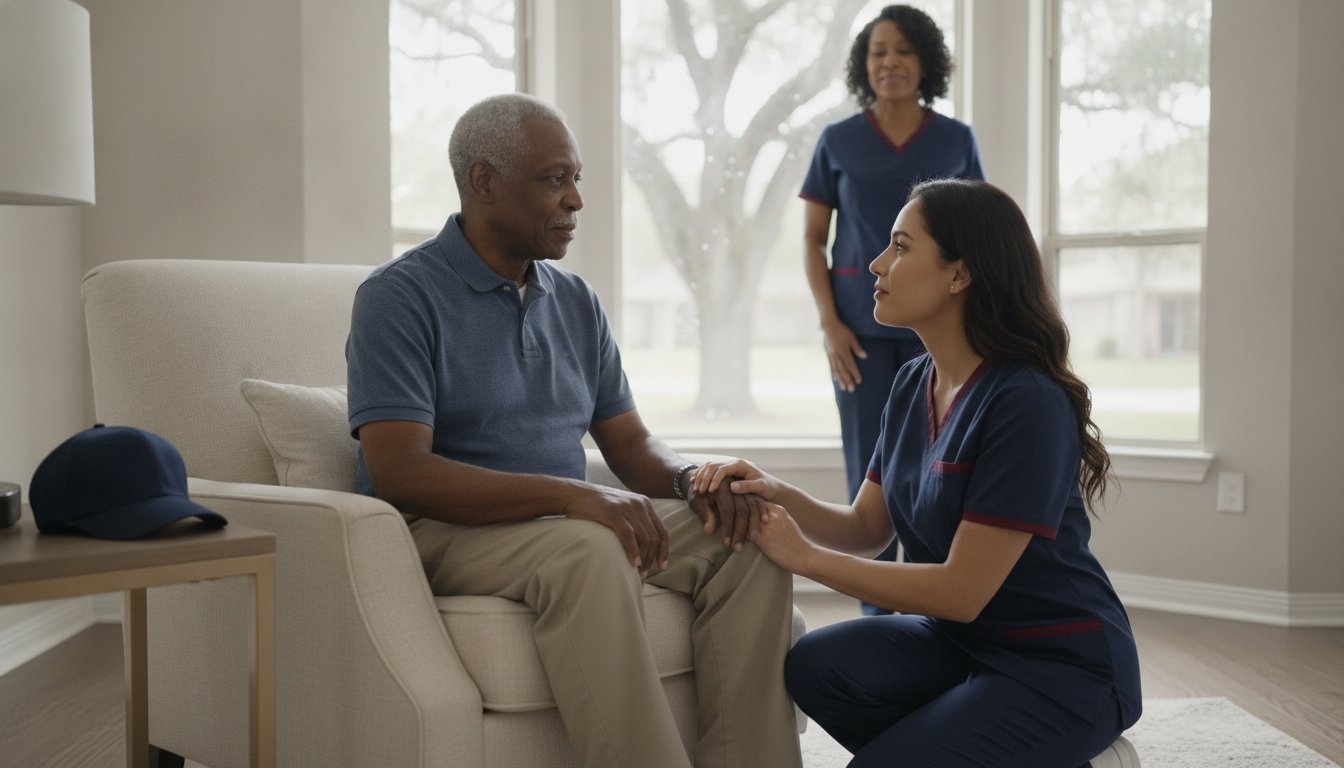
Imagine the man who once commanded a platoon or navigated a battleship now feeling uncertain in his own living room. It’s heartbreaking to watch a hero struggle with the confusion of memory loss, and it’s even harder when you’re the one trying to manage his safety around the clock. You’ve likely spent late nights worrying about wandering or wondering if you’ll ever find a way to pay for the professional help he needs. Securing high-quality home care for veterans with dementia Sugar Land is a deeply personal mission, and you deserve a partner who understands both the clinical needs of memory care and the profound respect owed to those who served.
We understand that the paperwork for VA benefits can feel like a maze during a family crisis. Whether you’re feeling burnt out from constant supervision or just starting to notice the signs of decline, there’s a clear path forward. This guide will help you navigate the 2026 VA Aid and Attendance benefit rates, which can provide up to $2,874 per month for married veterans to help cover costs. You’ll discover how to create a structured home environment that reduces agitation and how to find specialized support that honors your loved one’s military legacy while keeping them safe in the comfort of home.
Key Takeaways
- Learn how military-informed routines and mission-based daily activities can reduce agitation and provide a sense of purpose for veterans living with memory loss.
- Understand the 2026 VA Aid and Attendance eligibility requirements to help offset the costs of specialized home care for veterans with dementia Sugar Land.
- Compare the benefits of maintaining a familiar home environment with the flexibility of professional care versus the fixed structures of a memory care facility.
- Discover how automated safety features, including medication reminders and check-in systems, provide peace of mind while preventing wandering incidents.
- Identify the advantages of choosing a locally owned partner that provides veteran-centric advocacy and compassionate support tailored to Fort Bend County families.
The Unique Intersection of Military Service and Memory Care
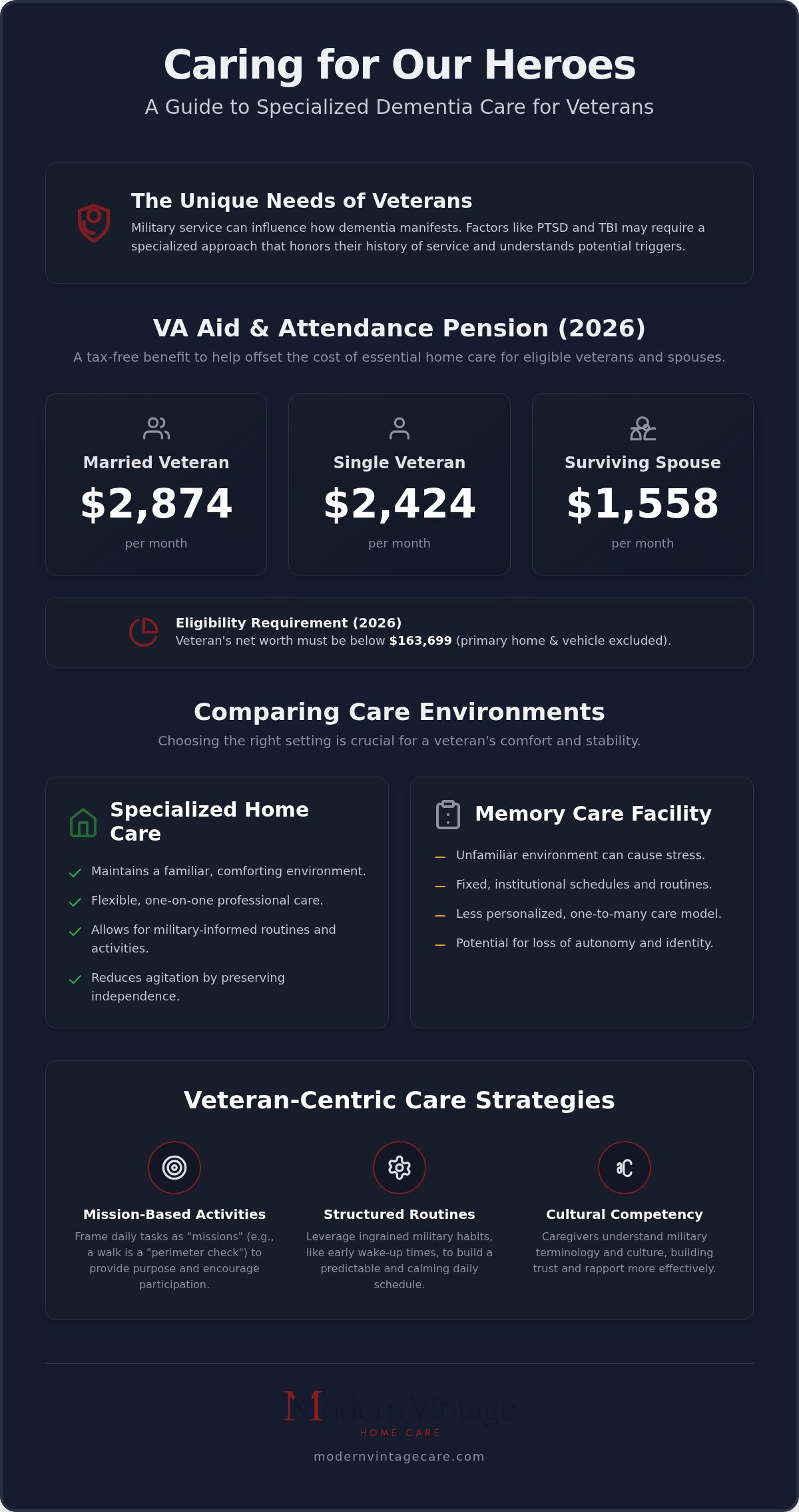
Military service leaves a lasting mark on the mind and spirit. While many families understand the general overview of dementia, the experience for a veteran often carries unique complexities. Service-related factors such as Post-Traumatic Stress Disorder (PTSD) or past Traumatic Brain Injuries (TBI) can influence how memory loss manifests. This isn’t just a clinical observation; it’s a reality that changes how we approach daily support. Providing home care for veterans with dementia Sugar Land requires more than just keeping someone safe. It involves understanding the mission-ready mindset that many former service members carry throughout their lives.
Understanding Service-Related Cognitive Decline
Research has shown a significant link between past service trauma and the timing of cognitive decline. For a veteran, dementia symptoms might intertwine with long-dormant PTSD triggers. Loud noises, specific smells, or even a feeling of being trapped can cause heightened agitation that a standard caregiver might not expect. We look for military-ingrained habits to help bridge the gap. For example, a veteran who spent decades waking up at 0500 hours may find comfort in a strict early morning routine. If we ignore these ingrained patterns, we risk causing unnecessary stress. Instead, we use these habits as a foundation for safety and emotional stability.
The Value of a Veteran-Centric Care Plan
A generic care plan often fails because it treats the veteran as a patient rather than a person with a history of service. Effective home care for veterans with dementia Sugar Land must be mission-based. This means framing daily tasks in a way that resonates with their background. Instead of suggesting it’s time for a walk, a caregiver might suggest it’s time for a perimeter check. This shift in language respects their dignity and encourages participation.
Building trust is the first hurdle. Many veterans are fiercely independent and may resist help from outsiders. We overcome this by focusing on partnership rather than supervision. Our approach includes:
- Cultural Competency: Matching caregivers who understand military terminology and respect the chain of command.
- Relational Engagement: Incorporating military history into person-centered activities, such as organizing service medals or viewing historical documentaries.
- Behavioral Awareness: Identifying veteran-specific behavioral symptoms early to prevent escalation.
When care feels like a shared objective rather than a loss of autonomy, outcomes improve significantly. Specialized training allows our team to ensure that the home remains a sanctuary rather than a source of confusion.
Navigating VA Benefits for Dementia Care in Sugar Land
Financing high-quality care is often the primary concern for families following a dementia diagnosis. For those seeking home care for veterans with dementia Sugar Land, the Department of Veterans Affairs offers a critical financial lifeline that many families overlook. The cost of 24-hour supervision or specialized memory support can be substantial, but these benefits are designed to honor service by making professional help more accessible and sustainable for the long term.
The Aid and Attendance Pension Explained
The VA Aid and Attendance pension is a tax-free monthly benefit designed for veterans and surviving spouses who require the regular assistance of another person to perform activities of daily living. Because dementia affects cognitive safety and judgment, a formal diagnosis often satisfies the clinical requirement for this benefit. This is particularly relevant when considering the complex relationship between military service and memory care, as service-related stressors can lead to specific long-term needs that require specialized attention.
In 2026, the monthly benefit rates provide significant relief for families. A married veteran may receive up to $2,874 per month, while a single veteran can access $2,424. Even a surviving spouse may qualify for $1,558 monthly to help cover the costs of at-home support. To be eligible, the veteran’s net worth must be below the 2026 limit of $163,699, which excludes their primary home and vehicle. This pension is distinct from standard VA health benefits; it is a direct payment intended to offset the personal care costs that health insurance typically does not cover.
Steps to Access Veteran Care Benefits
Filing a claim requires precision and thorough documentation. You’ll need to gather the veteran’s discharge papers, specifically the DD214, along with medical evidence from a physician detailing the need for constant supervision or assistance with daily tasks. Working with a local Veterans Service Officer (VSO) in Sugar Land or Fort Bend County can help ensure your application is accurate from the start, reducing the likelihood of delays during a health crisis.
Understanding how veterans home care benefits Sugar Land can be maximized is essential for families who need to bridge the gap between basic companionship and comprehensive memory support. If you’re feeling overwhelmed by the complex VA paperwork, a trusted home care partner can often provide the steady advocacy needed to coordinate these benefits with a personalized care plan. This proactive approach ensures your loved one receives the safety they deserve while preserving the family’s financial stability.
Home Care vs. Memory Care: Making the Choice
Deciding between a specialized facility and staying at home is one of the most difficult choices a family will face. While memory care facilities offer a structured environment, the transition can be incredibly jarring for a veteran who values his independence and familiar surroundings. For many in our community, home isn’t just a house; it’s a sanctuary where they’ve built a life and a sense of security. Choosing home care for veterans with dementia Sugar Land allows your loved one to remain in the neighborhood they know, surrounded by the memories that provide comfort when their internal world feels increasingly uncertain.
The Psychological Benefits of Aging in Place
Dementia often leads to “sundowning,” a period of increased confusion and agitation that occurs as the sun sets. Maintaining a familiar home layout is a powerful tool in managing these symptoms. When a veteran knows exactly where the hallway leads or where his favorite chair is located, his anxiety levels naturally drop. Moving to a facility requires learning a completely new environment, which is nearly impossible for someone experiencing cognitive decline. By staying at home, veterans can continue to engage with their local Sugar Land neighbors and community groups, preserving a sense of belonging. We focus on maintaining this dignity through personalized personal care for seniors Houston, ensuring that support feels like a natural extension of their daily life rather than an intrusion.
Flexibility and Personalized Supervision
One-on-one attention is the primary advantage of home care. In a facility, staff members must divide their time among many residents, which can lead to a “one size fits all” approach to care. At home, a dedicated caregiver learns the veteran’s specific cues, preferences, and military-ingrained habits. If your loved one has a disrupted sleep cycle, a home caregiver adapts to their needs instead of forcing them to follow a facility’s rigid meal or activity schedule. This level of personalization is vital for reducing dementia-related agitation and ensuring safety.
The financial aspect is also a significant factor. In 2026, the median monthly cost for memory care in Texas is estimated to be around $7,100. Home care offers a more flexible alternative because families only pay for the hours of support they actually need. You have the ability to start with part-time companionship and gradually transition to 24 hour home care Houston as the condition progresses. This graduated approach provides a more sustainable path forward while ensuring your veteran never spends a moment without the supervision required for their safety.
Enhancing Safety with Specialized Memory Support Technology
Wandering and falls represent the most significant safety risks for veterans living with memory loss. When a veteran experiences confusion, they might attempt to “report for duty” or return to a previous home, leading them into potentially dangerous situations. Integrating specialized technology into home care for veterans with dementia Sugar Land provides a layer of protection that bridges the gap between caregiver visits. These tools don’t replace human interaction; instead, they ensure that help is always a button-press or an automated alert away. This combination allows veterans to maintain their dignity at home while giving family members the reassurance they need to rest.
Automated Safety Systems for Memory Care
Our proprietary automated check-in and medication reminder systems provide a level of oversight that basic companionship agencies simply cannot match. If a veteran doesn’t respond to a scheduled check-in, our team is alerted immediately, allowing for a rapid response. This is especially vital for families who live outside of Sugar Land and can’t check on their loved ones daily. Managing multiple health conditions often requires complex drug regimens that are easy to confuse. Utilizing professional medication management for elderly service members prevents the common errors that lead to emergency room visits and hospitalizations. These systems work quietly in the background, ensuring your veteran is taking the right dose at the right time without feeling like they’ve lost their autonomy.
Creating a Dementia-Friendly Home Environment
Physical safety also involves modifying the home to suit a veteran’s changing needs. Whether it’s installing motion-sensor lighting to prevent nighttime falls or using GPS-enabled wearable devices to address wandering, technology allows for a balance between independence and security. Simple changes, such as removing trip hazards and improving contrast on stairs, make a significant difference in daily safety. When these modifications are paired with professional supervision, the home remains a safe harbor rather than a source of confusion. We believe that technology should empower the veteran, not restrict them. If you’re ready to build a comprehensive safety plan for your loved one, our team can help you integrate these advanced memory support features into your daily routine.
Why Sugar Land Families Trust Modern Vintage Home Care
Choosing the right agency is about finding a team that treats your hero with the same honor they showed in uniform. When searching for home care for veterans with dementia Sugar Land, you aren’t just looking for a service provider; you’re looking for a neighbor who understands the values of our community. As a locally owned and operated agency in Fort Bend County, we don’t answer to a distant corporate headquarters. We answer to the families who live right here in our own neighborhoods. This local focus allows us to provide a level of personalized advocacy that national chains often struggle to replicate.
A Trusted Partner in the Sugar Land Community
Our approach combines the reliability of modern safety technology with the heartfelt empathy required for sensitive memory care. We’ve built deep connections with local veteran support networks and understand how to coordinate with the specific resources available in the Houston area. Families often tell us that the “Modern Vintage” difference lies in our ability to listen first. We recognize that every veteran’s service history is unique, and their care should reflect that individuality. Whether it’s matching a caregiver who shares a military background or simply ensuring a routine remains consistent, we prioritize the individual’s spirit above all else. Our reputation is built on being a steady, nurturing presence that families can lean on during their most challenging transitions.
Getting Started: The Path to Peace of Mind
The journey begins with a comprehensive, in-home care assessment. This isn’t a high-pressure sales meeting; it’s a conversation designed to understand your veteran’s specific needs, safety risks, and daily preferences. We’ll walk through your home to identify potential hazards and discuss how our automated check-in systems can provide an extra layer of protection. We also understand that the financial side of care is a major factor, so we assist in aligning your care plan with VA benefit timelines to ensure a smooth transition. Our goal is to provide the respite care for family caregivers that allows you to step back from the stress of 24-hour supervision.
Securing home care for veterans with dementia Sugar Land is the first step toward reclaiming your role as a daughter, son, or spouse. Instead of spending your time managing medications or worrying about wandering, you can focus on making meaningful connections with your loved one. If you’re ready to explore how specialized memory support can change your family’s daily life, we’re here to act as your compassionate guide. Taking this first step brings more than just professional support; it brings the peace of mind that your veteran is being cared for with the dignity they’ve earned through a lifetime of service.
A Path Forward for Your Family Hero
Caring for a veteran with memory loss is a profound responsibility that no family should have to carry alone. By combining the 2026 VA Aid and Attendance benefits with a veteran-centric approach, you can provide the safety your loved one deserves without sacrificing their independence. Whether it’s implementing mission-based routines or utilizing advanced automated safety monitoring, the right support system makes it possible for your hero to age with dignity in their own home.
Finding reliable home care for veterans with dementia Sugar Land means choosing a partner with deep Fort Bend County local expertise and specialized memory care training. You have the power to move from a place of constant worry to a place of structured, compassionate care. Schedule a Free Veteran Care Consultation Today to learn how we can bridge the gap between VA support and the high-quality care your family needs. You’ve honored their service for years; let us help you honor their future with the specialized care they’ve earned.
Frequently Asked Questions
Can VA benefits pay for 24-hour home care for a veteran with dementia in Sugar Land?
VA benefits like Aid and Attendance can significantly offset the cost of round the clock supervision, though they may not cover the entire expense. For 2026, married veterans can receive up to $2,874 per month to help pay for professional support. This tax-free benefit is specifically designed to help families afford the high-quality home care for veterans with dementia Sugar Land that ensures safety during the day and night.
What is the difference between VA Memory Care and standard home care?
VA Memory Care focuses on service-related cognitive issues such as TBI or PTSD-linked agitation, whereas standard home care typically handles basic daily activities. Specialized memory support includes mission-based routines and military-informed engagement strategies that respect a veteran’s background. This targeted approach helps manage behavioral symptoms that general companionship might miss; ensuring the veteran feels understood and secure in their own environment.
How do I qualify for the VA Aid and Attendance benefit if my loved one has Alzheimer’s?
You qualify by demonstrating a clinical need for a protective environment or assistance with daily tasks due to cognitive impairment. A formal Alzheimer’s diagnosis usually satisfies the clinical requirement because of the safety risks involved. You must also meet wartime service requirements and fall below the 2026 net worth limit of $163,699 to be eligible for these monthly payments.
Does Medicare cover dementia home care services in Texas?
Medicare generally does not cover non-medical home care services such as companionship or 24-hour supervision for dementia. While it may pay for short-term skilled nursing after a hospital stay, it doesn’t provide for the long-term personal care most families need. Many families in our community use VA benefits or private funds to secure consistent home care for veterans with dementia Sugar Land.
What should I do if my veteran refuses to have a caregiver in the home?
We recommend introducing the caregiver as a “concierge” or an assistant for the spouse rather than a medical provider. Veterans often value their independence and may resist anything that feels like a loss of autonomy. Framing the care as a “mission” to support the household can appeal to their sense of service; making the transition feel like a partnership rather than an intrusion.
How does Modern Vintage Home Care ensure the safety of veterans who wander?
We combine specialized caregiver training with proprietary automated check-in systems to monitor veterans at risk of wandering. These systems provide real-time oversight and alert our team immediately if a scheduled check-in is missed. This technology acts as a vital safety net; complementing the physical presence of a caregiver and allowing for a rapid response if a veteran leaves their safe zone.
Can surviving spouses of veterans also receive home care benefits for dementia?
Yes, surviving spouses of wartime veterans may be eligible for the VA Aid and Attendance benefit to help pay for professional memory care. In 2026, a surviving spouse can receive up to $1,558 per month if they meet the clinical and financial criteria. This support is essential for spouses who are managing their own health while ensuring their loved one receives the dignity and safety they deserve.
What are ‘Quick Care’ services and how can they help my family?
Quick Care services are flexible, short-duration visits designed to assist with specific tasks like morning routines or medication management. These are ideal for families who don’t yet require 24-hour support but need professional help during high-stress times of the day. It’s a proactive way to ensure safety and routine without a full-day commitment; allowing the care plan to grow as the veteran’s needs change.