
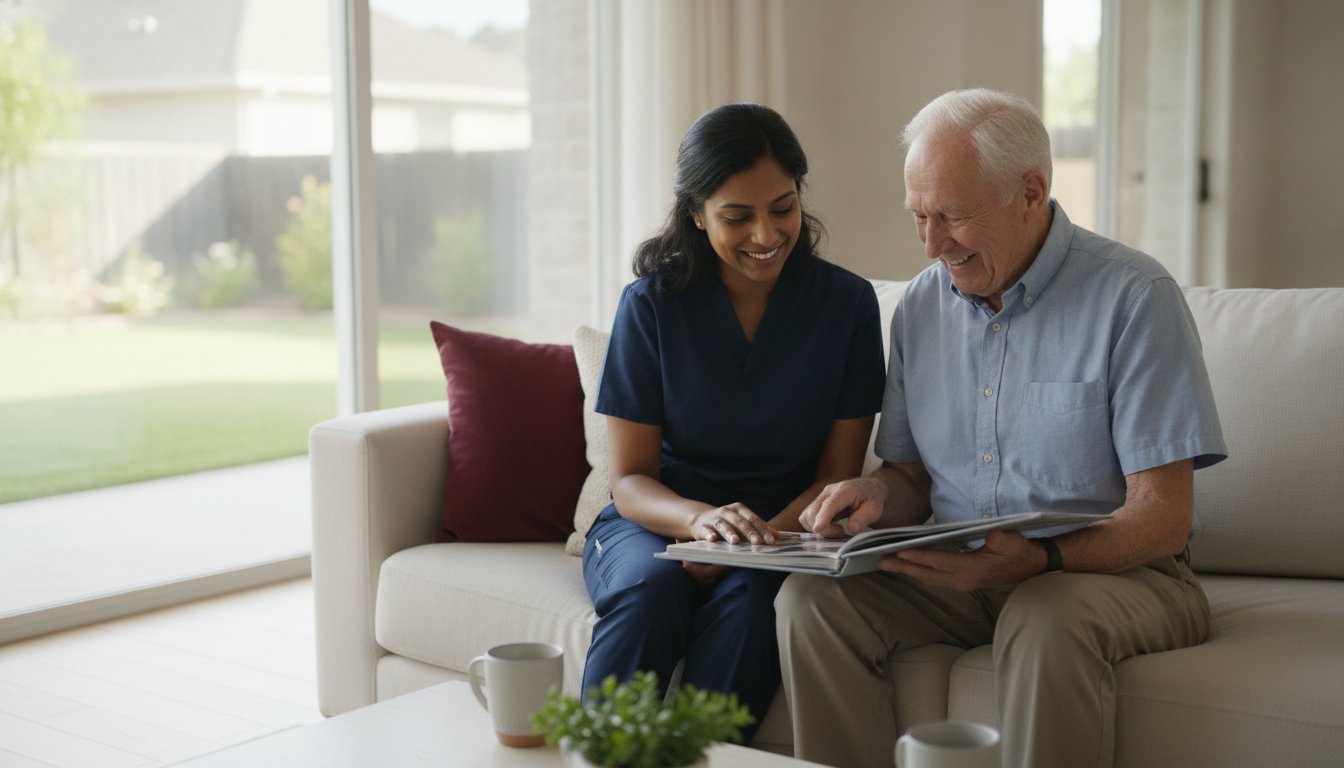
Imagine you’re sitting at your desk in downtown Houston, but your mind is miles away, wondering if your father remembered his medication or if he’s navigating the stairs safely. It’s a heavy burden to carry, and you aren’t alone in feeling that caregiver burnout is just around the corner. This is exactly where a professional in home attendant steps in, acting as a professional relative who blends technical safety protocols with the genuine empathy required to preserve a senior’s spirit.
We understand that you want more than just a pair of hands; you want someone who respects your loved one’s dignity while ensuring every safety protocol is followed. You might feel confused by the difference between medical and non-medical care, or perhaps you’re simply exhausted from trying to do it all yourself. This 2026 guide is designed to clear that confusion and show you how private care can restore balance to your family dynamic. We’ll explore the specific roles of an attendant, help you navigate the Houston care landscape, and provide a roadmap for finding a trustworthy partner who truly fits your home.
Key Takeaways
- Learn the essential difference between medical home health and the non-medical support provided by an in home attendant to ensure your loved one receives the correct level of care.
- Discover how professional assistance with daily tasks like grooming and meal preparation can preserve your family member’s dignity while maintaining their independence at home.
- Understand the benefits of agency-managed care, including rigorous background screenings and reliable backup support that independent hiring often lacks.
- Explore how specialized routines and memory care protocols can help manage Alzheimer’s and dementia symptoms, creating a calmer environment for everyone involved.
- Learn why matching a caregiver’s personality to your family dynamic is a vital step in building a trusting, long-term relationship that feels like a natural fit.
Understanding the Role: What is an In-Home Attendant?
An in-home attendant is a non-medical professional dedicated to supporting seniors within the comfort of their own residences. These professionals serve as a vital link in the support chain, providing the essential assistance required for a person to maintain their independence without moving to an institutional setting. To gain a broader perspective on how these services function, What is In-Home Care provides a foundational look at the various levels of support available to families today.
An in home attendant is a compassionate professional who ensures a senior’s safety through vigilant physical support while fostering emotional well-being through dedicated companionship.
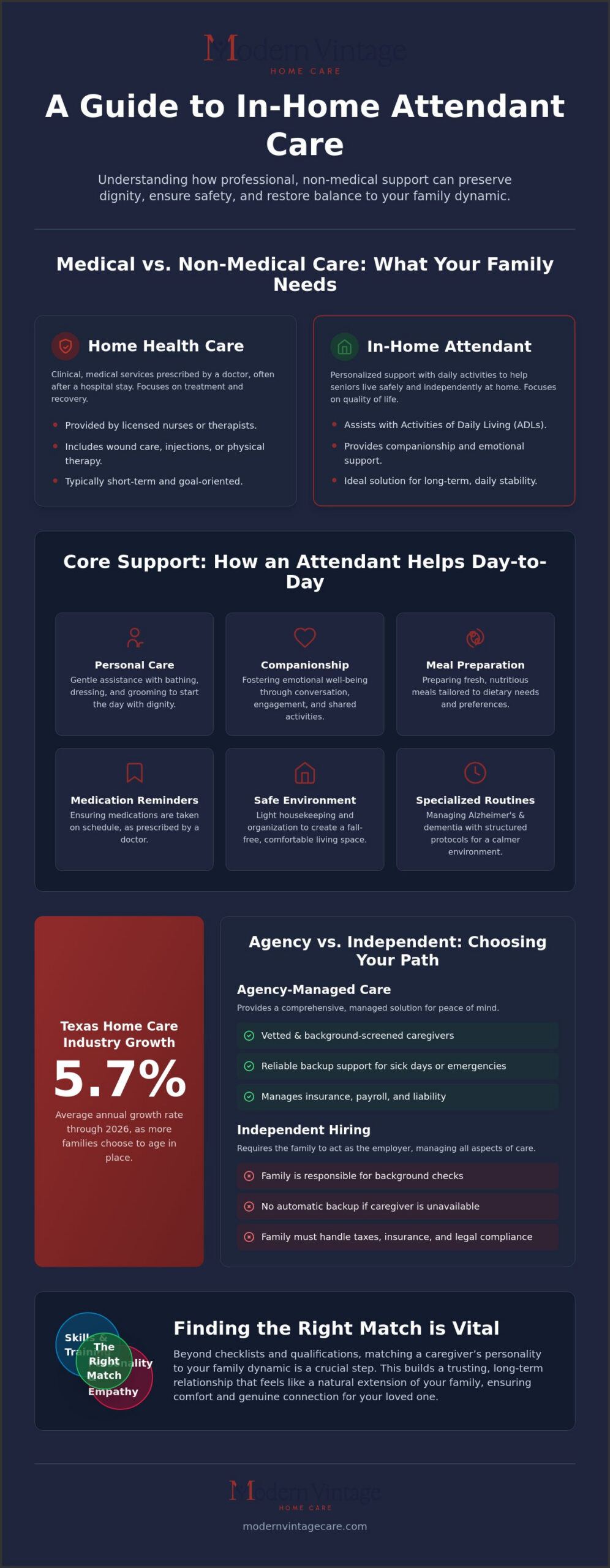
It’s common to feel confused by the different terms used in the care industry. The primary distinction lies between “home health” and “home care.” Home health is medical in nature, involving licensed nurses or therapists who provide clinical interventions like wound care or physical therapy, often after a hospital stay. In contrast, home care focuses on personal care and daily living. If your loved one needs help with getting dressed or preparing nutritious meals, they need an attendant. If they require specialized medical monitoring, they need home health. Most Houston families find that an attendant is the ideal solution for long-term, daily stability.
For many residents in our community, the goal is “aging in place.” This concept is about more than just staying at home; it’s about preserving a sense of self and dignity in a familiar environment. With the home care industry in Texas growing at an average annual rate of 5.7% through 2026, it’s clear that more families are choosing this path. An attendant makes this a reality by handling the physical challenges that might otherwise make living alone impossible.
Attendant vs. Housekeeper: Clearing the Confusion
A housekeeper’s primary focus is the environment; they ensure the floors are clean and the laundry is folded. An attendant’s primary focus is the person. While an attendant might perform light housekeeping as part of their routine, their training centers on senior-specific safety and engagement. They are skilled in techniques for safe transfers, such as helping someone move from a bed to a walker without risk of a fall. They don’t just clean the kitchen; they ensure the senior is eating well and staying hydrated. This shift from domestic help to person-centered care is what defines the role.
The Legal and Regulatory Landscape in Texas
In Texas, these services are regulated to ensure a high standard of safety for vulnerable adults. Understanding what is a in home caregiver helps clarify that attendants are legally permitted to assist with Activities of Daily Living, or ADLs. This includes tasks like bathing, grooming, and meal preparation. However, they aren’t authorized to perform medical tasks that require a nursing license. This regulatory boundary protects your loved one, ensuring that a qualified nurse handles clinical needs while your attendant focuses on the quality of daily life and personal connection.
Key Responsibilities: How an In-Home Attendant Supports Daily Living
The daily life of a senior can be transformed by the presence of a dedicated professional who understands the nuances of aging. When evaluating the Key Responsibilities of an In-Home Attendant, it’s clear that the goal is to provide a safety net that supports both physical health and emotional spirit. An in home attendant focuses on Activities of Daily Living (ADLs), which are the essential tasks that allow a person to start and end their day with dignity. This includes gentle assistance with bathing, dressing, and grooming, ensuring your loved one feels their best every morning.
Nutritional support is another cornerstone of this role. As we age, meal planning can become a chore, leading to poor dietary habits. An attendant steps in to prepare fresh, nutritious meals tailored to specific dietary needs, whether that involves low-sodium options or heart-healthy recipes. Beyond the kitchen, they maintain a “fall-free” environment by handling light housekeeping and organization. They ensure walkways are clear and essentials are within reach, which is vital for safety. For families in Sugar Land, an attendant also provides reliable transportation for grocery shopping, errands, and medical appointments, bridging the gap between home and the community.
The Vital Role of Companionship and Social Engagement
Isolation is a significant risk for seniors living alone, often leading to a decline in cognitive health and mood. Attendants provide more than just physical help; they offer meaningful conversation and shared activities that keep the mind sharp. By prioritizing senior social engagement at home, these professionals help prevent the loneliness that can shadow the aging process. Whether it’s playing a favorite card game or discussing current events, this social stimulation is a powerful tool for maintaining a high quality of life. Families who want to explore structured social support options can also learn more about senior companionship services Sugar Land residents rely on to keep their loved ones engaged and thriving.
Safety Monitoring and Medication Reminders
An attendant acts as a vigilant pair of eyes, observing subtle changes in a senior’s health or behavior that might otherwise go unnoticed. While they don’t provide clinical intervention, their role in Medication Management is crucial. They provide timely reminders to ensure medications are taken exactly as prescribed. To enhance this safety net, many families utilize 24-hour care or automated check-in services for continuous peace of mind. If you’re wondering how these services could fit into your family’s routine, exploring personalized care options is a wonderful first step toward a more stable daily life.
Comparing Your Options: Agency-Managed vs. Independent Attendants
Choosing the right path for care often starts with a fundamental decision: do you hire an individual directly or partner with an established agency? While hiring an independent in home attendant might seem like a budget-friendly choice at first, it often places the family in the role of an employer. This means you are responsible for payroll taxes, worker’s compensation insurance, and the complex legalities of domestic employment. If an injury occurs on the job, the financial liability falls squarely on your shoulders without the protection of a corporate umbrella.
When Comparing Your In-Home Care Options, the value of agency management becomes clear. Agencies handle the rigorous screening, professional liability insurance, and administrative burdens that individual families aren’t equipped to manage. While the hourly rate for an agency may be higher, the cheapest option often carries the highest risk of inconsistent care or legal complications. In 2026, comprehensive background checks and professional vetting are non-negotiable standards that ensure the person entering your home is both safe and qualified.
The Benefits of Professional Oversight
An agency doesn’t just provide a person; it provides a system of support. Care managers act as steady advocates, coordinating with family members to adjust care plans as a senior’s needs evolve. They provide ongoing training and supervision to ensure that standards for personal care for seniors Houston families expect are consistently met. This oversight ensures that your loved one’s routine remains stable and their spirit stays nurtured through every life transition.
Handling Emergencies and Care Transitions
Life is unpredictable, and even the most dedicated independent attendant will eventually face an illness or a family emergency. If you’ve hired independently, you’re suddenly left without care and forced to scramble for a replacement while balancing your own work and family life. Partnering with an agency provides an immediate advantage because they maintain a team of professionals ready to step in as backup. This reliability is essential when transitioning from part-time help to 24-hour support seamlessly. A professional in home attendant within an agency framework follows established emergency protocols, ensuring that communication with the family is clear and proactive during a crisis. This structured approach provides the stability needed to navigate the nuances of aging with quiet confidence.
Specialized Support: When an In-Home Attendant Becomes a Memory Care Partner
When a loved one is diagnosed with a cognitive condition, the role of an in home attendant evolves from a helper to a specialized partner. It’s about more than just checking boxes; it’s about understanding the unique language of memory loss and responding with patience. By creating structured routines, an attendant can significantly reduce the anxiety and confusion often associated with “sundowning” symptoms in the late afternoon. These routines provide a predictable rhythm to the day, which helps the senior feel secure in their environment.
Instead of correcting or confronting a senior who is confused about the time or place, professional attendants use redirection and validation. These techniques honor the individual’s current reality, which helps maintain a sense of calm and prevents behavioral escalations. For families seeking dementia home care services Sugar Land families trust, this specialized approach is essential for maintaining a peaceful household. The attendant acts as a bridge, ensuring the senior’s spirit remains nurtured even as their memory changes.
Dignity-First Care for Advanced Needs
Personal care becomes more complex when cognitive decline or physical limitations are involved. Providing elderly bathing and dressing help requires a gentle touch and immense patience to ensure the senior doesn’t feel threatened or embarrassed. The focus remains on preserving the person’s dignity while managing advanced needs like incontinence with absolute sensitivity. By maintaining a gentle and predictable routine, an attendant helps the individual feel respected and cared for, rather than just “managed.”
Support for Chronic Conditions: Parkinson’s and Stroke Recovery
For families managing Parkinson’s or stroke recovery, an in home attendant provides the physical stability needed for daily safety. If a loved one is recovering from a stroke, the attendant monitors for signs of skin breakdown and ensures proper circulation while supporting prescribed physical therapy exercises. In Parkinson’s care, they are trained to assist with mobility and fall prevention, acting as a steady advocate during the difficult “off” periods of medication cycles. This proactive engagement ensures that safety protocols are followed while the senior works toward regaining their independence. If you’re ready to see how a specialized partner can improve your loved one’s daily life, explore our Alzheimer’s and dementia care options today.
Finding the Right Match: Why Personalized In-Home Care Matters in Sugar Land
Choosing an in home attendant is a deeply personal decision that goes beyond reviewing a list of qualifications. While many state-funded programs focus on basic task completion, personalized private care prioritizes the relationship between the caregiver and the senior. We believe that finding a professional who fits your family dynamic is the cornerstone of successful support. When personalities align, the attendant becomes more than a helper; they become a trusted companion who understands the small details that make your loved one feel seen and respected. For families who want to understand the full spectrum of social and emotional support available locally, exploring the senior companionship services Sugar Land families are choosing can help clarify which level of engagement is right for your loved one.
Our local expertise in the Sugar Land and Houston healthcare landscape allows us to navigate the nuances of our community. Whether your family is coordinating with doctors at the Texas Medical Center or simply needs someone who knows the best routes to local parks in Sugar Land, having a partner with local roots makes a difference. This familiarity ensures that care transitions are smooth and that your loved one remains connected to the community they love.
The Modern Vintage Difference: High-Tech, High-Touch
Modern Vintage Home Care redefines the standard of support by integrating innovative technology with traditional, heartfelt caregiving. We utilize automated medication reminders and automated check-in services to provide an extra layer of safety that works silently in the background. These tools don’t replace the human touch; they enhance it. If you’re managing a complex schedule, then our concierge-level support can handle the logistics, allowing you to focus on being a daughter, son, or spouse again. Working with a local, licensed Texas agency ensures that these high-tech solutions are backed by rigorous professional standards and a dedicated team of advocates.
Empowering Family Caregivers with Respite
It’s vital to recognize that hiring an attendant is an act of love for the primary caregiver as much as it is for the senior. Many families wait until they are on the brink of exhaustion before seeking help, but proactive support is the best way to prevent burnout. By establishing a sustainable care plan early, you ensure that your own health and spirit remain intact. Exploring respite care for family caregivers provides you with the breathing room needed to recharge, knowing your loved one is in capable and compassionate hands.
If you’re ready to begin this journey, the next step is a simple conversation. We invite you to schedule a consultation where we can listen to your unique requirements and help you find the perfect in home attendant for your family. This initial meeting is an opportunity to ask questions, address concerns, and start building a path toward safety, independence, and much-needed peace of mind.
Restoring Balance and Safety to Your Home
Navigating the path of aging doesn’t have to be a journey you take alone. By choosing a professional in home attendant, you’re investing in your loved one’s independence and your own peace of mind. We’ve explored how these dedicated professionals provide essential daily support, why agency-managed care offers a vital safety net, and how specialized memory care techniques can transform the quality of life for those living with Alzheimer’s or dementia.
Making the right choice for your family means finding a partner who understands the unique landscape of our community. Modern Vintage Home Care is licensed by the State of Texas and provides caregivers with specialized Alzheimer’s and dementia training to ensure every individual feels safe and respected. Whether you are in Sugar Land, Missouri City, or Houston, we are here to act as a compassionate guide during this sensitive life transition.
If you’re ready to take the first step toward a more stable and nurturing home environment, please Schedule a Free In-Home Assessment with Modern Vintage Home Care today. You don’t have to carry the weight of caregiving by yourself; let us help you rediscover the joy of simply being a family again.
Frequently Asked Questions
What is the difference between an in-home attendant and a home health aide?
An in-home attendant provides non-medical assistance focused on daily living and companionship, while a home health aide typically works under a clinical plan of care. Attendants focus on the long-term preservation of independence through tasks like meal prep and personal care. Home health aides are usually involved in short-term recovery following a medical event or hospital stay.
Do in-home attendants in Texas provide medical services like injections?
No, an in home attendant in Texas is not permitted to perform medical services such as injections, sterile wound care, or catheter management. These clinical tasks are reserved for licensed nurses or medical professionals. The attendant’s role is to provide essential physical support and medication reminders rather than administering medical treatments.
How much does an in-home attendant cost in the Houston area?
The cost of care in Houston depends on the level of support required and the duration of the shifts. Factors such as whether you need 24-hour care or just a few hours of companionship each week will influence the total investment. It’s best to speak with a local agency to get a personalized quote that reflects your family’s specific needs and dynamic.
Can an in-home attendant help with Alzheimer’s or dementia patients?
Yes, a professional in home attendant can be a vital partner in managing the challenges of Alzheimer’s or dementia. They are trained to implement structured routines that reduce anxiety and help manage behavioral changes like sundowning. This support ensures the senior remains safe in a familiar environment while receiving specialized, dignity-first engagement.
Is an in-home attendant covered by Medicare or private insurance?
Medicare typically does not cover non-medical personal care or attendant services as it focuses on clinical recovery. However, many private long-term care insurance policies do provide coverage for these essential daily supports. It’s helpful to review your specific policy or check with a Veterans Affairs representative if your loved one is a veteran.
What should I look for when interviewing an in-home attendant agency?
Look for an agency that is licensed by the State of Texas and prioritizes rigorous background screenings for all staff members. You should also ask about their specific training programs for conditions like Parkinson’s or dementia. A high-quality agency will always focus on personality matching to ensure the caregiver fits your family dynamic.
Can an attendant stay overnight or provide 24-hour care?
Yes, many agencies offer flexible scheduling that includes overnight shifts or continuous 24-hour care. This ensures that a professional is always present to assist with mobility and safety during the night. Continuous care provides families with the assurance that their loved one is never alone during their most vulnerable hours.
How do I know if my loved one is ready for an in-home attendant?
Your loved one might be ready for help if you notice changes in their personal hygiene, missed medications, or a cluttered living environment. Loneliness and a lack of social engagement are also significant indicators that their quality of life is declining. If you find yourself feeling overwhelmed by caregiving duties, it’s a sign that professional support could benefit everyone.