
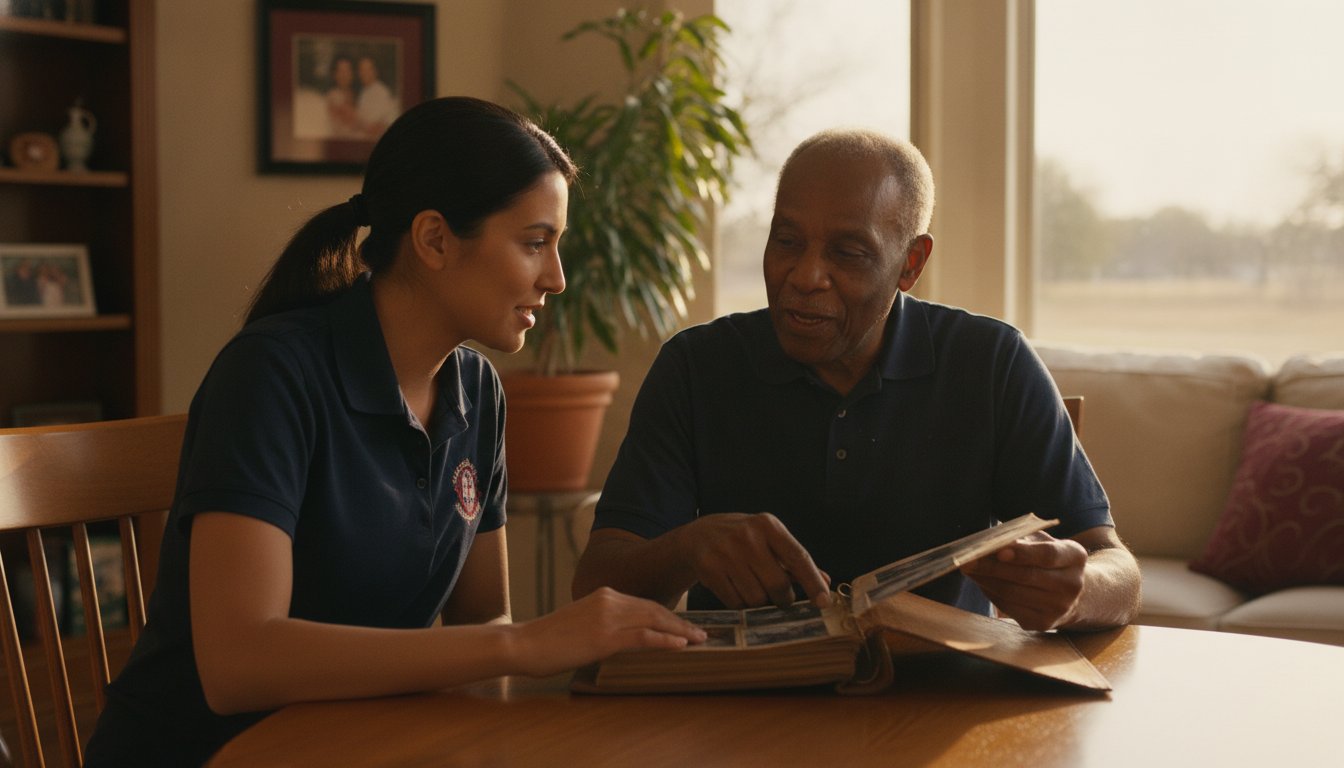
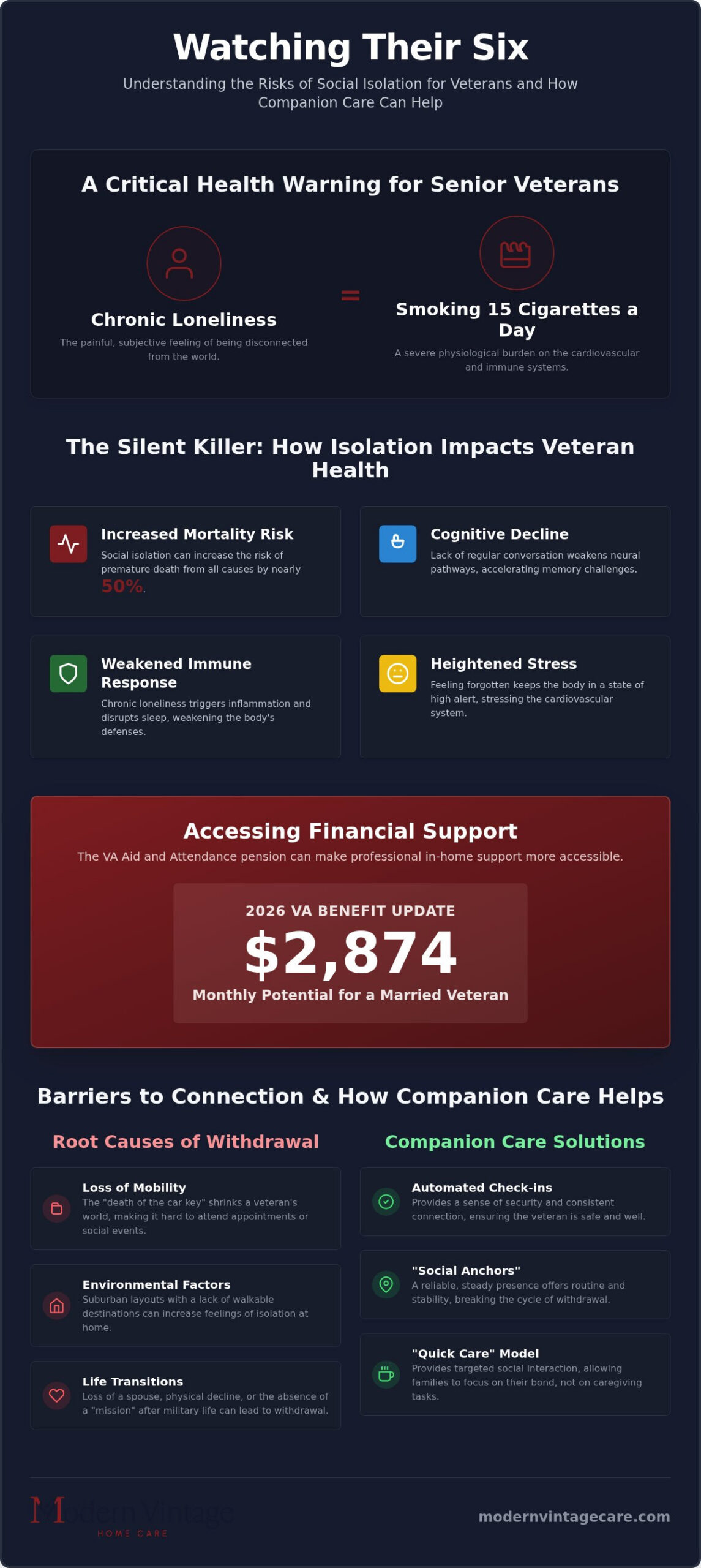
Did you know that for a senior veteran, chronic loneliness can be as damaging to their health as smoking 15 cigarettes every single day? It’s a startling reality that many families face as they watch a once vibrant loved one pull away from social life. If you’ve noticed your father or mother becoming increasingly withdrawn, you aren’t alone in your concern. Finding high-quality companion care for veterans Houston is often the first step in “watching their six” and ensuring they remain safe and connected within their own community.
We understand that you want to provide the best for them, yet the stress of navigating complex VA benefits can make the process feel impossible. You shouldn’t have to choose between being a loving family member and a full-time administrative assistant. This guide will show you how to identify the risks of social isolation and provide a roadmap for accessing specialized support. We’ll also cover the 2026 VA benefit updates, including how a married veteran might qualify for up to $2,874 monthly to help cover the costs of professional companionship and home care.
Key Takeaways
- Understand the critical health risks associated with chronic loneliness and how to distinguish them from simple social isolation in aging veterans.
- Gain a clear roadmap for navigating 2026 VA benefits, such as the Aid and Attendance pension, to make professional in-home support more accessible.
- Identify how specialized companion care for veterans Houston can overcome common barriers to engagement like driving cessation and sensory loss.
- Discover how automated check-ins and routine “social anchors” provide a sense of security and consistent emotional connection for your loved one.
- Learn how the “Quick Care” model provides targeted social interaction, allowing you to focus on your bond as a family member rather than a full-time caregiver.
The Health Impact of Loneliness vs. Social Isolation in Veterans
While the terms are often used interchangeably, they represent two distinct challenges for our aging heroes. Social isolation is the physical state of having few social contacts or little interaction with others. In contrast, loneliness is the painful, subjective feeling of being disconnected from the world. A veteran might live in a bustling Houston neighborhood yet feel entirely alone. This emotional distress acts as a “silent killer,” triggering chronic inflammation and placing immense stress on the cardiovascular system. When a veteran feels forgotten, their body stays in a state of high alert, which can lead to long-term health complications.
Veterans often face a unique path toward withdrawal. The transition from the tight-knit camaraderie of a military unit to the often-fragmented nature of civilian life can leave a void that is difficult to fill. If service-related PTSD or physical mobility issues are present, the risk of retreating into oneself grows significantly. Professional companion care for veterans Houston serves as a vital bridge, offering the consistent social engagement necessary to break the cycle of withdrawal. By having a steady, reliable presence in the home, veterans can reclaim a sense of belonging and purpose.
Loneliness as a Clinical Risk Factor
Understanding The Health Impact of Loneliness vs. Social Isolation helps us see that these aren’t just “feelings”; they’re critical medical indicators. Research indicates that social isolation can increase the risk of premature death from all causes by nearly 50%. It’s a physiological burden that disrupts sleep quality and weakens the immune response in aging adults. Whether a veteran is struggling with a chronic illness or simply navigating the natural changes of aging, their social environment plays a major role in their recovery and resilience. If they don’t have regular, meaningful interactions, their physical health often declines much faster than it would otherwise.
The Connection to Cognitive Health
Engaging in regular conversation isn’t just a way to pass the time; it’s a form of cognitive “resistance training.” Keeping the mind active through storytelling, debating current events, or sharing hobbies helps preserve vital neural pathways. For those already managing memory challenges, integrating social interaction into specialized dementia home care services in Sugar Land can significantly improve daily well-being. A dedicated companion does more than provide company; they act as a trained observer. They can catch early signs of cognitive change or mood shifts that a busy family member might miss, ensuring that companion care for veterans Houston remains proactive rather than reactive.
Identifying the Root Causes of Social Withdrawal for Aging Veterans
Social withdrawal rarely happens overnight. It’s often a slow retreat triggered by physical, environmental, or emotional changes that make staying connected feel like an uphill battle. For many veterans in the Greater Houston area, the loss of independence begins with what many experts call the “death of the car key.” In a city where daily life is built around driving, losing a license isn’t just an inconvenience. It’s a barrier to human connection. When a veteran can’t drive themselves to a doctor’s appointment or a morning coffee group, their world begins to shrink to the four walls of their home.
The geography of our local communities often compounds this issue. While neighborhoods in Sugar Land and Missouri City are beautiful, their suburban layout isn’t always senior-friendly. Wide streets and a lack of walkable destinations mean that spontaneous interactions with neighbors are rare. If a veteran is also mourning the loss of a spouse or struggling to find a “mission” after military life, the silence of a suburban home can become deafening. Professional companion care for veterans Houston addresses these challenges by providing a consistent link to the outside world.
The Mobility and Transportation Gap
The emotional toll of being unable to visit the local VFW hall or meet friends for lunch is profound. For a veteran who has spent their life being self-reliant, asking for a ride can feel like a blow to their dignity. This is where Navigating Houston Veteran Benefits for In-Home Companion Care becomes essential. Programs like the Homemaker and Home Health Aide Care can provide the support needed to help veterans stay active in their communities. Specialized concierge services bridge the gap between staying isolated and staying engaged, ensuring that social routines remain a priority rather than a luxury.
Sensory and Psychological Barriers
Sensory loss adds another layer of difficulty that often goes unnoticed. If a veteran struggles with hearing loss, they may “check out” of family gatherings to avoid the embarrassment of asking people to repeat themselves. The mental load of trying to follow a conversation in a noisy room is exhausting, and many seniors simply find it easier to stay home. Additionally, service-related anxiety or PTSD can make new social environments feel unpredictable or unsafe. A consistent, trusted companion helps build the confidence needed to re-enter the community. By having a partner who understands their specific needs and triggers, veterans feel more secure stepping back into social life. If you’ve noticed your loved one pulling away, exploring personalized veterans care can help restore their sense of connection and purpose.
Navigating Houston Veteran Benefits for In-Home Companion Care
Securing the right support for a loved one shouldn’t feel like a second job. While the paperwork for VA benefits can be intimidating, several programs are specifically designed to help families cover the cost of companion care for veterans Houston. The most common source of funding is the Aid and Attendance Pension. As of 2026, this benefit provides up to $2,874 per month for married veterans and $2,424 for single veterans who require assistance with daily activities. This is a life-changing resource that allows seniors to stay in their own homes while receiving the social engagement they deserve.
It’s important to distinguish between clinical nursing and “Homemaker and Home Health Aide” services. While clinical care focuses on medical tasks, companion care centers on safety, routine, and emotional well-being. For many families, the VA Community Care Network (CCN) is the gateway to these services. By obtaining a referral from a VA doctor, you can access private, non-medical care that is paid for directly by the VA. This ensures your loved one receives high-quality attention from local providers who understand the unique culture of military service.
Key VA Programs for Houston Families
The path to support often begins with a clinical assessment at the Michael E. DeBakey VA Medical Center. This evaluation determines the level of care required and opens doors to various funding streams. For instance, the Veteran-Directed Care program gives veterans more control over their care budget, allowing them to choose services that best fit their lifestyle. If you’re currently providing care yourself, you might also explore the Program of Comprehensive Assistance for Family Caregivers (PCAFC). Many families find that using veterans home care benefits in Sugar Land is the best way to supplement their own efforts, providing much-needed respite while ensuring their veteran isn’t left alone.
Maximizing Support with Professional Guidance
Working with a licensed agency can take the weight off your shoulders by simplifying the benefit navigation process. These experts understand the local Houston landscape and can help you coordinate with a VA Caregiver Support Coordinator to ensure no benefit is left on the table. In some cases, companion care can be part of a broader 24-hour home care plan in Houston, providing a continuous safety net for those with more intensive needs. Whether you need a few hours of social interaction each week or more comprehensive oversight, professional companion care for veterans Houston ensures your loved one is never truly isolated. By handling the logistics of care, you can return to your most important role: being a supportive son, daughter, or spouse.
Practical Engagement Strategies and Local Sugar Land Resources
Consistency is often the most powerful tool in combating the slide toward isolation. For many veterans, the transition from a highly structured military career to the open-ended days of retirement creates a vacuum. By establishing what we call a “Social Anchor,” you can provide your loved one with a predictable, routine reason to engage with the world. Whether it’s a weekly visit from a friend or a scheduled outing to a local park, these routine touchpoints act as a new mission for the day. Professional companion care for veterans Houston specializes in creating these anchors, ensuring that social interaction is a reliable part of the veteran’s calendar rather than a random occurrence.
Involving the younger generation is another effective way to bridge the social gap. Encouraging grandchildren to interview their veteran grandparents for a “legacy project” or simply sharing a meal can foster deep, intergenerational connections. These interactions provide the veteran with a sense of purpose and a chance to pass down valuable life lessons. If a veteran feels that their stories and experiences are valued, they are much more likely to remain active and communicative within the family unit.
Automated Connection and Safety
Technology can serve as a gentle bridge to the outside world without becoming overwhelming. Voice-activated assistants allow seniors to listen to music, check the weather, or call family members using simple verbal commands. We also recommend utilizing automated check-in calls as a non-intrusive social touchpoint. These calls ensure the veteran is safe while providing a brief moment of connection during the day. Additionally, integrating medication management for elderly seniors into the daily routine serves as a natural wellness check. If a caregiver or family member is alerted that a dose was missed, it provides a perfect opportunity to reach out and start a conversation.
Community Re-Entry in Fort Bend County
For those living in Sugar Land and Missouri City, local resources offer excellent opportunities for social re-entry. The T.E. Harman Center in Sugar Land is a fantastic hub for senior programs, offering everything from fitness classes to social clubs. Taking advantage of these veteran-friendly spaces can help your loved one find a new community of peers. If your veteran feels hesitant about attending an event alone, a “Senior Concierge” can provide the necessary encouragement and transportation. You might also consider using personal care for seniors in Houston to help your loved one prepare for these social outings, ensuring they feel confident and dignified when they step out the door. If you’re ready to build a personalized engagement plan for your loved one, you can explore our comprehensive veterans support services to see how we can help.
Integrating Professional Companionship into a Personalized Care Plan
Family caregivers often carry a heavy emotional load. While your dedication is unmatched, the constant stress of managing daily needs can sometimes strain the bond you share with your loved one. Choosing professional companion care for veterans Houston isn’t about replacing your role. It’s about enhancing it. A professional companion brings a fresh perspective and specialized training in active listening and engagement. They aren’t carrying the weight of family dynamics, which often allows them to be more successful at encouraging a stubborn or withdrawn veteran to participate in social activities. This support allows you to step back from the role of “manager” and return to being a supportive son, daughter, or spouse.
We believe every veteran deserves a “mission-focused” care plan that honors their unique history and personality. This approach goes beyond basic supervision. If your loved one was a career officer who values order, their companion can help maintain a structured daily routine that feels familiar and safe. If they were an avid outdoorsman, the plan might prioritize assisted walks in local parks or visits to Houston area nature centers. By centering care on their specific hobbies and values, we ensure the veteran feels respected and understood rather than simply “looked after.” This personalized engagement also provides essential respite care for family caregivers, giving you the time you need to recharge while your veteran stays active.
Starting Small with Quick Care Services
Many veterans are fiercely independent and might reject the idea of having a “caregiver” in the home. They often view it as a loss of pride. To bridge this gap, we utilize the Quick Care Services model. These are short, targeted visits focused on wellness checks and social interaction. It’s much easier to introduce a companion as a “neighborly expert” who is stopping by for a quick chat rather than a permanent fixture. These brief visits build a foundation of trust. Over time, as the veteran grows comfortable with their companion, these social check-ins can naturally transition into more comprehensive personal care if their needs change.
A Collaborative Path Forward
The success of companion care for veterans Houston depends on the quality of the connection. We take great care in matching veterans with caregivers who share their interests or military values. Whether it’s a shared love for history or a common appreciation for a well-kept home, these small commonalities make social engagement feel natural. Our caregivers are trained to be a steady, nurturing presence that bridges the gap between professional service and familial warmth. If you’re ready to see how a dedicated partner can improve your loved one’s quality of life, schedule a free in-home assessment with Modern Vintage Home Care to build a connection plan today.
Honoring Their Service Through Meaningful Connection
Restoring a veteran’s sense of purpose doesn’t happen by chance; it requires a proactive approach that addresses both their physical safety and their emotional well-being. By understanding the clinical risks of isolation and utilizing the 2026 VA benefit updates, you can provide your loved one with a higher quality of life right at home. Whether it’s through routine social anchors or specialized companion care for veterans Houston, the goal is to ensure they never feel forgotten in the community they served so bravely.
As a licensed Texas home care provider, we’re here to act as your steady advocate and compassionate guide. We provide specialized veterans and dementia care training to ensure every interaction is respectful, dignified, and effective. Whether you are in Sugar Land, Missouri City, or the Greater Houston area, we handle the complexities of daily engagement so you can focus on being a family again. It’s time to watch their six and provide the reliable, nurturing presence they deserve.
Request a Free Veteran Care Assessment in Sugar Land today and take the first step toward a more connected and vibrant future for your loved one.
Frequently Asked Questions
What exactly is companion care for veterans?
Companion care is a non-medical service that focuses on social engagement, safety, and emotional well-being. Unlike clinical nursing, these services prioritize human connection through shared hobbies, conversation, and assistance with daily routines. It’s a proactive way to ensure your loved one remains active and mentally stimulated while staying safe in their own home.
Does the VA pay for in-home companion care in Houston?
Yes, the VA offers several programs that can fund in-home support, including the VA Community Care Network and the Aid and Attendance pension. These benefits allow families to hire professional companion care for veterans Houston through licensed agencies. By obtaining a referral from a VA doctor, you can often access these services with little to no out-of-pocket cost.
How do I qualify for the VA Aid and Attendance benefit?
To qualify, a veteran must meet specific military service requirements, have a clinical need for assistance with daily activities, and meet certain financial criteria. In 2026, the maximum monthly benefit for a married veteran is $2,874. We recommend starting with a clinical assessment at the Michael E. DeBakey VA Medical Center to document the level of support required.
What is the difference between social isolation and loneliness?
Social isolation is the physical state of having few social contacts, while loneliness is the subjective, painful feeling of being disconnected. A veteran can be physically isolated but feel content, or they can be surrounded by family and still feel deeply lonely. Both conditions carry significant health risks, including increased inflammation and a higher risk of heart disease.
How can I help my veteran parent who refuses to have a caregiver in the house?
The best approach is to start small by introducing a “Quick Care” visit focused on social wellness rather than “care.” Position the companion as a social visitor or a “neighborly expert” who is there to help with a specific hobby or task. This builds trust over time without making the veteran feel like they’ve lost their independence or pride.
What are automated check-in services for seniors?
Automated check-ins are scheduled wellness calls that provide a non-intrusive way to ensure your loved one is safe. These calls act as a brief social touchpoint during the day and can be paired with medication reminders. It’s an excellent solution for veterans who aren’t yet ready for in-home visits but still need a consistent safety net.
Are there local veteran support groups in Sugar Land, Texas?
Yes, Sugar Land and Missouri City have several active hubs, including the T.E. Harman Center and local VFW posts. These organizations offer structured social programs and peer-to-peer support specifically for veterans. Professional companion care for veterans Houston often includes providing transportation and encouragement to help seniors attend these local events.
How many hours of companion care does a veteran typically need?
The number of hours depends entirely on the veteran’s unique social needs and physical health. Some families find that 4 to 8 hours a week provides enough social stimulation and respite, while others prefer daily visits for more consistent engagement. A personalized assessment is the best way to determine a schedule that respects your loved one’s routine and budget.